Vhils: The Wall Carver Exploring Identity and Urbanization
Vhils: Carving Portraits into the City’s Skin
Portuguese artist Vhils (Alexandre Farto, born 1987) has revolutionized street art with striking portraits created by chiseling into walls and urban surfaces. His unique subtractive technique and his focus on identity, memory, and urban transformation have left a lasting mark on cities worldwide.

Early Life and Inspirations
Growing up in the 1990s, Farto witnessed rapid urban transformation around Lisbon, an experience that shaped his sensitivity to the textures, layers, and stories embedded in city walls. As a teenager, he explored abandoned buildings and decaying surfaces, absorbing the tension between the old and the new that would later become central to his work.

At 13 he began experimenting with graffiti, drawn to its rebellious energy and the idea of the city as a canvas. Over time, he became increasingly interested in the physical and metaphorical layers of the urban landscape. So, he moved beyond paint toward a language based on excavation and removal.
That shift became his signature: instead of adding color on top of the wall, he started revealing what was already there. In doing so, he uncovered brick, plaster, concrete, scars, and history.
The Birth of Vhils and the Chiseling Technique

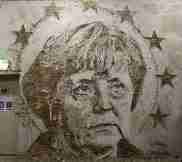
The name “Vhils” marked a deliberate new identity within the street art scene. His breakthrough was a subtractive method: chiseling, drilling, and scratching into walls to uncover hidden layers beneath the surface. Instead of painting a portrait onto a wall, he makes the portrait emerge from the wall.
He was inspired by urban palimpsests—posters, ads, graffiti, and repairs stacked over time. For Vhils, the city is not a clean image but a layered archive, and the act of carving is a form of excavation.
This approach also creates a powerful tension: the work feels permanent because it’s embedded in the material. Yet it remains fragile because weather, decay, and redevelopment can erase it—just like memory in a fast-changing city.

Exploring Themes of Identity and Urbanization
Vhils often depicts anonymous faces—ordinary people who make up the urban population. Yet, their stories are frequently overlooked. His work highlights the tension between the individual and the collective, the visible and the erased.
By revealing what lies beneath the surface, he comments on how urban development can cover up histories, communities, and identities. The portraits become witnesses: reminders that the city is built not only from concrete and policy, but from lives.
One of his best-known directions is Scratching the Surface, a series of site-specific portraits carved into walls around the world, each made in dialogue with the textures and materials of the location.

Global Impact and Major Projects
Vhils’ work appears across the globe, from Lisbon and London to Shanghai and Rio de Janeiro, often shaped by local context and community. His portraits adapt to different surfaces and histories, but maintain the same core idea: cities are layered stories, and people are their most important layer.
He has also brought his practice into galleries and museums through exhibitions that combine carved works, installations, and multimedia elements, expanding street art into a wider contemporary art language.
The Role of Technology in Vhils’ Work
While his process is grounded in craft, Vhils also uses technology to plan and execute projects. Tools and methods such as power drills, digital planning, laser cutting, or 3D modeling can support the precision of his large-scale works.
Digital platforms also help document and share his practice globally, allowing audiences to follow both process and finished pieces.
Social and Environmental Commentary
Beyond portraiture, Vhils often addresses larger social and environmental issues, consumerism, globalization, and the impact of human activity on the planet. By working in public space, his themes confront viewers in everyday life rather than behind institutional doors.
Projects like Debris use discarded materials to speak about waste, consumption, and sustainability, expanding his “excavation” logic into an environmental register.
Collaborations and Community Engagement
Collaboration is central to his practice. Vhils frequently works with local artists, organizations, and communities to ensure projects resonate with the places they inhabit.
He also runs workshops and educational activities, sharing tools and ideas with younger artists and students.
Major Exhibitions and Recognition

Vhils has exhibited internationally in galleries and museums, showing how his subtractive method can operate across different materials (wood, metal, plaster). His work also spans various formats like portraits, installations, and mixed media. Critical recognition and international press have helped consolidate his role as a key figure in contemporary street art.
Legacy and Future Projects
Vhils’ legacy is defined by innovation and an insistence on the city as a living archive. His work reminds us that urban surfaces are never neutral: they hold histories, wounds, and identities. By carving portraits into walls, he turns public space into a mirror, one that asks us to look beyond the surface and recognize the human layer beneath every city.
Related articles
- The Rise of Street Art: From Graffiti to Gallery
- Banksy — The enigmatic street provocateur
- Shepard Fairey — Provocative artist
- Keith Haring — Vibrant vanguard
- Jean-Michel Basquiat — Revolutionary
- JR — Visionary artist
- Eduardo Kobra — Brazilian muralist
- Swoon — Urban storyteller
- Os Gemeos — Magical twins
- Invader — Pixel pioneer