Spatialism: The Movement That Succeeded by Failing as a Style
Spatialism Has a Fontana Problem
Lucio Fontana was the greatest artist to emerge from Spatialism. He may also be the reason we misunderstand it. His cuts became so powerful, recognisable and historically successful that they gradually replaced the movement itself. Spatialism is now remembered through its most perfect answer, while the question that produced it has largely disappeared.
This is more than a problem of neglected artists. Roberto Crippa, Gianni Dova, Mario Deluigi, Cesare Peverelli, Tancredi Parmeggiani and others did not simply produce lesser variations on Fontana. Their works often proposed completely different ideas of space. Some remained firmly within painting, others moved toward matter, light, movement, Surrealism or environmental experience. At times, they hardly look as if they belong to the same movement.
That apparent incoherence has often made Spatialism difficult to describe. I think it should be understood as its most revealing characteristic. Spatialism failed to establish a unified style because style was never its most important achievement. It brought together artists around a problem: what should happen to art when modern ideas of space, technology, matter and perception can no longer be contained by the traditional image?
Fontana answered that question more radically than anyone else. The problem began when his answer became so successful that history started treating it as the question itself.
Spatialism Was a Question Before It Became an Image
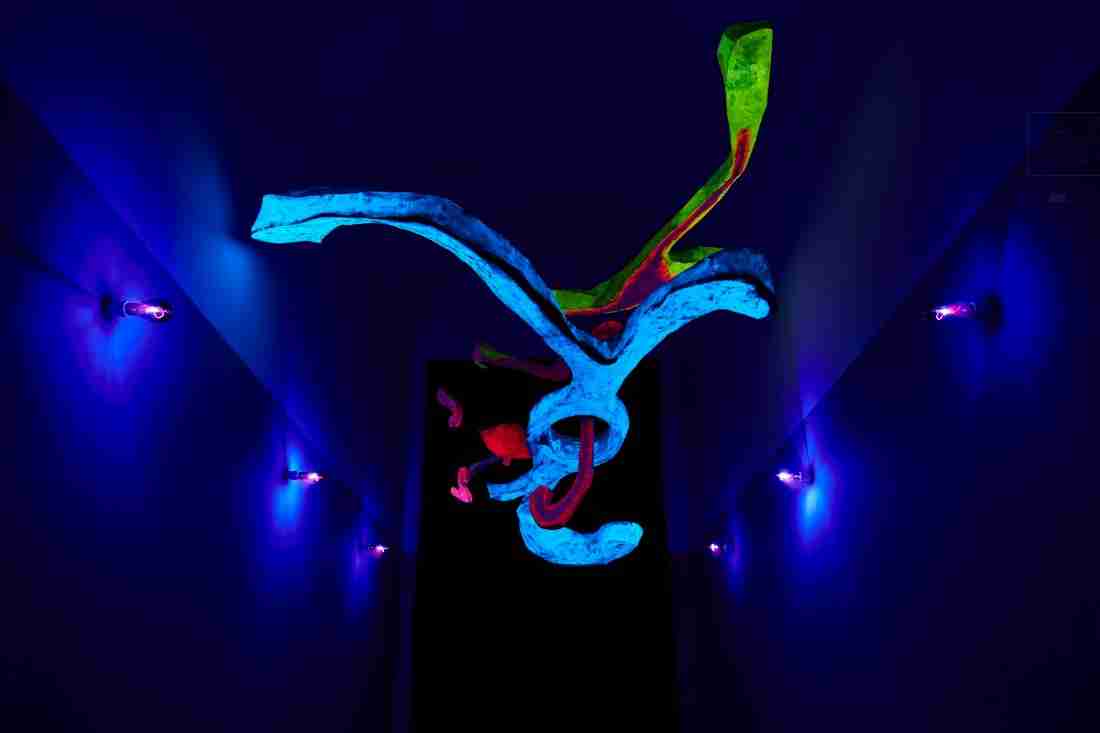
The theoretical origins of Spatialism developed between Buenos Aires and Italy during the second half of the 1940s. The Manifiesto Blanco of 1946 anticipated many of the ideas that Fontana would develop after returning to Milan. A sequence of Spatialist manifestos followed from 1947 into the early 1950s, involving artists, writers and intellectuals rather than a neatly organised school of painters.
Their ambitions extended well beyond a new way of composing a canvas. They discussed space, time, movement, light, science, new materials and technological communication. The 1952 manifesto devoted to television is particularly revealing. Television interested the Spatialists not simply as a modern object to depict, but as a technology capable of changing the way an artwork could exist, move through space and reach an audience.
This difference matters. An artist can paint a television and leave the structure of art untouched. The Spatialist proposition was more difficult: perhaps a transformed world required a transformed artwork.
The postwar context gave that idea urgency. Aviation had changed the human relationship with distance. Atomic physics was altering the understanding of matter. Electronic communication was transforming the circulation of images, while the possibility of travelling beyond Earth was entering the cultural imagination. In that environment, the traditional painting could begin to look less like an eternal form and more like a historical convention.
Yet the movement never produced a common answer to this crisis. That is precisely where its history becomes more interesting than the simplified version centred on Fontana.
Fontana, Crippa and Deluigi Did Not Mean the Same Thing by Space
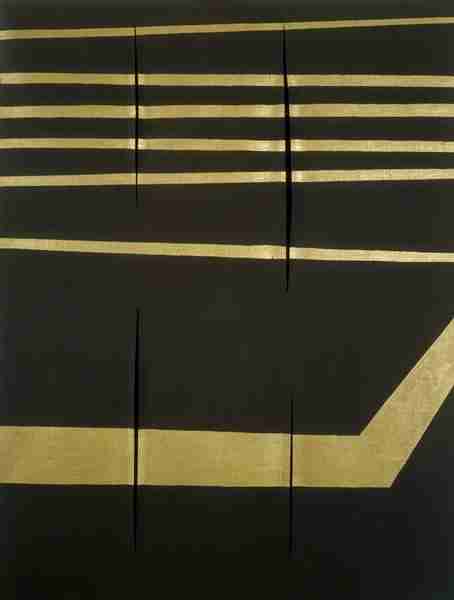
Fontana’s importance remains impossible to overstate. With the Buchi, begun in 1949, he pierced the pictorial surface. With the Tagli, developed from 1958, the operation became cleaner and conceptually more absolute. Painting had spent centuries constructing the illusion of depth on a flat support. Fontana no longer needed to represent depth because he could introduce actual depth into the work.
The gesture changed the status of the surface. A canvas was no longer only the place where an image appeared. It became a physical boundary that could be crossed. His spatial environments pushed the same idea further, replacing the spectator positioned in front of an object with a spectator entering a spatial situation shaped by light, architecture and perception.
Fontana therefore produced an extraordinarily convincing synthesis of Spatialist theory and artistic form. But this is exactly why using his work as the definition of Spatialism becomes misleading. If Fontana’s cut defines the movement, most Spatialists stop looking Spatialist.
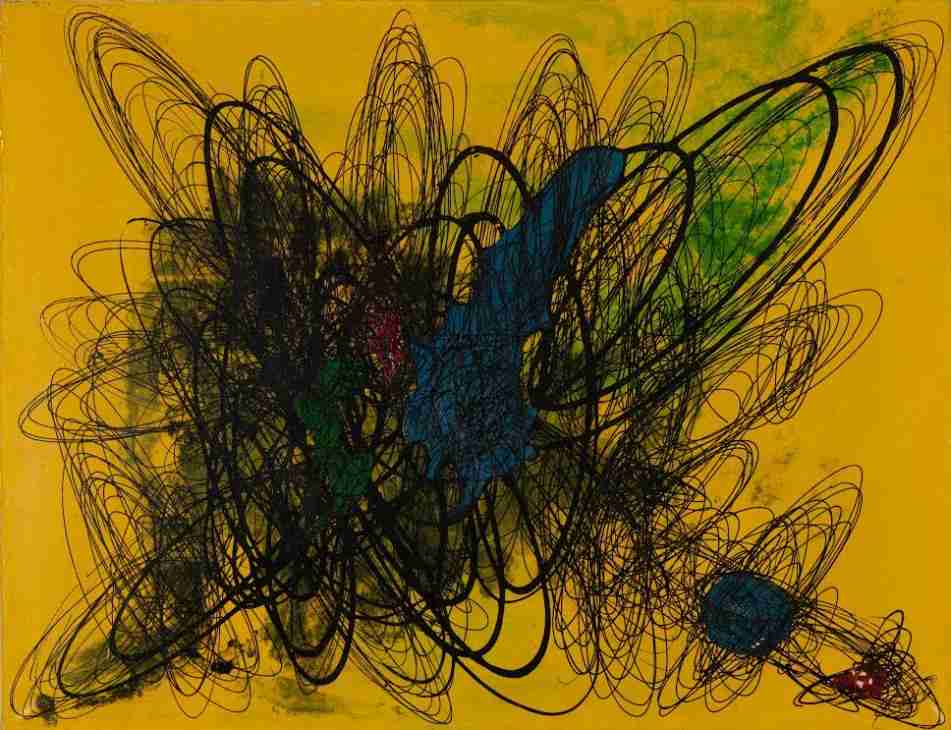
Roberto Crippa is the clearest example. His Spirali do not breach the canvas. Lines twist, intersect and accelerate across it, turning pictorial space into a field of trajectories. The works can suggest flight, orbital movement or atomic energy, yet their importance lies less in what they resemble than in the instability they produce. Crippa makes it difficult for the eye to experience the surface as static.
Fontana and Crippa therefore begin with a related dissatisfaction but reach different conclusions. Fontana challenges the physical boundary of the surface. Crippa changes the experience of movement within it. His later introduction of cork, metal, wood and other materials further complicated the distinction between painted image and material object without simply reproducing Fontana’s solution.
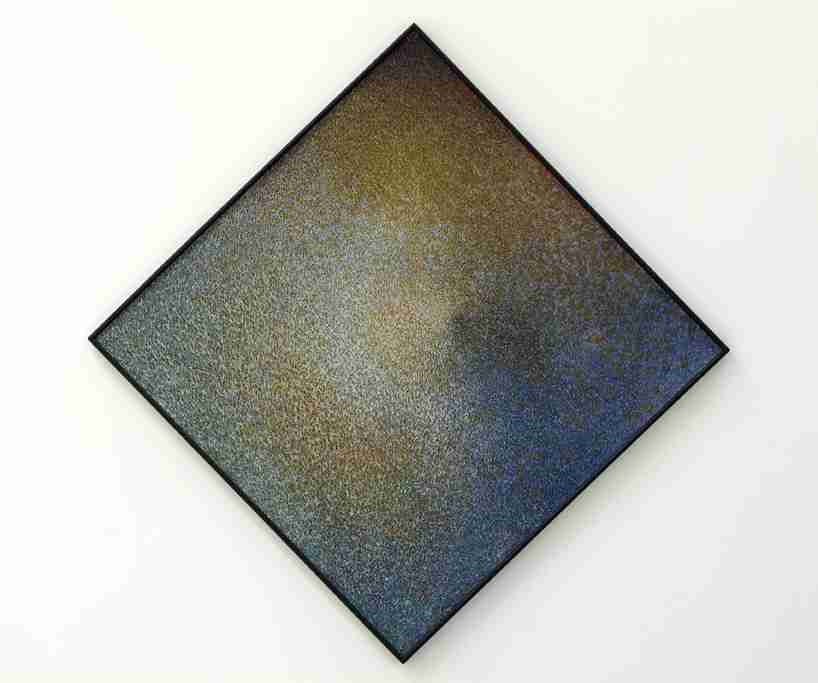
Mario Deluigi makes the idea of a common Spatialist style even harder to defend. In his grattages, he scratched into layers of paint so that light and colour appeared to vibrate across the surface. Fontana and Deluigi both subtract material, but subtraction performs almost opposite functions in their work. Fontana opens the canvas toward real depth; Deluigi uses removal to make the surface itself optically unstable.
These differences are not secondary. They suggest that Spatialism cannot be identified through holes, spirals, cuts or scratches. Each of those forms is an answer to a larger question about the limits of the image.
Dova, Peverelli and Tancredi Reveal the Movement’s Instability
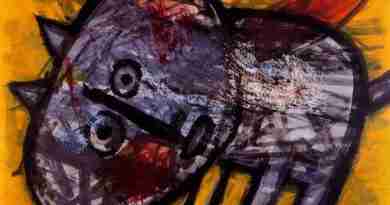
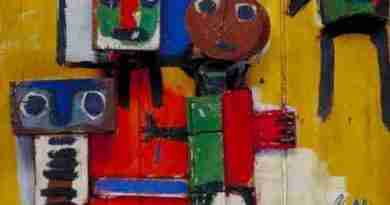
Gianni Dova makes this instability more explicit. His early involvement with Spatialism developed into a language populated by biomorphic forms, strange organisms and ambiguous presences. Space became psychological and sometimes hallucinatory rather than primarily technological. Dova did not simply abandon the question of space; he allowed it to become entangled with Surrealism and the unstable emergence of the figure.
Cesare Peverelli followed another trajectory toward Surrealism, automatism and the Informel. Matter and gesture increasingly competed with the technological optimism associated with some Spatialist declarations. His work demonstrates that the movement could contain darker and less rational interpretations of space, where the unknown was not necessarily a cosmic promise but something internal, organic or disturbing.
It is tempting to describe these developments as evidence that Dova and Peverelli eventually left Spatialism behind. In chronological terms, that is partly true. Critically, however, their departures expose a contradiction already contained within the movement. Spatialism asked artists to challenge inherited visual structures, yet a movement founded on that freedom could hardly demand permanent obedience to a new Spatialist grammar.
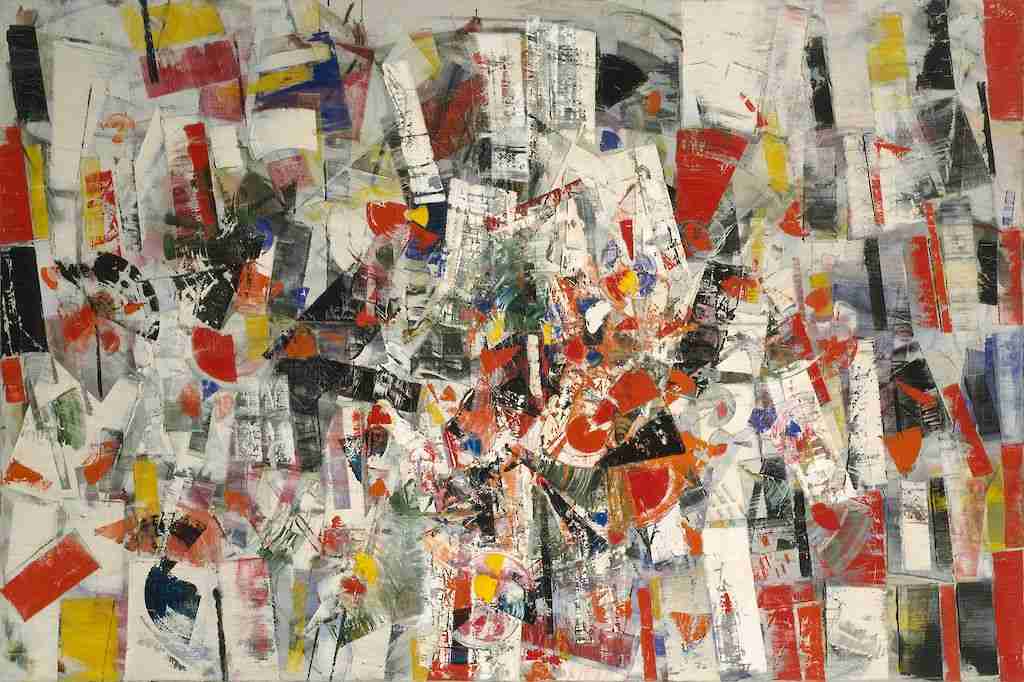
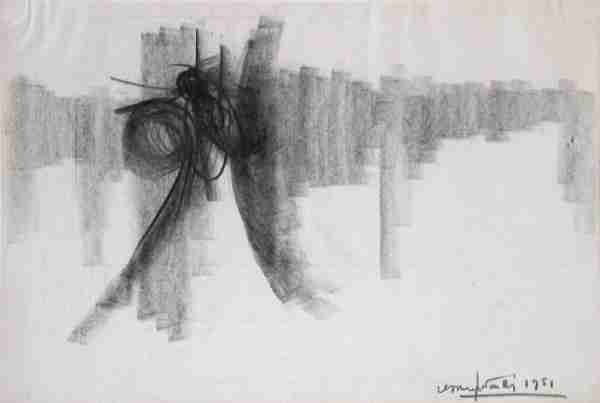
Tancredi Parmeggiani makes the boundary still more porous. His participation in the 1952 television manifesto connected him directly to Spatialist debates, but his painting quickly developed according to a much wider international conversation. Marks and colour spread across the surface without a stable centre, producing a spatial field that expands through perception rather than physical penetration.
Reducing Tancredi to a Spatialist would be inaccurate. His importance here lies precisely in the opposite fact: Spatialism could temporarily accommodate an artist who would soon exceed it. By the early 1950s, the movement was less a stylistic school than a place where different artistic trajectories could intersect around a common dissatisfaction.
The Movement Was More Coherent in Its Manifestos Than on Its Canvases
This creates what I consider one of Spatialism’s most productive failures. The theoretical programme often appears more coherent than the art produced under its name. The manifestos spoke expansively about time, movement, technology, new media and the overcoming of traditional artistic categories. Much of the actual production, however, remained recognisably attached to painting.
Fontana came closest to closing that distance. His environments, perforations, neon structures and cuts genuinely changed the physical conditions of the artwork. Other Spatialists often transformed painting without abandoning it to the same degree. Crippa introduced movement and material complexity; Deluigi transformed the surface through light; Dova and Peverelli destabilised representation; Tancredi dispersed pictorial space.
This does not make them failed Fontanas. That would repeat the historiographic mistake created by Fontana’s later dominance. It shows instead that the Spatialist proposition was broader than any one artistic solution, including Fontana’s.
The distinction also helps explain why the movement matters today. Artificial intelligence, virtual environments and digital networks confront contemporary artists with another technological transformation. Much art responds by representing these subjects through familiar forms. Spatialism suggests a more difficult test: has the new technology altered the structure of the artwork itself, or have we simply updated the imagery?
That question is more valuable than any attempt to revive Spatialist aesthetics. Painting a digital world is not necessarily more structurally contemporary than painting a landscape. The stronger challenge is to understand whether a different reality requires a different relationship between artwork, material, space and audience.
How Fontana Became Spatialism
If the movement contained such diverse practices, why did its history eventually collapse so decisively around Fontana? His artistic quality explains only part of the answer. Fontana also produced something that the mechanisms of cultural memory reward: an image capable of becoming a sign.
The cut can be recognised almost instantly. It survives reduction, photography and reproduction. It works on a museum wall, in an auction catalogue, on a book cover and on a phone screen. A single incision can carry the identity of an artist before the viewer knows anything about the theoretical history that produced it.
The work of other Spatialists resists this compression. Crippa’s spirals are recognisable, but they do not summarise a philosophical proposition with the same efficiency. Deluigi’s relationship between scratching and light requires slower looking. Dova and Peverelli resist easy categorisation precisely because their work moves toward other languages. Tancredi cannot be claimed by Spatialism without diminishing the rest of his practice.
Fontana solved this problem almost too well. His greatest achievement became Spatialism’s historiographic trap.
This does not mean that museums, scholars or the market simply invented Fontana’s importance. His importance is real. The distortion occurs elsewhere: the strongest artist becomes a retrospective filter through which every other artist is measured. Once this happens, difference starts looking like inadequacy. Crippa becomes the Spatialist who did not cut. Deluigi becomes a quieter alternative. Dova and Peverelli seem to drift away. The movement begins to look like a series of imperfect approximations leading toward the clarity of Fontana.
That chronology is false. Fontana was not the destination toward which the others were travelling.
A cut is easier to reproduce than a disagreement. It is also easier to market.
Fontana Is Spatialism’s Greatest Achievement and Its Greatest Distortion
This paradox changes how I would position Fontana inside the movement. He remains its most important artist because he understood the implications of Spatialist thought with exceptional clarity. At the same time, his success has made it harder to see what was distinctive about Spatialism in the first place.
Fontana gave the movement the coherent image it had never possessed. In doing so, he retrospectively imposed a visual unity on a history that had actually been defined by disagreement. The more famous the cut became, the easier it became to forget that Spatialism had once included very different relationships with light, movement, matter, psychology, environment and technology.
There is an irony here that feels particularly appropriate to the movement. Spatialism wanted to break the confinement of the artwork, yet its history became confined inside one image. It challenged the stability of the object, but the market and the museum eventually stabilised it around one extraordinarily successful object-type.
Fontana therefore did not merely overshadow the other Spatialists. His work changed the terms by which their historical relevance would later be judged.
That may be the strongest reason to return to Crippa, Deluigi, Dova, Peverelli, Tancredi and the wider Spatialist network today. The purpose is not to diminish Fontana in order to rescue supposedly forgotten minor artists. It is to recover the movement from the clarity that Fontana accidentally imposed on it.
Spatialism Succeeded Because It Never Found One Answer
Seen this way, the absence of a recognisable Spatialist style stops being embarrassing. Fontana could make space physical, Crippa kinetic, Deluigi luminous, while Dova and Peverelli allowed it to become psychological and unstable. Tancredi could participate in the same debate while developing a language that Spatialism alone cannot explain.
The disagreement between these artists is not noise surrounding the movement. It is evidence of what the movement actually was.
Spatialism appeared at a historical moment when artists understood that inherited forms might no longer be sufficient for a changing reality. Its members disagreed about what should replace them, and many never abandoned the very forms their manifestos appeared ready to supersede. The movement remained unresolved, sometimes inconsistent and often much less visually radical than its rhetoric suggested.
Yet that incompleteness may explain why its central question still works. When technology changes our relationship with space, images and perception, should art merely represent the new world, or should the form of art itself change?
Fontana gave the most memorable answer. Art history then made the mistake of confusing that answer with Spatialism itself.
The movement becomes more significant once the distinction is restored. Spatialism did not produce one coherent solution because coherence was never the real measure of its success. It failed as a style precisely because it succeeded as a question.
Books on Lucio Fontana and Spatialism
Further reading
Lucio Fontana 1-2 – Catalogue
A substantial reference for exploring Fontana’s practice beyond the iconic Tagli, including sculpture, ceramics, environments, Buchi and the broader development of his Spatialist research.
Further reading
Lucio Fontana 2-2
The companion volume provides further documentation for understanding Fontana’s work within the broader history of Spatialism and Italian postwar art.
View Lucio Fontana 2-2 on Amazon →
As an Amazon Associate I earn from qualifying purchases.