Contemporary Art 2010s
“`html
The 2010s: When Visibility Became Power
The 2010s promised that everyone could become visible. Artists could bypass institutions, protests could cross borders through a phone screen, and histories excluded from museums could enter public debate. But visibility also became measurable, monetised and controlled. The decade did not simply democratise the image. It turned visibility itself into a form of power.
Contemporary art in the 2010s cannot be reduced to one dominant movement. Painting remained active. Sculpture expanded into installation and architecture. Performance merged with activism and social practice. Photography confronted an unprecedented flood of digital images, while post-internet art responded to a world in which the distinction between online and offline was rapidly disappearing.
What changed most dramatically was circulation. Smartphones and social media altered how artworks, exhibitions, bodies, protests and political violence were encountered. An installation could reach millions of people who never entered the museum. An artist could build an audience without waiting for a gallery. At the same time, platforms increasingly decided which images were amplified, ignored, censored or converted into commercial data.
The decade also transformed who could claim visibility. Black, African, diasporic, feminist, queer, trans and Indigenous practices gained greater institutional attention. Yet greater representation did not automatically redistribute authority. Museums could diversify exhibitions while leaving collections, boards, markets and funding structures largely unchanged.
This is the central contradiction of art in the 2010s: visibility expanded, but control over visibility became more concentrated.
The following sections examine the major artistic practices, media and power structures that defined that contradiction.
For a wider chronological view, visit the Contemporary Art Index.
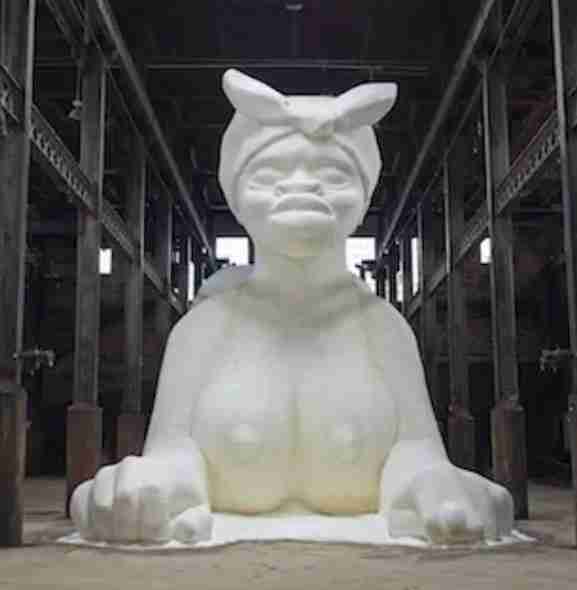
Kara Walker, A Subtlety, or the Marvelous Sugar Baby, 2014. A monument built from sweetness, exploitation, racial fantasy and industrial memory.
Explore Contemporary Art of the 2010s
Open a section to explore the major movements, practices, artists and critical questions that shaped the decade.
- Post-Internet Art, Social Media and Surveillance
- Painting and New Figuration
- Sculpture, Installation and Immersive Art
- Performance, Activism and Social Practice
- Photography, Moving Image and Documentary
- Decolonial, Black and Diasporic Practices
- Feminist, Queer and Trans Visibility
- Eco Art and the Anthropocene
- Street Art, Public Space and Urban Culture
- Museums, Biennials, Markets and Institutional Power
Post-Internet Art, Social Media and Surveillance
The internet stopped being somewhere art went and became part of the environment in which art existed.
Post-internet art became one of the decade’s most recognisable terms, although the name was frequently misunderstood. It did not simply describe art made on the internet. It described artistic practice after digital networks had already transformed photography, painting, sculpture, performance, commerce and identity.
Artists including Hito Steyerl, Amalia Ulman, Jon Rafman and Petra Cortright worked with circulation, low-resolution images, avatars, stock photography, online identities and the visual languages of digital platforms. What mattered was not simply the screen. It was the new relationship between image and network.
Instagram, launched in 2010, intensified that transformation. Museums and galleries increasingly encountered a parallel audience viewing exhibitions through photographs. Scale, colour, spectacle and recognisable visual effects could become advantages because the artwork now had to compete inside a feed as well as inside a gallery.
This new visibility came with surveillance. Facial recognition, tracking systems, metadata and data extraction made the digital image part of an infrastructure capable of identifying and monetising its users. Trevor Paglen, Hito Steyerl and other artists showed that being visible to a machine is very different from being visible to another human being.
The promise of the decade was access. Its hidden price was that the infrastructure granting access increasingly belonged to corporations.
Painting and New Figuration
The digital image did not kill painting. It changed the conditions under which painting had to justify its survival.
One of the easiest mistakes when describing the 2010s is to focus so heavily on digital culture that painting disappears from the history. In reality, painting remained one of the decade’s most visible and commercially important media.
What changed was the range of histories and bodies entering the painted image. Artists such as Njideka Akunyili Crosby, Jordan Casteel, Toyin Ojih Odutola and Tschabalala Self used figuration to address race, diaspora, gender, intimacy and social space. Julie Mehretu continued to expand abstraction through maps, architecture, political events and layered systems of information.
This was not simply a “return to painting.” Painting had never gone away. The more interesting question is why it remained so persistent while culture became increasingly digital. One answer may lie in material resistance. A painting can circulate endlessly as an image online, but its surface, scale and physical labour remain impossible to reproduce completely on a screen.
The 2010s therefore created a productive contradiction. The painted object could participate in digital circulation while reminding the viewer that an image and an object are not the same thing.
Sculpture, Installation and Immersive Art
The artwork expanded into architecture, material, environment and experience, while the viewer increasingly entered the work instead of standing in front of it.
Sculpture in the 2010s rarely meant only an autonomous object displayed on a pedestal. Artists worked with architecture, found materials, ceramics, textiles, sound and entire environments. Installation became one of the most important forms through which contemporary art addressed scale, memory and political space.
Simone Leigh brought ceramics, architecture and histories of Black womanhood into powerful sculptural forms. Sarah Sze created fragile constellations of everyday objects and images. Theaster Gates moved between sculpture, archives and the transformation of buildings, while Thomas Hirschhorn continued to construct deliberately unstable environments from cardboard, tape, printed images and inexpensive materials.
The decade also witnessed the spectacular rise of immersive exhibition culture. Yayoi Kusama’s mirrored environments became global phenomena, while projection, responsive technologies and digital installations attracted enormous audiences. Immersion could alter bodily perception, but it also introduced another problem: when the photograph of the viewer inside the installation becomes more valuable than the experience itself, participation can collapse into content production.
At the same time, textiles, ceramics and handmade processes gained renewed institutional attention. Material knowledge became especially significant in a culture increasingly organised around frictionless digital images.
Performance, Activism and Social Practice
Art entered protest, assembly and collective action, but participation did not automatically mean that power had been shared.
The 2010s were shaped by Occupy, the Arab uprisings, Black Lives Matter, feminist mobilisation, climate protest, anti-austerity movements and renewed resistance to authoritarian power. Artists responded through performance, posters, public actions, archives and interventions inside cultural institutions.
Performance became especially powerful because the body could operate simultaneously as artistic material and political evidence. Tania Bruguera linked performance to migration, censorship and civic power. Pussy Riot used performance, music and media circulation as political confrontation. Other practices blurred the distinction between artistic intervention and activism so thoroughly that the category of “artwork” became difficult to stabilise.
Social practice expanded the same question through workshops, research, community projects and collective production. Instead of producing a discrete object, artists could produce relationships, situations or temporary infrastructures.
Yet participation developed its own institutional contradictions. A museum could invite a marginalised community to participate while retaining control over funding, authorship and interpretation. The critical question was therefore not simply whether people participated, but who established the terms of participation and who benefited once the project acquired cultural value.
Photography, Moving Image and Documentary
When everyone became a photographer, contemporary photography had to ask what an image could still prove.
The smartphone transformed photography during the 2010s. Billions of images could be produced, edited and distributed almost instantly. Rather than making artistic photography obsolete, this saturation gave new urgency to questions of framing, evidence, identity and circulation.
Zanele Muholi used portraiture as visual activism, producing an expanding counter-archive of Black LGBTQ+ lives in South Africa. LaToya Ruby Frazier connected photography with family, labour, environmental injustice and the decline of industrial communities. Wolfgang Tillmans continued to move between intimate observation, abstraction and political image culture.
Moving-image practices also expanded through museums and biennials. Artists used essay film, documentary strategies, archives and multi-screen installations to slow down histories that social media often compressed into isolated images. Arthur Jafa’s moving-image work, for example, brought together music, found footage, violence and Black cultural experience without reducing them to a linear documentary narrative.
The decade also destabilised photographic truth. Manipulation had existed since photography began, but digital circulation made context increasingly fragile. By the end of the decade, the question was no longer only whether an image had been altered, but how an image acquired authority in the first place.
Decolonial, Black and Diasporic Practices
Global visibility expanded, but artists increasingly asked who still controlled the museum, the archive and the historical narrative.
The 2010s brought major institutional and market attention to Black, African and diasporic artists. Yet this greater visibility also exposed the distance between representation and authority. Museums could present diverse exhibitions while collections, leadership structures and historical narratives remained disproportionately shaped by Western institutions.
Kara Walker’s monumental A Subtlety confronted slavery, racial fantasy, labour and industrial capitalism through the seductive material of sugar. El Anatsui transformed discarded metal into monumental surfaces that connected trade, consumption and colonial history. Wangechi Mutu combined bodies, mythology and collage, while Njideka Akunyili Crosby explored diasporic identity through domestic spaces layered with photographic memory.
Afrofuturism also gained renewed cultural relevance. It provided more than futuristic imagery. It offered a method for imagining Black existence outside historical narratives structured primarily through slavery, colonialism and exclusion.
At the same time, the category “contemporary African art” became increasingly marketable. This created another contradiction: visibility could challenge exclusion while still compressing extraordinarily different countries, languages and practices into a category useful to Western institutions and collectors.
Feminist, Queer and Trans Visibility
The right to appear expanded, but appearing also meant entering systems that could classify, monetise and attack the body.
Feminist, queer and trans practices became increasingly central to contemporary art during the 2010s. Gender violence, reproductive control, domestic labour, racialised representation, sexuality and trans visibility entered museum programmes with greater frequency.
Social media offered artists new ways to construct identities and reach audiences outside established institutions. Juliana Huxtable used photography, performance, text and digital self-fashioning to destabilise distinctions between body, avatar, race and gender. Cassils turned the physical transformation of the body into a sculptural and political process, while Zanele Muholi described their photographic practice as visual activism.
This expansion of representation was significant, but the decade also exposed its limits. Identity could become a category that institutions displayed without addressing deeper inequalities in acquisitions, staffing, leadership or market value. Diversity could therefore function simultaneously as political progress and institutional branding.
The deeper question was no longer simply whether marginalised bodies could become visible. It was whether visibility could change the structures deciding whose bodies had value.
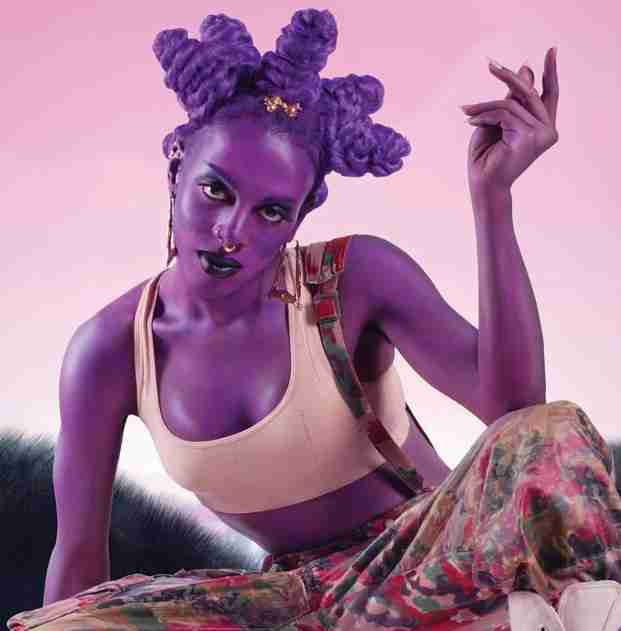
Juliana Huxtable, Untitled (Psychosocial Stuntin’). The body becomes image, avatar, performance and resistance to fixed identity.
Eco Art and the Anthropocene
Climate change moved from distant warning toward immediate political reality, while the idea of the Anthropocene changed how art understood responsibility.
Environmental art gained new urgency during the 2010s as climate breakdown, pollution, mass extinction and extractivism became increasingly difficult to separate from economic and political systems.
Artists used scientific data, living organisms, contaminated sites, melting ice, waste and long-term ecological research. Olafur Eliasson brought melting glacial ice directly into urban environments. Artists such as Aviva Rahmani developed ecological practices in which artistic action became inseparable from restoration, land use and environmental activism.
The concept of the Anthropocene became influential because it described an era in which human activity had become a geological force. Yet the term also attracted criticism. Speaking about “humanity” as a single agent can hide the enormous differences between those who profit from extraction and those who experience its consequences.
This pushed ecological art beyond the representation of damaged landscapes. The stronger practices increasingly addressed responsibility, colonial extraction, land rights and the unequal distribution of environmental harm.
Street Art, Public Space and Urban Culture
Street art became globally visible just as cities learned how efficiently rebellion could be converted into branding.
Street art and public intervention expanded dramatically during the 2010s. Murals, stencils, wheatpaste, photography and large-scale interventions circulated between neighbourhoods, festivals, museums, commercial galleries and social media.
Banksy remained the most internationally recognisable example of street art’s transformation into a global cultural phenomenon, while artists such as JR used photography and monumental public installation to connect local communities with international audiences.
The institutionalisation of street art created an obvious contradiction. Art associated with illegality, anonymity and public occupation could be commissioned by property developers and city governments. Murals became instruments of tourism and urban regeneration, sometimes contributing to the gentrification of the neighbourhoods whose identities they appeared to celebrate.
Public space therefore became a struggle over permission. Who owns the wall? Who is allowed to speak on it? When does intervention become vandalism, and when does the same visual language become a municipal cultural asset?
Museums, Biennials, Markets and Institutional Power
The decade expanded representation while making increasingly visible the institutions, collectors and platforms deciding whose representation mattered.
The global art system grew significantly during the 2010s. Biennials multiplied, art fairs became essential nodes of the market, mega-galleries expanded internationally and museums competed for global audiences. Contemporary art appeared more geographically diverse than ever before.
Yet greater global circulation did not eliminate concentration. A relatively small network of galleries, collectors, auction houses, fairs and museums continued to determine which artists acquired international visibility and market confidence. The expanding market for contemporary African art is a good example: greater attention created important opportunities while also encouraging broad regional categories that could make very different practices easier to sell.
Institutional critique therefore acquired new urgency. Artists and activist groups challenged museum sponsorship, colonial collections, board structures and relationships with private wealth. Andrea Fraser’s work remained highly relevant because it refused the comforting idea that the institution is simply somewhere outside us. Fred Wilson’s interventions continued to demonstrate how museums produce meaning through what they hide as well as what they display.
One of the decade’s most significant museum campaigns came from Nan Goldin and P.A.I.N., whose protests against Sackler philanthropy exposed the political implications of museum funding. Institutions could no longer treat sponsorship as separate from cultural meaning.
By the end of the decade, the museum, the market and the platform were increasingly difficult to separate from the artwork’s public identity. Visibility was not simply something an artist achieved. It was something systems produced.
Other Forces That Changed Art in the 2010s
Not every defining development of the decade was an artistic movement. Some were technologies, economic structures or changes in audience behaviour that altered how art was produced and understood.
The Smartphone Changed the Exhibition
The smartphone did more than make photography universal. It created a new spectator: someone who could look at an artwork, photograph it, edit it and publish it before leaving the room. Museums gained enormous digital audiences, but the photographable exhibition also acquired new economic value.
This changed exhibition design. Immersive rooms, monumental installations and instantly recognisable visual environments circulated particularly well online. The distinction between experiencing an exhibition and producing content inside it became increasingly unstable.
Virtual Reality and the Experience Economy
VR, augmented reality, projection and interactive technologies expanded during the decade as artists and institutions experimented with digitally constructed environments. At their best, these works challenged space, embodiment and narrative. At their weakest, immersion became a technical effect detached from any critical necessity.
Explore Virtual Reality and Immersive Art.
Craft, Textiles and Ceramics Returned to the Centre
Textile, weaving, embroidery and ceramics gained increasing institutional recognition. This shift challenged hierarchies that had historically separated fine art from practices associated with women, domestic labour, Indigenous cultures and non-Western traditions.
The renewed interest in material knowledge was also a response to digital culture. As images became increasingly frictionless, the evidence of hand, labour, texture and imperfection acquired new importance.
The Contemporary African Art Market Expanded
Artists from Africa and its diasporas gained substantial museum and market attention during the decade. New fairs, galleries and collecting networks expanded international access, but the category “African art” remained problematic when it treated a continent as though it represented a single cultural position.
The decade demonstrated that inclusion in a global market is not the same as controlling the terms through which value and historical importance are produced.
What Defined Contemporary Art in the 2010s?
The 2010s did not produce one dominant style because the most important transformation occurred around the artwork rather than inside one particular medium. Painting, performance, photography, sculpture, street art and digital practice all continued, but they entered a new system of circulation.
The smartphone collapsed the distance between exhibition and audience. Social media gave artists unprecedented access while placing that access inside privately controlled platforms. Political movements understood the power of images, while institutions discovered that diversity itself could become part of their public identity.
This is why visibility became the decade’s central conflict. Black, diasporic, feminist, queer and trans artists fought for the right to appear within institutions that had historically excluded them. Activists used visibility to expose violence and inequality. Artists used platforms to construct audiences outside traditional gatekeepers.
Yet every expansion produced another question. Who controlled the platform? Who selected the exhibition? Who owned the collection? Who acquired the work? Who turned visibility into cultural and financial value?
The 2010s demonstrated that being visible and having power are not the same thing.
That distinction helps explain why the decade leads so directly into the art of the 2020s. The 2010s built the infrastructure of permanent visibility. The following decade inherited its consequences.
Related Articles
- Post-Internet Art and the Digital Condition
- Contemporary Painting: A Mirror to Modern Society
- Activist Art: The Power of Expression for Social Change
- Zanele Muholi: Reclaiming Identity Through the Lens
- Afrofuturism: Art, Diaspora and Science Fiction
- Eco Art: Artists, Methods and Climate Justice
- Virtual Reality and Immersive Art: Beyond the Screen
- Andrea Fraser: Performing the Institution, Embodying the Critique
← Back to Contemporary Art Index
```