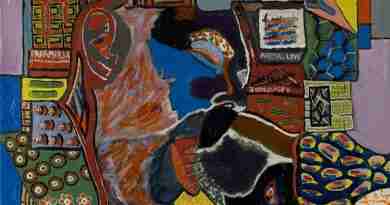
Tracey Emin: Unveiling the Raw and Personal in Contemporary Art
Transforming Personal Pain into Universal Art
Tracey Emin is one of the most compelling and provocative figures in contemporary art, renowned for an unabashedly raw, autobiographical language. Working across neon, video, sculpture, drawing, and found objects, she turns lived experience into material: not as confession for its own sake, but as a method for making private states publicly legible. Emin’s practice insists that vulnerability can be a formal strategy, and that honesty can function as aesthetic force.
From biography to artistic method
Born in Croydon, South London, in 1963, Emin studied at Maidstone College of Art and later at the Royal College of Art in London. From the beginning, her work was marked by a confessional intensity that would later bring her international recognition. In the 1990s, she rose to prominence in dialogue with the Young British Artists (YBAs), a context defined by risk-taking, media visibility, and a willingness to test the border between art and life. Emin stood out for the way she made that border not just porous, but structurally central to the work.
“My Bed”: crisis as form
Among Emin’s most iconic works is My Bed (1998): an installation consisting of her unmade bed surrounded by the debris of a depressive period. The work collapses categories that are typically kept apart: artwork and evidence, exhibition and aftermath, intimacy and public display. By presenting a private space as a sculptural field, Emin challenges assumptions about taste, value, and what can carry meaning in a museum context.
The power of My Bed lies in its refusal to “aestheticize” pain into something distant. Instead, it puts viewers close to a reality that is usually hidden: mental health as material fact, not metaphor. The work is not simply about the artist; it becomes a mirror for shame, exhaustion, loneliness, and survival.
Neon: desire, language, and the glow of confession
Emin’s neon works are another defining strand of her practice. Using her handwritten phrases in luminous tubing, she transforms language into presence: statements that hover between love letter, threat, memory, and prayer. The choice of neon, historically linked to commerce and nightlife, matters because it carries a built-in tension. In Emin’s hands, the seduction of the medium amplifies emotional directness, turning personal declarations into public atmosphere.
Video and the performance of memory
Video is central to Emin’s ability to merge storytelling with exposure. In Why I Never Became a Dancer (1995), she constructs a narrative that moves through adolescence, humiliation, and resilience, culminating in a bodily release that reads as both confrontation and catharsis. The work demonstrates a core Emin strategy: using the artist’s own voice and body to control the terms of the story, refusing both silence and victimhood.
Sculpture and found objects: turning the ordinary into evidence
Sculpture and found objects extend the autobiographical dimension into three-dimensional space. Everyday items become charged with history, while bronze works introduce a different register: endurance, gravity, monument. Pieces such as Roman Standard (2005) combine vulnerability and authority, suggesting that fragility can stand upright, and that tenderness can be a form of strength.
Drawing and painting: immediacy as emotional truth
Emin’s drawings and paintings push emotional immediacy to the surface. Her line often feels urgent, exposed, and physically close to the body. Works on paper, including series such as Purple Virgin, unfold themes of love, longing, sex, grief, and selfhood with a directness that rejects “polish” as a substitute for meaning. The rawness is not a lack of skill; it is the chosen temperature of the work.
From the personal to the universal
What makes Emin’s practice endure is her ability to produce universal recognition through intensely personal material. Love, shame, desire, rage, abandonment, and the need to be seen are not private themes; they are human constants. Emin’s work invites viewers into proximity with these states, creating a relationship where empathy is not sentimental, but structural.
In this sense, her art functions less like autobiography and more like a public language for what is often unspeakable. It gives form to experiences many people carry silently, and it does so without apology.
Recognition, evolution, and the work after illness
Emin represented Great Britain at the Venice Biennale in 2007 and was elected to the Royal Academy of Arts in 2011. Her work is held in major international collections, and she has continued to evolve across media while maintaining her signature emotional clarity. In recent years, she has also spoken publicly about illness, adding a new layer to her ongoing exploration of mortality, survival, and the body as both subject and site.

“A Fortnight of Tears”: grief as a complete environment
A significant late chapter in her practice is A Fortnight of Tears (2019), presented at White Cube Bermondsey in London: an exhibition that brought together painting, photography, and sculpture in a sustained meditation on love, loss, and the physical reality of grief. The show underlined Emin’s recurring achievement: transforming private suffering into shared space, where viewers can recognize their own emotional histories without needing to share the artist’s biography.
Conclusion
Tracey Emin’s legacy is profound because it reframes what strength can look like in art. She does not protect the viewer from discomfort, and she does not protect herself from exposure. Her work asks a difficult, enduring question: what happens when a life becomes material, and honesty becomes form?
By turning vulnerability into structure, Emin expanded the possibilities of contemporary art and opened a path for artists who refuse distance, who treat emotion as intelligence, and who insist that the personal can be a shared territory.