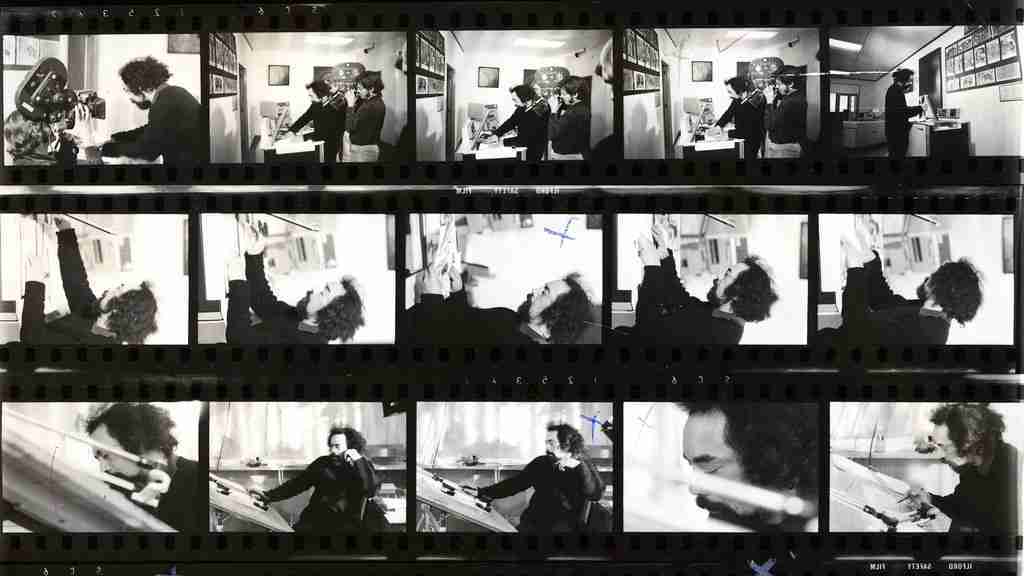
Ralph Hotere: The Artist Who Made Black Speak of Land, Fire, and Resistance
Ralph Hotere: Black, Protest, and the Māori Minimalism That Changed New Zealand Art
Ralph Hotere turned black into a field of memory, mourning, protest, and spiritual concentration. His art shows how minimal means can carry enormous political and emotional force.
Ralph Hotere, born Hone Papita Raukura Hotere in Mitimiti in 1931, was one of Aotearoa New Zealand’s most important late twentieth-century artists. Of Te Aupōuri descent, he developed a body of work that moved between painting, drawing, sculpture, installation, text, light, poetry, land, and protest.
Within the wider history of Antipodean art, Hotere occupies a crucial position. He made abstraction speak from a specific place: Māori memory, New Zealand landscape, Catholic imagery, political resistance, and the dark pressure of modern history. His paintings and installations are often spare, but never empty. They hold silence like a charge.
Why Ralph Hotere Matters
Hotere matters because he refused the idea that abstraction had to be detached from life. His art may look minimal at first: black fields, crosses, circles, lines, windows, fragments of text, metal, wood, and light. Yet those reduced forms carry questions of land, grief, colonisation, nuclear threat, environmental destruction, poetry, and collective memory.
He belongs in dialogue with artists such as Colin McCahon, whose text-based paintings gave New Zealand modernism a spiritual and existential weight. But Hotere’s voice is different. McCahon often made language feel like revelation. Hotere made language feel like an inscription after damage: a trace, a prayer, a warning, a wound.
This is what makes his work so powerful. It does not explain itself quickly. It asks the viewer to stay with blackness, with absence, with the edge between visibility and disappearance.
The Power of Black
Black is the central force in Hotere’s mature work. It is not simply a colour. It is a space of mourning, depth, resistance, and concentration. In the Black Paintings, small shifts of tone, line, circle, cross, or text interrupt near-monochrome surfaces. These interruptions are never decorative. They become events.
In Western modernism, black was often used to suggest reduction, purity, or formal discipline. In Hotere’s work, black also carries Māori associations, spiritual intensity, political grief, and historical pressure. The surface becomes a place where light is not absent but difficult. You have to look for it. You have to wait for it.
This makes Hotere’s minimalism very different from a purely formal minimalism. His work is not about removing meaning. It is about compressing meaning until it becomes almost unbearable.
Themes and Style
Hotere’s mature language is spare and exact. The colour black is a central field where light, line, and text do the work of meaning. In the Black Paintings, he set bands, crosses, circles, and words against near-monochrome grounds, sometimes combining poetry, prayer, and political reference. The results are contemplative and political at once.
His Māori heritage shaped this voice, but never in a simple illustrative way. Works often converse with tikanga, whakapapa, land, and language, while his collaborations with poets and writers introduced stencilled and handwritten text as structure. Later partnerships with Bill Culbert brought electric light into play, extending the conversation between darkness and illumination.
Hotere’s art is therefore built on tension: black and light, silence and language, abstraction and protest, personal grief and collective history. He shows that restraint can be more devastating than excess.
Black Painting: Minimal Surface, Maximum Pressure
Black Painting presents a sombre plane where small shifts in tone carry emotional weight. Auckland Art Gallery connects these paintings with human rights concerns, geometric abstraction, and colour associations related to Māori art traditions. Words from poems enter as incantation and structure.
The achievement of these works lies in their refusal to overstate. Hotere does not fill the surface with information. He gives the viewer just enough: a line, a cross, a band, a word, a small chromatic vibration. The rest is pressure. The painting becomes an encounter with what cannot be easily represented.
This makes the Black Paintings central not only to New Zealand art but also to a broader history of abstraction. They show that minimalism can be local, spiritual, and politically charged. They also expand the story of postwar abstraction beyond the usual Euro-American frame.
Black Phoenix: Destruction, Renewal, and the Burnt Boat
Black Phoenix is one of Hotere’s major installations. It was assembled from the charred remains of the fishing boat Poitrel, destroyed by fire near Port Chalmers. In the gallery, the prow is staged with burnt planks arranged on the floor and wall, transforming wreckage into a powerful meditation on destruction and regeneration.
The title is crucial. The phoenix is a figure of rebirth through fire. But in Hotere’s hands, rebirth is not sentimental. The work does not erase damage. It preserves it. The burnt wood remains burnt. The object carries its wound into the museum.
This is one of Hotere’s strongest lessons: art does not have to heal by hiding violence. It can give form to what has been burned, broken, or threatened. Black Phoenix is not only about survival. It is about survival with memory intact.

Aramoana: When Art Becomes Protest
Hotere was also active in environmental and community protest. His Aramoana works responded to the proposal to build an aluminium smelter at Aramoana, near the entrance to Otago Harbour. This was not an abstract political concern for him. It was close to the land, community, and harbour around Port Chalmers where he lived and worked.
The Aramoana works show how Hotere could make political art without turning it into propaganda. He did not simply illustrate an issue. He transformed protest into a visual language of windows, blackness, obstruction, and warning. The work asks what happens when a landscape is treated as a resource instead of a living place.
This is why Hotere remains so relevant today. His art understood that ecological damage is also cultural damage. To threaten a place is to threaten memory, community, and ways of seeing.
Text, Poetry, and Collaboration
Words often enter Hotere’s work as fragments, quotations, dedications, or invocations. He collaborated with and responded to poets, including Hone Tuwhare and Bill Manhire, allowing language to become part of the visual structure. These words do not explain the painting from outside. They live inside it.
This places Hotere close to a wider tradition of artists who make text carry spiritual, political, or existential force. In New Zealand art, the comparison with Colin McCahon is unavoidable. Yet Hotere’s use of text is often more compressed, more elegiac, and more wounded. His words appear like remains after speech has almost failed.
That is part of their force. They do not decorate the image. They disturb it.
Hotere and Māori Modernism
Hotere’s work is central to understanding Māori modernism, but it resists any narrow label. He was not interested in producing identity as a fixed image for easy consumption. His art works through relation: to iwi, to land, to memory, to language, to political history, and to modern abstraction.
This is why Hotere can be read alongside contemporary Indigenous and Antipodean practices without being flattened into a category. Articles on Contemporary Indigenous Australian Art, Papunya Tula, and Fiona Pardington show different ways in which land, memory, ancestry, and image can become inseparable. Hotere’s path is his own: austere, dark, poetic, and politically alert.
His modernism is not imported and then adapted. It is remade from within Aotearoa New Zealand, from local pressure, Māori inheritance, Catholic imagery, global abstraction, and civic struggle.
Impact and Legacy
Hotere’s career traces a path from Northland to international recognition while staying close to community. He moved from drawing and painting into installation and collaboration, expanding what New Zealand art could hold. His work shows how minimal means can bring spiritual attention and civic urgency together.
Collections across Aotearoa hold key works, including Te Papa’s Black Phoenix and major Black Paintings in Auckland and Christchurch. These institutions continue to keep his questions active for new audiences.
His legacy is not only stylistic. It is ethical. Hotere showed that art can speak quietly and still refuse power. It can be restrained and still furious. It can be black and still full of light.
Conclusion: Silence as Resistance
Ralph Hotere’s art does not ask for quick interpretation. It asks for attention. It gives the viewer darkness, line, text, burnt wood, light, and silence. Then it waits.
That waiting is political. It resists the speed with which images are consumed and forgotten. It refuses spectacle. It insists that grief, land, memory, and protest need another tempo.
Hotere’s power lies there: in the black surface that does not close, in the burned object that refuses disappearance, in the word that survives as a trace, and in the edge of light that appears only after we have learned how to look.
Related Articles
- Exploring the Vibrant World of Antipodean Art
- Colin McCahon’s Text Paintings and Landscapes, Demystified
- Fiona Pardington at Biennale Arte 2026: The New Zealand Pavilion Between Extinction, Memory, and Vision
- Sidney Nolan: Iconic Australian Artist Depicting History
- Brett Whiteley: The Vibrant Visionary of Australian Art
- Contemporary Indigenous Australian Art: A Rich Tapestry of Tradition and Innovation
- Desert Strokes: The Cultural Resonance of Papunya Tula Art