Art Basel After the First Look
Art Basel 2026 From Timur Si-Qin to Pacita Abad, Nairy Baghramian, Ibrahim Mahama and Irma Blank, a day at Art
Read MoreContemporary Art Criticism, Interviews, Essays and Visual Politics
Contemporary Art Movements explores how art has changed from the late twentieth century to today. This section looks at the evolution of ideas, aesthetics and cultural tensions that shaped the global art scene. It examines the movements that emerged after modernism and postmodernism and how artists used new languages to rethink art, power and identity.
Here, contemporary art is not just visual decoration. It becomes a space of conflict, imagination and responsibility. The focus is on movements linked to feminism, queer culture, environmental activism, body politics and socially engaged practices. These artistic languages question authority, gender rules, capitalism, colonial heritage and the fragile relationship between individuals and society.
The aim of this category is to offer context, clarity and critical reflection. Each article helps readers understand how artistic movements are born, how they develop and why they still matter. By connecting past and present, this space shows how contemporary art movements continue to reshape aesthetics, redefine the role of artists and change the way we think about the world.
 Courtesy of Art Basel
 Art Basel 2026 From Timur Si-Qin to Pacita Abad, Nairy Baghramian, Ibrahim Mahama and Irma Blank, a day at Art
Read More Camille Eskell - Queens of Babylon Put On Your Crown
 Bodies, fabrics, traumas: how Camille Eskell turns vulnerability into visual strength This article about Camille Eskell was originally written and
Read More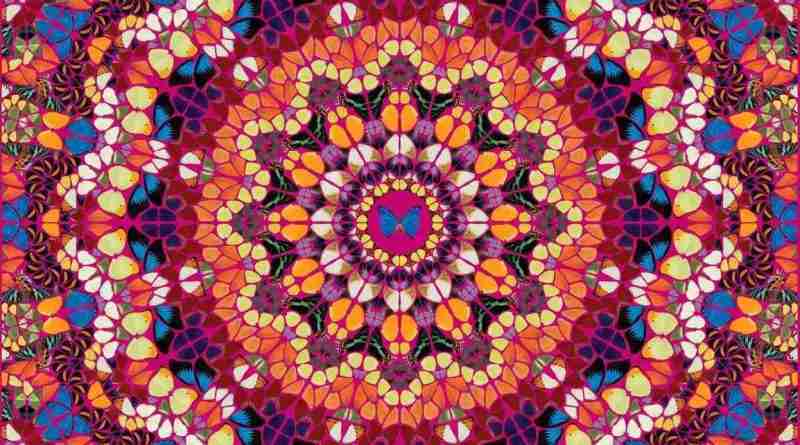 Damien Hirst - The Kaleidoscopes: Harlequin
 When Scandal Becomes a Medium From sharks in formaldehyde and butterfly rooms to toy copyright lawsuits and diamond skulls, this
Read More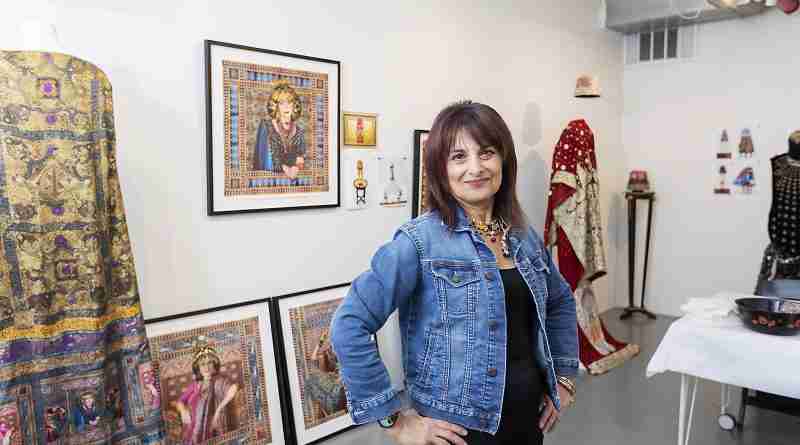 Camille Eskell (Photo courtesy of the artist)
 Family, patriarchy, and diaspora compressed into a single trembling cap There are artists who work mainly with material, and artists
Read More Arlene Rush poses with her installation “Rejection, Reject, Re…” (2019) at Pen and Brush. (Credits www.arlenerush.com)
 Turning Rejection into Artistic Practice This interview with Arlene Rush was originally written and published by me in Italian on
Read More
The Beginning of a Revolution Allan Kaprow (1927 – 2006) radically redefined what art could be. He was not satisfied
Read More Alison Knowles at BAMPFA, 2022 — Fluxus installation view.
 From Painting to Participation Alison Knowles was trained as a painter, but painting was never going to be large enough
Read More Yoko Ono in 1967
 Beyond the Myth: Yoko Ono and the Art of Participation From Fluxus to Instruction Art: how Yoko Ono reshaped conceptual
Read More George Maciunas, portrait — the visionary architect of Fluxus.
 George Maciunas was not simply the founder of Fluxus. He was its architect, administrator, designer, propagandist, publisher, distributor, urban planner
Read More Jason deCaires Taylor – Ocean Gaia: Immersion in the Japanese Sea (Credit www.underwatersculpture.com)
 Site & Symbolism Material, Ecology, and Time Cultural Resonance in Japan A Practice of Living Museums Public Art for the
Read More