Alison Knowles — Fluxus, Chance and the Poetry of Everyday Objects
From Painting to Participation Alison Knowles was trained as a painter, but painting was never going to be large enough
Read MoreContemporary Art Criticism, Interviews, Essays and Visual Politics
The Fluxus movement emerged in the early 1960s as a loose international network of artists, composers and poets. George Maciunas gave the network its name and became its main organiser. Fluxus rejected firm borders between music, performance, visual art and everyday life. A concert could involve breaking a piano, preparing food, opening a door or following a one-line instruction. The artistic act mattered more than the finished object.
George Brecht, Yoko Ono, Nam June Paik, Alison Knowles, Dick Higgins, Mieko Shiomi and Wolf Vostell developed its experimental language. They used event scores, mail, cheap editions, performances and ordinary objects. Their work questioned artistic skill, private ownership and the commercial value of unique objects. Many Fluxus works invited anyone to perform, copy, carry or reinterpret them.
This archive gathers articles, exhibitions and critical views on the Fluxus movement and its continuing influence. Fluxus remains difficult to define because it resisted fixed membership and a shared visual style. That refusal became one of its greatest strengths. It changed performance, conceptual art, video and artist publishing. Its legacy survives whenever art enters daily life and asks for participation instead of passive attention.
 Alison Knowles at BAMPFA, 2022 — Fluxus installation view.
 From Painting to Participation Alison Knowles was trained as a painter, but painting was never going to be large enough
Read More Yoko Ono in 1967
 Beyond the Myth: Yoko Ono and the Art of Participation From Fluxus to Instruction Art: how Yoko Ono reshaped conceptual
Read More George Maciunas, portrait — the visionary architect of Fluxus.
 George Maciunas was not simply the founder of Fluxus. He was its architect, administrator, designer, propagandist, publisher, distributor, urban planner
Read More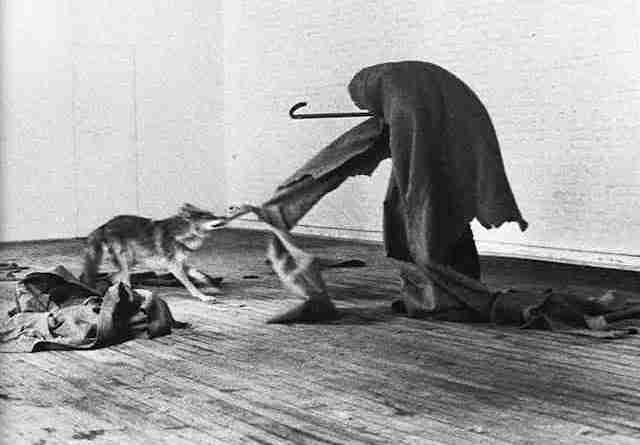 Joseph Beuys - I Like America and America Likes Me (1974)
 The Alchemist of Social Sculpture Few artists have redefined the boundaries between art, life, and politics as profoundly as Joseph
Read More Fluxus Art — redefining the boundary between art and life, 1960s avant-garde.
 The 1960s Art Movement that Transformed Performance, Participation, and Everyday Life. Fluxus, an avant-garde art movement that emerged in the
Read More
Performance Art: When the Artwork Is an Event Time, bodies, presence, and the audience: art that happens live—then lingers as
Read More