Who Owns Frida Kahlo? Mexico’s Fight to Keep Her Art at Home
The Gelman Collection, a disputed export permit and the growing distance between private ownership and cultural memory The Gelman Collection,
Read MoreContemporary Art Criticism, Interviews, Essays and Visual Politics
Frida Kahlo remains one of the most recognisable and frequently reproduced artists of the twentieth century. Her self-portraits, images of physical pain, Mexican identity, gender, disability, desire, and political commitment have become part of global visual culture. Yet her popularity can also obscure the complexity of her work.
This tag brings together articles, exhibitions, and critical essays that examine Frida Kahlo beyond the mythology surrounding her life. Her paintings are often read through biography, illness, her relationship with Diego Rivera, and the construction of an unmistakable public image. However, they also raise wider questions about the body, identity, colonial histories, nationalism, femininity, and the transformation of personal experience into political form.
These posts explore how Kahlo’s work continues to influence contemporary artists and debates around feminist art, queer identity, disability, self-representation, and cultural appropriation. They also consider how museums, publishing, fashion, and popular culture have turned Frida Kahlo into both an artistic icon and a commercial symbol. Her work is also examined within Magical Neorealism.
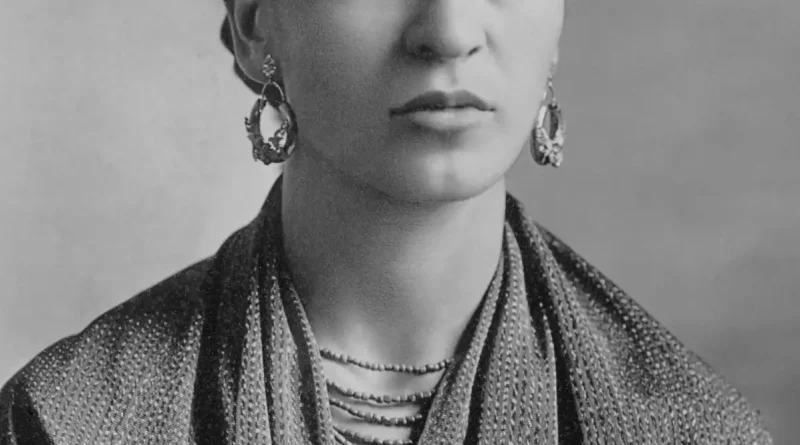 Frida Kahlo photographed by her father, Guillermo Kahlo.
 The Gelman Collection, a disputed export permit and the growing distance between private ownership and cultural memory The Gelman Collection,
Read More Frida Kahlo - The two Fridas
 A field guide to believable miracles in contemporary art Magical Neorealism is a way of seeing that keeps one eye
Read More Frida Kahlo self-portrait
 Art of One Impossible Truth Frida Kahlo’s paintings feel as concrete as a tiled floor after rain. Flesh, fabric, kitchen
Read More Closeup of Frida Kahlo and Diego Rivera Sculptur
 Diego Rivera and Frida Kahlo in Detroit: Art, Industry, and Transformation In the early 1930s, the vibrant city of Detroit
Read More