Pak’s The Merge: NFT Art, Record Sales, and the Future of Digital Collecting
How the most expensive NFT by a living artist challenges ownership, value, and the meaning of art When in December
Read MoreContemporary Art Criticism, Interviews, Essays and Visual Politics
Pak is an anonymous digital artist and one of the most influential figures in the development of crypto art and blockchain-based artistic practices. Working across digital images, moving forms, algorithms, editions, and token-based systems, Pak has expanded the concept of the artwork beyond the individual image to investigate value, scarcity, ownership, participation, and the structures of the digital art market.
Active in digital culture for more than two decades, Pak is also the founder and lead designer of the studio Undream and the creator of Archillect, an automated system designed to discover and circulate visual material. This interest in networks, algorithms, and the distribution of images predates the emergence of NFTs and remains central to Pak’s broader artistic practice.
Pak’s visual language is often radically minimal. Cubes, spheres, geometric structures, monochromatic surfaces, and continuously transforming digital forms replace traditional narrative imagery. This apparent simplicity shifts attention from representation toward the systems surrounding the artwork: how it is produced, owned, exchanged, multiplied, and assigned value.
These questions became particularly visible in The Fungible, presented with Sotheby’s and Nifty Gateway in 2021. The project used open editions and different token mechanisms to question conventional distinctions between uniqueness and multiplicity, transforming the sale itself into part of the conceptual structure of the artwork.
Another major project, The Merge, further challenged traditional ideas of collecting. Released on Nifty Gateway in 2021, the work allowed collectors to acquire units of digital “mass” capable of combining within individual wallets. Instead of offering a fixed object, Pak created an evolving system in which ownership, accumulation, scarcity, and participation became inseparable from the artistic experience.
Pak’s practice therefore occupies a territory between digital art, conceptual art, generative systems, blockchain art, and market critique. The technology is not simply a new medium for distributing images. Smart contracts, editions, ownership structures, and economic behaviour become materials through which the artwork itself is constructed.
The anonymity surrounding Pak also complicates conventional ideas of artistic identity and authorship. Rather than presenting a recognisable individual behind the work, Pak operates through a persistent digital identity, raising questions about whether authorship in networked culture necessarily requires a publicly identifiable human figure.
Within contemporary digital art, Pak has become particularly important for demonstrating how blockchain technology can be used conceptually rather than merely as a certification or sales mechanism. The work investigates the relationship between art and economic systems while testing how digital scarcity, collective participation, and programmable ownership can alter the meaning of an artwork.
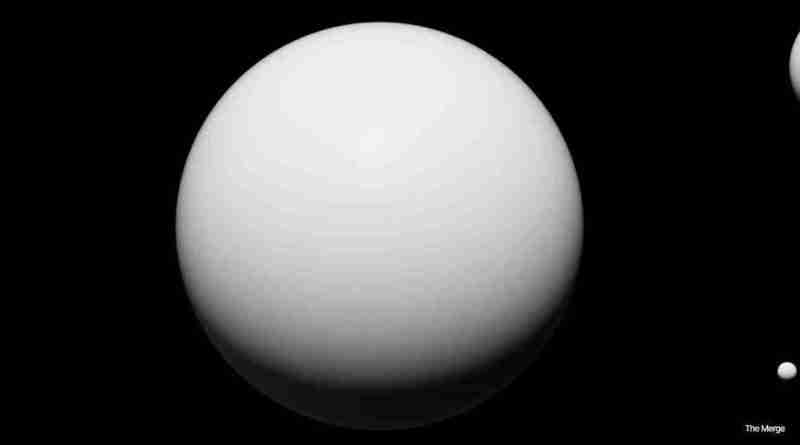 Pak — The Merge
 How the most expensive NFT by a living artist challenges ownership, value, and the meaning of art When in December
Read More