Patrick Angus: The Men Who Looked, Desire, AIDS and the Gaiety Theater
Men Who Looked: Why Rediscovery Is Not Enough Patrick Angus has become easier to admire than he ever was to
Read MoreContemporary Art Criticism, Interviews, Essays and Visual Politics
Patrick Angus was an American figurative painter whose work documented gay life, desire and loneliness in Los Angeles and New York during the 1970s and 1980s.
Working against the dominance of abstraction, Minimalism and conceptual art, Angus developed an observational painting style influenced by social realism and by David Hockney. His subjects included portraits, urban scenes, male nudes, bathhouses, bars and erotic dancers performing in New York venues such as the Gaiety Theater.
Rather than idealising the gay underground, Angus represented its contradictions: intimacy and isolation, spectacle and vulnerability, sexual freedom and economic marginalisation. His paintings give visibility to people and environments that were rarely admitted into museums or mainstream cultural narratives.
Angus received limited recognition during his lifetime and died from AIDS-related complications in 1992, aged thirty-eight. His work has since been reconsidered as an important contribution to American figurative painting, queer art and the visual history of the AIDS era.
Explore articles, exhibitions, paintings and critical perspectives related to Patrick Angus, his representations of queer life and his distinctive combination of realism, eroticism and emotional observation.
 Patrick Angus portrait
 Men Who Looked: Why Rediscovery Is Not Enough Patrick Angus has become easier to admire than he ever was to
Read More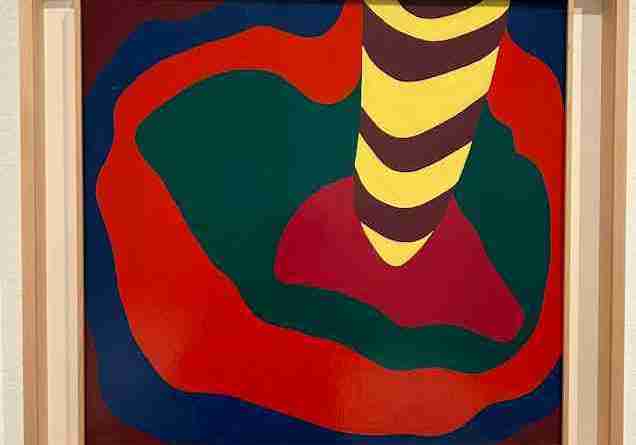 Mari Chordà - Coitus Pop 1967
 Mari Chordà, Patrick Angus, Miriam Cahn, and More: Celebrating Art that Challenges, Empowers, and Inspires Art has long been a
Read More