Maximalism in Art: Excess, Pattern and Visual Power
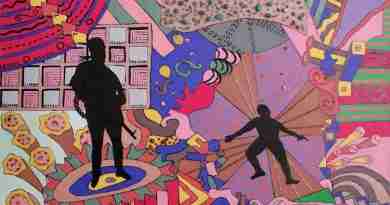
Maximalism in art is not clutter. It is excess turned into structure, memory, power and visual pressure.
Maximalism in art is often misunderstood as the simple opposite of Minimalism: more color, more decoration, more objects, more noise. That is the easy version, and also the weakest one. The real force of Maximalism begins when excess stops being ornament and becomes a way of thinking.
A maximalist artwork does not merely fill space. It pressures it. It can overwhelm the eye, but it can also expose how images, commodities, histories and identities pile up inside contemporary life. In this sense, Maximalism is not chaos. It is a controlled refusal of emptiness.
That refusal matters now because we do not live in a minimalist world. We live inside saturated feeds, museum spectacles, political images, advertising, pop icons, historical revivals, digital repetition and cultural overload. Maximalism in art does not escape that condition. It turns it into form.
What Maximalism in Art Really Means
Maximalism is not a license to throw everything into an image. Bad maximalism is only accumulation. Strong maximalism has rhythm, hierarchy, tension and consequence. It knows how to make abundance legible without making it polite.
This is why Maximalism in art should not be reduced to “more is more.” That slogan is useful, but it is not enough. The question is not only how much an artist adds. The sharper question is what the excess does.
Does it seduce? Does it suffocate? Does it parody wealth? Does it turn trauma into pattern? Does it make the viewer feel trapped inside beauty? Does it reveal that decoration has always been political?
Seen this way, Maximalism is not the decorative cousin of serious art. It is one of the places where contemporary art shows how overloaded the modern subject has become.
Against Minimalism, but Not Without It
Maximalism became easier to name once Minimalism had established its own discipline: reduction, industrial clarity, repetition, restraint, objecthood. Minimalism removed the unnecessary and asked the viewer to confront space, material and perception.
Maximalism answers differently. It does not trust emptiness as a neutral condition. It suspects that restraint can become another form of authority. Instead of purifying the artwork, it contaminates it with pattern, story, color, body, commodity, memory and contradiction.
However, the two are not simple enemies. Many maximalist works depend on repetition, seriality and structure, just as Minimalism did. The difference is temperature. Minimalism often cools the room. Maximalism raises the pressure until looking becomes almost physical.
Historical Roots: Baroque, Victorian Taste and the Theatre of Power
The roots of Maximalism in art reach far beyond the late twentieth century. Baroque churches, court interiors, Victorian rooms, religious altarpieces, rococo surfaces and ceremonial architecture all understood that abundance could organize power. The Victoria and Albert Museum describes Baroque as a highly ornate and elaborate style that spread across Europe and beyond, and that global ambition is part of the story.
Ornament was never innocent. Gold, mirrors, folds, frescoes, textiles, floral motifs and architectural drama told viewers where authority lived. Beauty became persuasion. Excess became theatre.
Contemporary Maximalism inherits this history, but it often turns the old language against itself. Instead of glorifying church, empire, aristocracy or wealth, it can reveal how power still hides inside spectacle. The surface becomes a battlefield.
Pop Art, Kitsch and the Return of the Overloaded Image
Modern Maximalism also grows from Pop Art. Pop taught artists that mass culture was not outside art. Supermarkets, celebrities, comics, packaging, magazines and advertising were already shaping desire more aggressively than museums.
From there, it becomes easier to understand why Neo-Pop Art, Kitsch Art and Pop Surrealism matter to Maximalism. These languages refuse the clean border between serious taste and popular seduction. They know that bad taste is often where culture reveals its secret desires.
Kitsch, especially, is crucial. It is not only cheap sentiment or decorative excess. In the hands of artists such as Jeff Koons, Mark Ryden or Takashi Murakami, kitsch becomes a test of sincerity, manipulation and belief. The image looks easy, but it is not harmless.
Yayoi Kusama: Repetition as Infinity and Self-Obliteration
Yayoi Kusama is one of the clearest examples of how Maximalism in art can move beyond decoration. Her polka dots, nets, pumpkins, mirrored rooms and immersive installations are visually seductive, but their power does not come only from visual pleasure.
Kusama’s work turns repetition into a psychological environment. A dot is simple. Thousands of dots become a system. They cover objects, bodies, rooms and perception itself. The viewer does not stand outside the pattern. The viewer becomes absorbed by it.
The Yayoi Kusama Museum connects her practice to self-obliteration through the obsessive repetition and multiplication of motifs. This matters because her Maximalism is not merely joyful. It is also existential. Excess becomes a way to dissolve the self and survive it.
Her early soft sculptures make this even clearer. MoMA presents Accumulation No. 1 as an early example of soft sculpture, created in the same New York environment where Pop, object culture and bodily repetition were colliding. That history links Kusama not only to Maximalism, but also to Soft Sculpture and installation art.

Takashi Murakami and Superflat: When Surface Becomes Diagnosis
Takashi Murakami brings Maximalism in art into the age of anime, manga, luxury branding, studio production and global pop circulation. His images are bright, flat, cute, monstrous, commercial and historically loaded at the same time.
Murakami’s idea of Superflat is essential because it shows that surface is not superficial. It can contain trauma, commodity culture, tradition, fantasy and market logic. The surface does not hide depth. It compresses it.
The official Kaikai Kiki profile places Murakami’s Superflat exhibitions within a wider curatorial and cultural project. That is why Murakami cannot be read only as an artist of flowers and smiling icons. His Maximalism works like a machine: it produces beauty, merchandise, critique and contradiction in the same breath.
In Murakami, excess is not a decorative surplus. It is the operating system of contemporary image culture.
Grayson Perry: Ornament, Class and the Violence of Taste
Grayson Perry gives Maximalism another intelligence. His ceramics, tapestries, prints and objects use pattern and ornament to speak about class, gender, identity, sexuality, religion and social performance.
Perry understands that taste is never neutral. What a society calls elegant, vulgar, refined, tacky or excessive often reveals who has the power to define culture. His vases may look decorative at first, but they behave like social maps. They carry jokes, wounds, autobiographical fragments, national anxieties and class codes.
Victoria Miro describes Perry as a chronicler of contemporary life who works through identity, gender, social status, sexuality, religion, decor and decorum. That is precisely why he belongs in this discussion. His maximal surfaces do not hide meaning. They multiply it.
With Perry, Maximalism in art becomes a critique of taste itself.
Kehinde Wiley: Pattern, Portraiture and the Rewriting of Power
Kehinde Wiley uses visual abundance in a different way. His portraits place Black subjects inside the grammar of historical power: heroic scale, classical poses, lush backgrounds, floral pattern, decorative intensity and art-historical quotation.
The excess in Wiley’s paintings is not only beautiful. It interrupts the hierarchy of portraiture. The figure and the background compete, merge and challenge one another. Pattern does not stay behind the subject. It pushes forward, sometimes threatening to swallow the body, sometimes crowning it.
The artist’s own studio notes that Wiley situates himself within the portrait painting tradition. That tradition matters because the history of portraiture is also a history of who was granted visibility, status and symbolic force.
Here Maximalism in art becomes political without becoming a slogan. It rewrites the old visual codes of dignity, wealth and domination from inside the image.
When Maximalism Becomes Immersive
Maximalism is not limited to painting. It becomes especially powerful when it enters rooms, bodies and environments. Kusama’s mirrored spaces, textile installations, Pop environments, soft sculpture and immersive digital works all push art beyond the framed image.
This is why Maximalism connects naturally to installation. Once the artwork becomes an environment, excess is no longer only something we see. It becomes something we move through. Scale changes the viewer’s role. The body is no longer outside the work, calmly judging it from a safe distance.
That shift links Maximalism to the wider history of physical and virtual experience in contemporary art. Today, immersive exhibitions, digital projections and spectacular environments often use maximalist strategies, although not always with the same depth. Some become pure entertainment. Others use overload to make perception unstable.
Why Maximalism Is Not the Same as Visual Noise
The danger of Maximalism is obvious. It can become style without thought. It can turn into decorative content, Instagram bait, luxury wallpaper or empty spectacle. Not every crowded image is complex. Not every colorful surface is alive.
Strong Maximalism needs internal pressure. The elements must collide for a reason. Pattern, color, scale, ornament, narrative and repetition must produce meaning, not only sensation.
That is the difference between visual noise and maximalist force. Noise only occupies attention. Maximalism organizes attention until the viewer begins to feel the logic of overload.
This is also why Maximalism in art remains relevant. It offers a way to think about our present without pretending that the present is clean, silent or ordered. It accepts that contemporary life is excessive, but it refuses to let excess remain stupid.
Maximalism in the 1990s and After
The late twentieth century gave Maximalism new energy. The 1980s and 1990s brought spectacle, Neo-Expressionism, market expansion, identity politics, media culture, installation, Young British Artists, Neo-Pop and a renewed taste for visual intensity.
That context is explored further in Decade of Excess: Exploring the Maximalist Art Movement of the 1990s, where Maximalism appears not only as a style, but as a symptom of a larger cultural shift. Art was becoming more theatrical, more mediated, more global and more entangled with money, celebrity and public shock.
After the 1990s, the logic of excess did not disappear. It migrated into biennials, immersive shows, digital art, fashion collaborations, artist brands and the online image economy. In many ways, the internet made everyone live inside a maximalist archive.
Conclusion: Excess Is Only Powerful When It Has Consequence
Maximalism in art is not the celebration of having too much. It is the question of what too much does to the eye, to the body, to memory and to power.
In Kusama, excess becomes infinity and self-obliteration. In Murakami, it becomes surface, commodity and cultural diagnosis. In Perry, it becomes class, taste and autobiography. In Wiley, it becomes portraiture, visibility and the rewriting of historical authority.
The best Maximalism does not decorate the world. It exposes the world’s appetite for decoration, spectacle, beauty, status and overload. It understands that we are already surrounded by too many images. Then it asks a harder question: can excess still make us see?
That is why Maximalism remains more than a style. At its strongest, it is a form of pressure. It does not whisper. It accumulates, seduces, disturbs and insists until the surface can no longer be dismissed as surface.
Related Articles
- Yayoi Kusama’s Infinity Mirror Rooms: The Polka-Dot Artist Who Turned Installation Art into a Global Obsession
- Soft Sculpture: When Fabric, Foam and Flesh Replaced Stone
- Takashi Murakami: Bridging Tradition and Pop Culture
- What Is Superflat? Japanese Art, Pop Culture, and Murakami
- Grayson Perry: The Provocative Tapestries of Identity, Class and Excess
- Kehinde Wiley: Black Identity and Representation
- Neo-Pop Art: A Vivid Reimagining of Pop Culture and Consumerism
- Kitsch Art Movement: Taste Wars and Aesthetic Power
- Decade of Excess: Exploring the Maximalist Art Movement of the 1990s
- Pop Art: A Revolutionary Movement in Art History