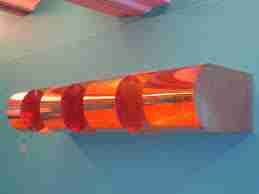
Donald Judd: The Purity of Form in Minimalism
Donald Judd; purity of form, “specific objects”, and the discipline of space
Donald Judd stands as a central figure in the Minimalist movement, renowned for his rigorous approach to form and his unwavering commitment to the purity of the object in space. His simple, repetitive structures and precise use of industrial materials revolutionized postwar sculpture, challenging inherited ideas of composition, symbolism, and craft. Judd did not want sculpture to “represent” anything; he wanted it to exist, with the clarity of a fact. In this post we explore his artistic formation, the defining qualities of his work, and the enduring impact of his contribution to Minimalism and contemporary art.
Early life and artistic formation
Born in 1928 in Excelsior Springs, Missouri, Donald Judd initially pursued painting and studied philosophy at Columbia University. Like many artists of his generation, he absorbed the dominance of Abstract Expressionism, then grew dissatisfied with its emotive rhetoric and gestural heroism. What he wanted was a more direct relationship between work, material, and viewer, without the performance of “expression” as a substitute for structure.
In the late 1950s Judd began moving toward three dimensional form. This shift was not simply a change of medium, it was a change of ethics. By the early 1960s he embraced a reductive aesthetic based on geometry, repetition, and physical presence, building a language where the object does not point away from itself.
Defining Minimalism; simple forms, repeated with intent
Judd’s work is characterized by clarity, precision, and a refusal of illusion. He rejected traditional sculptural techniques such as modeling and casting, favoring industrial materials and fabrication. This decision was not about style. It was a way to remove expressive trace, so the work could insist on what it is; an object, made of specific materials, occupying real space.
Repetition is one of Judd’s most distinctive strategies. Identical units, arranged with strict regularity, create rhythm without narrative and order without hierarchy. In works such as Untitled (Stack) (1967), the form repeats up the wall, separated by equal intervals. The “composition” is not a picture on a wall, it is a measured encounter with vertical space. Your eye does not search for a focal point; it moves, counts, pauses, and becomes aware of the room.
The purity of the object in space
Central to Judd’s philosophy is the idea of the autonomous object, present without representation. Minimalism often gets reduced to a look, but for Judd it was a structural position. The work should not be a metaphor, a symbol, or a scene. It should be a physical presence that makes perception itself the subject.
This is where Judd’s thinking about “object in space” becomes crucial. His works are designed to interact with their environment through scale, spacing, reflection, and the way light hits edges and planes.
In his essay “Specific Objects,” Judd argued for an art that sits between painting and sculpture, refusing the categories that kept form obedient to old expectations.
Untitled (Progression) (1965) makes this visible. A sequence of rectangular units runs along the wall, increasing according to a mathematical progression. The work is neither image nor monument. It is a measured proposition. As you walk, the piece changes. Light and shadow activate the gaps. The wall becomes part of the work’s logic, and the room becomes part of the viewing.
Industrial materials and fabrication; the removal of “hand”
Judd’s use of industrial materials and fabrication techniques was revolutionary. Steel, aluminum, and Plexiglas allowed for extreme precision and consistency, supporting the clarity he pursued. These materials also carry an unapologetic modernity. They do not pretend to be timeless. They announce their era, their manufacture, their engineered exactness.
Judd frequently collaborated with fabricators to produce works according to strict specifications. This was a deliberate refusal of artisanal aura. By minimizing the trace of the artist’s hand, he shifted attention to proportion, surface, edge, and interval. The work’s authority comes from decisions, not from gesture.

In the Untitled (Stacks) (1967), anodized aluminum and exact spacing create a sleek, almost clinical rhythm. Yet the effect is not sterile. It is intensely perceptual. The boxes catch light differently as you move. The gaps become as meaningful as the solids. What seems “simple” reveals itself as carefully tuned.
Legacy; Minimalism as a method, not a style
Donald Judd’s contributions to Minimalism and contemporary art are profound and enduring. By redefining sculpture as a relationship between object and space, he opened a path for installation practices, serial structures, and an expanded understanding of how art can occupy architecture. His work remains a touchstone in debates about form, authorship, and the conditions of looking.
Judd’s influence extends beyond the gallery. Architecture, design, and even philosophical discourse continue to draw from his insistence on simplicity, clarity, and function. Yet his Minimalism is not decoration. It is discipline. It is the belief that reduction can intensify experience rather than impoverish it.
Reflecting on Judd’s artistic journey
Judd’s art asks for attention that is slow, bodily, and spatial. His works are not puzzles to interpret, they are conditions to inhabit. They teach us that meaning can arise through proportion, repetition, interval, and material truth, and that the simplest structure can produce the most precise form of intensity.
In the end, Judd’s legacy is a reminder that Minimalism is not emptiness. It is concentration. It strips away the noisy alibis of imagery and returns us to what is fundamental; object, space, light, time, and the act of looking.
Related articles
- Frank Stella; the Master of Minimalism and Geometric Abstraction
- Sol LeWitt; Pioneering Conceptual Art and Minimalism
- Conceptual Art; Revolutionizing the Art World Since the 1960s
- Serial Art; Repetition, Variation, and the Evolution of Contemporary Art
- American Figurative Expressionism; context and aftermath


