Donald Judd: The Purity of Form in Minimalism
Donald Judd; purity of form, “specific objects”, and the discipline of space Donald Judd stands as a central figure in
Read MoreContemporary Art Criticism, Interviews, Essays and Visual Politics
Minimalism in contemporary art is usually reduced to reduction itself. Yet its real force lies in the relationship between object, space, body and attention. From the 1960s onward, serial forms, industrial materials and restrained gestures shifted the work away from private expression and towards the viewer’s physical encounter with it.
This archive brings together articles, exhibitions, interviews and critical readings of Minimalism, including the ways its visual language survives, mutates and acquires political meaning in contemporary practice. Less, after all, is never automatically neutral.
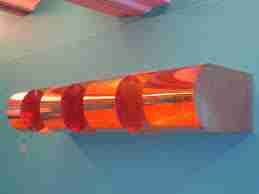 Donald Judd, Untitled (Progression sculptures)
 Donald Judd; purity of form, “specific objects”, and the discipline of space Donald Judd stands as a central figure in
Read More Gary Hume — Jealousy and Passion
 Transforming the Ordinary into the Extraordinary with Minimalism and Gloss Gary Hume is synonymous with bright, glossy surfaces and reductive
Read More Abstract
 Contemporary art; identity, boundaries, and the problem of defining a moving target Contemporary art, a term that generally refers to
Read More
Sol LeWitt; the idea as a machine, rules as authorship, drawing as architecture Sol LeWitt stands as a transformative figure
Read More
Hard-Edge Painting: Sharp Geometry, Flat Color, and the Cool Rebellion Against Abstract Expressionism Hard-edge painting is one of the clearest
Read More Keith Sonnier — Untitled
 From Minimalism to Anti-Form: When Structure Broke and Materials Took Over By the early 1960s, the art world was undergoing
Read More