Art as Interruption: The Transformative Power of Public Art Interventions
The Power of Art Interventions: How Artists Disrupt Spaces and Engage the Public
Art interventions are unexpected creative actions that enter our everyday spaces and quietly, or loudly, transform them. These works interrupt routine. They shift perception and invite viewers to rethink their relationship with the environment around them. From subtle gestures to monumental projects, art interventions turn streets, buildings, and public institutions into temporary stages for reflection and debate.
One of the most iconic examples comes from Christo and Jeanne-Claude. Their large-scale wrappings, such as the Pont Neuf in Paris and the Reichstag in Berlin, temporarily covered familiar landmarks in fabric. By hiding these buildings, they paradoxically made them more visible. Viewers were forced to rediscover their contours, histories, and symbolic weight as if seeing them for the first time.
Street Art and Urban Interventions
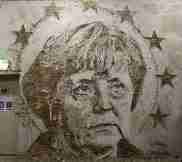
In dense urban contexts, art interventions often take the form of street art. In New York and many other cities, Banksy‘s stencils appear overnight on walls, bridges or shop fronts. These images function as fast, sharp commentaries on politics, capitalism, surveillance or inequality. They turn anonymous corners into instant meeting points where passers-by stop, photograph and argue about what the work means.
At the same time, Ai Weiwei has used installations to question power structures and human rights violations. His sea of hand-painted porcelain sunflower seeds in Tate Modern’s Turbine Hall invited viewers to walk across what looked like a mass-produced industrial surface. In reality each seed was unique and handmade, pushing people to think about labour, individuality and the scale of contemporary production in China.
The Impact of Art Interventions
All of these interventions use surprise and displacement as tools. The works are not simply placed in a neutral setting. Instead, they are woven into the specific histories, tensions, and memories of the sites they occupy. A stencil on a border wall, a fabric-wrapped parliament building, or a field of porcelain in a former power station all carry different meanings because of the context.
By repositioning art in streets, rivers, bridges, or contested public spaces, these projects expand the audience beyond regular museum visitors. People encounter art on their way to work, during a protest, or while doing everyday errands. In this way, interventions push viewers into a dialogue with the work, the site, and with each other.
Damien Hirst and the Power of Provocation
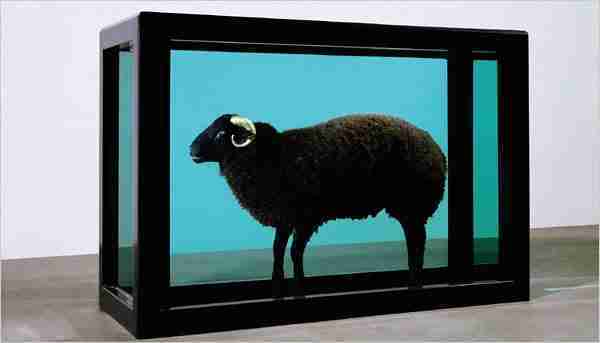
The story of art interventions also includes more confrontational gestures inside galleries. In 1994, Damien Hirst curated the exhibition Some Went Mad, Some Ran Away at the Serpentine Gallery in London. One of the key works, Away from the Flock, presented a sheep preserved in a tank of formaldehyde. The piece highlighted the fragility of life, the blunt fact of death and the tension between scientific display and emotional response.
Hirst has often stated that he cares less about whether viewers like or dislike his work than about whether they engage with it. This desire for a strong reaction sits at the center of many art interventions. That logic became even clearer when artist Mark Bridger poured black ink into the tank of Away from the Flock. He effectively vandalised and renamed it Black Sheep. His intervention changed the appearance and meaning of Hirst’s work. It opened a new debate about authorship, ownership, and the limits of artistic rebellion.
Art Interventions and the Public Arena
Whether in a museum, on a city wall, or across a historic building, art interventions remind us that art does not belong only to protected, sanitized spaces. They stretch the definition of where art can be seen and who it is for. A giant teacup in a park, a wrapped bridge, a hacked sculpture, or a sudden mural all demand that we pause, reconsider, and respond.
These works encourage a broader public conversation about how we live together. They can highlight social injustice, environmental damage, political hypocrisy, or the simple beauty of overlooked corners of our cities. At their best, art interventions enrich the shared fabric of the public arena. They do so by asking difficult questions in ways that are visual, poetic, and sometimes playful.
The next time you encounter an unexpected artwork in the street or a transformed building on your commute, it is worth asking what kind of conversation it is trying to start. Which norms does it challenge? Whose voice does it amplify? Also, how might it change the way you see the space you move through every day?