Art Under Attack: The Defiance of Miriam Cahn’s Vision
When Art Challenges Comfort: The Attack on Miriam Cahn’s Work
The attack on Miriam Cahn’s artwork is a stark reminder that art still confronts and provokes, sometimes to the point of backlash. This is not only about a painting being defaced; it is about the uneasy tension that surfaces when an artist holds a mirror to society and shows us what we might prefer to ignore. Cahn’s work, shaped by themes of violence, power, and human suffering, forces the viewer into discomfort, a space where the margins of consciousness become impossible to keep at the margins.
Miriam Cahn’s artistic vision
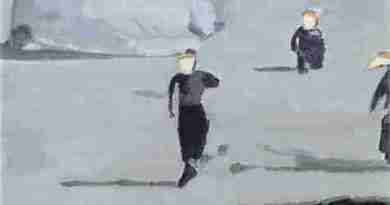
Miriam Cahn is known for visceral imagery that touches war, trauma, displacement, and the vulnerability of the human body. The painting that was attacked belongs to that same vocabulary of confrontation. It does not soothe; it insists. It asks the viewer to stay with what is difficult, to look at violence and victimization without the usual distancing mechanisms of media and rhetoric.
If the attacker hoped to silence the work, the gesture achieved the opposite. The damage exposes the painting’s impact and expands its public meaning. The act of vandalism becomes an unintended admission: the image has power, and the power is unsettling.
Vandalism as an attempt to control the narrative
Vandalism often stems from the desire to control a narrative: to shut down an artwork’s ability to circulate, to limit what others can interpret, or to block an encounter that feels threatening. In this case, the attack reads as a form of censorship by force, an attempt to overwrite an artist’s voice with a simpler, more comfortable version of reality.
Cahn’s work challenges that comfort. It refuses to make violence abstract. It refuses to let the viewer remain neutral. The intensity of the reaction suggests why art still matters: it can destabilize the stories we tell ourselves, and it can make denial feel impossible.

Miriam Cahn – Fuck Abstraction – Damaged
The artist’s commitment to bearing witness
Cahn’s practice has long been a form of bearing witness. Her paintings often operate like alarms: urgent, physical, and direct. They register the fragility of bodies and the brutality that societies normalize. Seen through that lens, the attack is not only damage to a surface; it is an assault on the act of witnessing itself.
And yet, the attempt to destroy the work also amplifies its message. The painting becomes a document twice over: first as an image, and then as a wounded object that shows how quickly discomfort can turn into aggression.
Art as a battleground for ideas
Art has always been a battleground for ideas, because images do not merely decorate reality; they shape it. When someone tries to destroy an artwork because it creates discomfort, they acknowledge art’s capacity to intervene. That intervention is precisely what Cahn’s work insists on: not agreement, but confrontation; not comfort, but clarity.
The episode also raises a question that extends beyond one painting. If an artwork can be attacked for what it shows, then the real subject is not only the image, but the boundaries of what a society allows itself to see.
Conclusion: the resilience of art
In the end, the damage done to Miriam Cahn’s painting does not silence it. If anything, it makes the work louder. It draws attention to the conversation Cahn forces: the realities that remain urgent even when we try to look away. The ideas inside an artwork cannot be erased with a smear of paint or a cut in the canvas. This incident reminds us that art is resilient, and that voices like Cahn’s continue to resonate precisely because they refuse the easy exit of comfort.