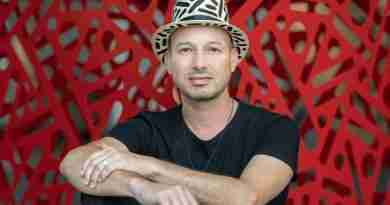
Tuan Andrew Nguyen at the Venice Biennale 2026: What History Cannot Resolve
Tuan Andrew Nguyen and the Histories That Refuse to Be Resolved
Translation of the original Italian article published by Artribune on August 16, 2026. Read the Italian version on Artribune.
With Ñi Demoon, Ño Delusi, presented within In Minor Keys, the Vietnamese artist explores the unstable territories between archive, myth, colonialism and memory. Without turning trauma into a reassuring narrative.
At the 2026 Venice Art Biennale, while many works seem to seek an immediate translation into the global language of contemporary art, (Ho Chi Minh, 1976) Tuan Andrew Nguyen’s work instead remains opaque, unstable, difficult to consume quickly. And perhaps that is precisely where the work begins.
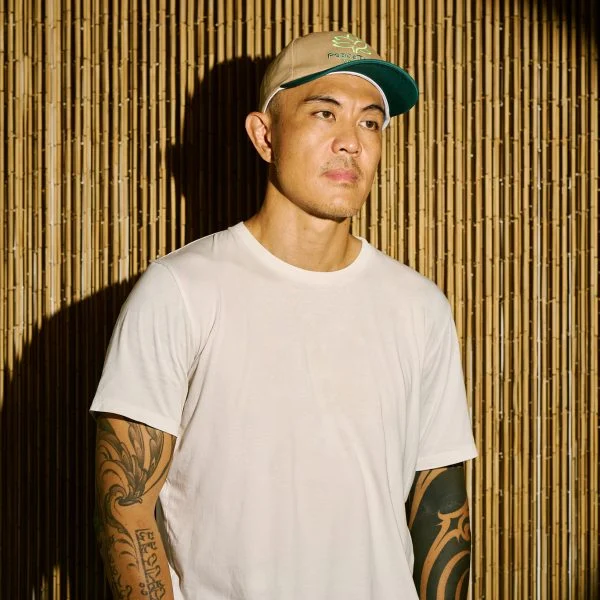
History never appears as something stable or definitively interpretable. In his images, there is always something that escapes the stability of narrative. Memory merges with invention, the document with myth, history with what continues to survive orally and emotionally.
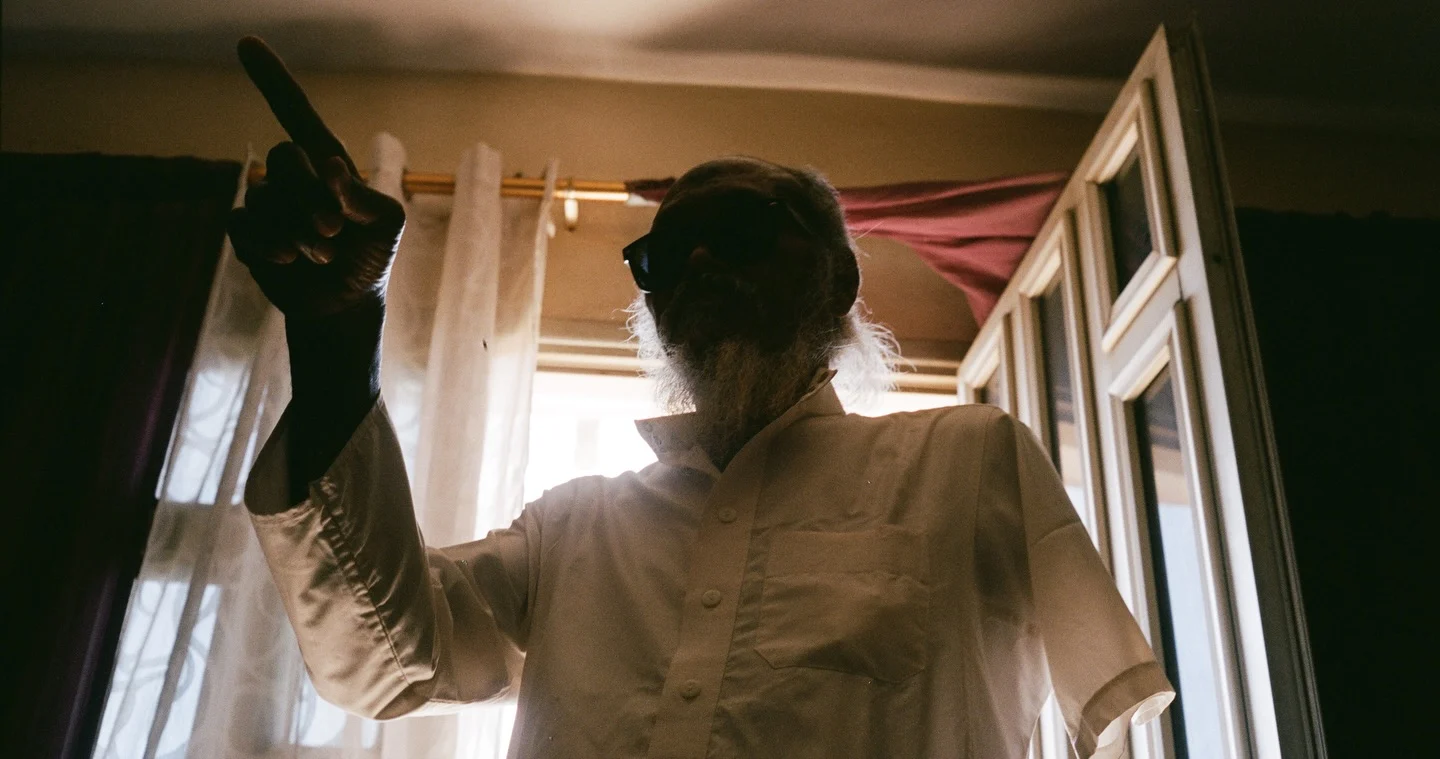
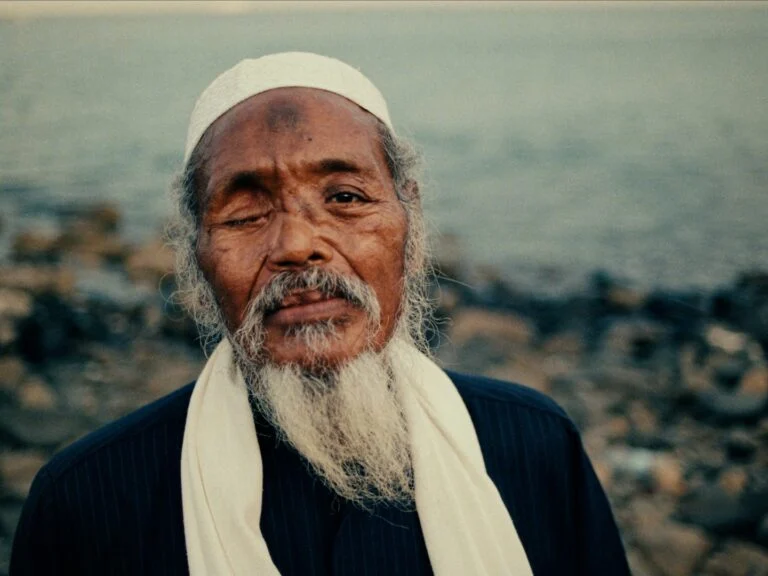
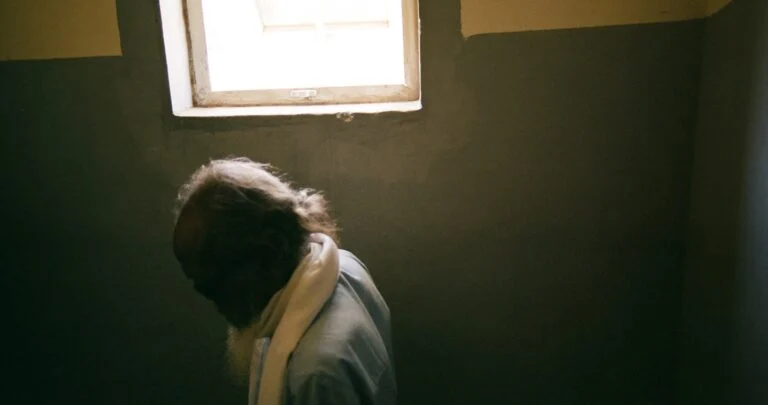
At the 2026 Venice Art Biennale, within In Minor Keys, Nguyen presents Ñi Demoon, Ño Delusi (“Those Who Left, Are Those Who Return”), a two-channel video installation emerging from the story of Bouba Chinois, a legendary and controversial figure in Senegal between the 1970s and the 1990s.
He is a figure difficult to place: a criminal to some, a revolutionary to others, by now almost an urban legend.
We interviewed Tuan Andrew Nguyen during the 2026 Venice Biennale.
Interview with Tuan Andrew Nguyen
Your work at the Biennale begins with a figure who seems to exist simultaneously within history and myth. Who is Bouba Chinois, and what drew you to this story?
The work I am presenting for Koyo’s Venice Biennale is titled “Ñi Demoon, Ño Delusi.” It is a title in Wolof, translated to English, it means, “Those Who Left, Are Those Who Return.” It is a two-channel video installation in collaboration with a man named “Bouba Chinois.” He was a notorious bandit that operated in Senegal and throughout West Africa in the late 70’s to the 90’s. Bouba Chinois is his nickname. Chinois is French for Chinese, but Bouba is actually half Vietnamese. His father was a tirailleur senegalais who was fighting for the French during the revolutionary uprising against the French in what was then known as Indochina. His mother was a military nurse.
The piece that I’m presenting at Venice is a continuation of my work and my relationship with the Senegalese-Vietnamese community of Dakar, so on some level, it’s still an exploration of the war and subsequent movements of colonized subjects between colonized countries, namely Senegal and Vietnam, at a very turbulent and chaotic moment in French history. But it really hones in on one person who was born from this moment of collapse, and at this intersection between many forces/cultures/politics, and was deeply affected by the violence of it all and in turn, revolted within Senegalese society. Bouba Chinois exists as urban folklore, but the nuances and complexities of how he thinks, which ultimately ensured his survival, is what the film narrows in on.
In your films, there is always a moment when history stops behaving like an archive and almost begins to become a form of hallucination. What happens, for you, in that fracture between fact and invention?
Fiction reveals that there are multiple truths. Archives show us what remains; fiction lets us inhabit what was once lived. In Ñi Demoon, invention allows these histories to speak differently: to inhabit space, linger in time, and reach audiences in ways that pure documentation cannot.
What I’ve learned while making Ñi Demoon is that the line between fact and fiction is often more porous than we tend to think. Bouba Chinois’ life—and his own recounting of it—resists simple categorization. As he states in the film, Bouba Chinois is a Senegalese myth: revered by some, hated by others, both a criminal and a revolutionary. My team and I have tried to fact-check aspects of his story, but it has often been a difficult task. So the film for Venice walks the thin line between fact and fiction, storytelling and archive, between history and memory.
In reconstructing a life, you immediately encounter fiction: the gaps, the silences, the impossibility of fully capturing experience. And fabulations become tools for us to help fill in gaps in order to understand and empathize.
Many works at the Biennale today seem to move quickly through a ready-made institutional language: trauma, colonialism, identity, memory. Do you feel these histories are really being heard, or are they simply being absorbed into a new aesthetics of the contemporary?
I fear that the white noise of social media drowns out a lot of the important stories that need to be heard. But I also believe every story needs to be heard – by somebody, at least one person.
That being said, I think these histories are more visible than they’ve been before, but visibility isn’t the same as being heard. There’s a tendency for them to be translated into institutional language—curatorial, academic, even humanitarian—that makes them legible, but also flattens their edges. Something gets stabilized in that process.
At the same time, those frameworks are not neutral, but they’re not entirely empty either. They can create conditions for circulation, for encounter. So I don’t see it as a simple opposition.
What interests me is the friction—what resists being absorbed, or what exceeds the language that’s meant to contain it. In my work, I’m often thinking about how to hold onto that excess, or how to let certain things remain unresolved rather than fully translated.
When historically marginalized voices enter a global platform such as the Venice Biennale, what is gained, and what risks being neutralized?
Platforms like Venice Biennale can amplify stories that might otherwise remain unseen and unheard, opening dialogue across borders and giving them a wider stage. But the structures of prestige carry their own pressures: they can demand coherence where there is ambiguity.
In my films and artwork, I try to carry those edges into every space the work reaches—allowing fragments, silences, and unresolved moments to persist. It’s not about rejecting platforms, but about insisting that the histories I engage with maintain their urgency and resist full domestication, even in spaces that often want to tidy them up.
And my moving-image work tends to be much longer than the average attention span of a typical biennale visitor, and that adds to the challenges of amplifying or featuring voices.
After years spent working on war, diaspora, colonialism and memory, do you still believe art can produce understanding? Or is your work today primarily about trying to remain within contradiction without resolving it?
Oh, everything feels unresolved. I’ve become at ease with the idea that my work isn’t to resolve anything for the audience. And I’ve accepted that I will continue working through these stories and forgotten fragments until the end of my career. At this stage, I’m still asking how to let those fragments breathe, how to carry their friction and uncertainty into the work in more poignant and moving ways, and how to allow audiences to feel that unresolved space without leaving them feeling empty.
Antonino La Vela
Tuan Andrew Nguyen: Radiant Remembrance
Further reading
Tuan Andrew Nguyen: Radiant Remembrance
For readers interested in exploring Tuan Andrew Nguyen’s practice further, Radiant Remembrance offers a broader view of his work across memory, history, displacement and the lingering effects of colonial violence.
View Tuan Andrew Nguyen: Radiant Remembrance on Amazon →
As an Amazon Associate I earn from qualifying purchases.
Related Articles
- Danish Pavilion, Venice Biennale 2026: Who Brought Porn Stars into the Exhibition?
- The United Arab Emirates Pavilion at the Venice Biennale: Washwasha
- Ryoji Ikeda at the Venice Biennale: When Data Stops Being Neutral
- When Art Becomes Responsibility: Interview with Lynn Hershman Leeson
- The Story of the Guerrilla Girls: Interview with Robin Tewes