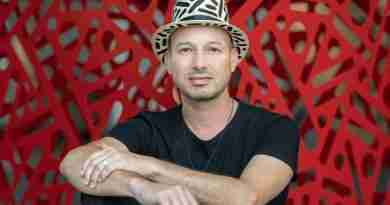
Judy Chicago in Venice
An interview on material, feminism, power, and the long work of changing art history
Link to the Italian shorter version on Artribune
This Interview connects to my hub, Feminism in Art Isn’t a Style: It’s a Battle Over Visibility, and to the Feminism category.
Interview and introduction by Antonino La Vela
Some interviews matter because of the person involved. Others matter because of the moment in which they happen. This one carries both kinds of weight. Judy Chicago arrives in Venice in 2026 with The Materiality of Judy Chicago, presented by Alberta Pane and curated by Allison Raddock, at a time when the art world is once again being forced to confront the structures it once treated as natural: exclusion, delayed recognition, the hierarchy between art and craft, and the habit of reducing women artists to one work, one label, one decade.
Chicago does not fit inside any of those reductions. Across more than six decades, she has built a body of work that moved through painting, drawing, , smoke, pyrotechnics, sculpture, porcelain, needlework, glass, tapestry, photography, and installation, while insisting that materials associated with women carry formal intelligence, historical force, and political consequence. Too often, that breadth has been flattened in public memory by the scale of The Dinner Party alone. This exhibition in Venice helps correct that view.
The context matters. Alberta Pane has brought to Venice a presentation that does not treat Chicago as a monument to be politely celebrated, but as a living artist whose work still presses on unresolved questions. Allison Raddock, who has worked closely with Chicago for years, frames the exhibition through material itself. That curatorial choice is not decorative. It goes to the center of Chicago’s practice, because in her work material is never neutral. It carries labor, gender, class, history, and often conflict.
The conversation also reaches beyond the exhibition. Massimiliano Gioni, who interviewed Chicago for the accompanying publication, is part of the wider critical frame around this moment. Venice, with its beauty, fragility, and long memory, becomes more than a prestigious location. It becomes an active setting for a return that feels historically charged. For an artist who has spent much of her life fighting to enter art history on equal terms, showing in Venice now is not a simple career milestone. It is a pointed re-entry into one of the places where cultural legitimacy is staged and recognized.
What interested me most was not producing a ceremonial interview. There is little value in speaking with Judy Chicago only to confirm what is already known. What mattered here was to create space for the tougher, more enduring questions inside her work: the politics of material, the invisibility of collaborative labor, the representation of masculinity and violence, the ethics of approaching trauma, ecological responsibility, and the slow, uneven process through which institutions finally begin to see what was in front of them all along.
Chicago’s answers have the clarity of someone who has spent decades being misread and therefore learned to speak with unusual precision. They also contain something rarer: continuity. The artist who once challenged the terms of artistic legitimacy has not softened those questions for easier consumption. She has expanded them. That is what makes this interview important for Venice, but also for the larger international conversation around feminist art and the canon.
For me, this exchange was also a reminder of what criticism and interviewing can still do when they are taken seriously. They can document a moment, yes, but they can also reposition it. They can connect the work, the exhibition, the curatorial choices, the publication, and the historical stakes into one readable field. That is how I wanted this text to function: not as a neutral transcript, but as an authored encounter with an artist whose work continues to alter how art history is written.
What follows is a conversation about Venice, materiality, gendered technique, collaboration, power, trauma, extinction, recognition, and unfinished work. More than that, it is a conversation with an artist who never accepted the limits that were assigned to her, and who still refuses them.
“Justice and equity for all creatures – both human and non-human – are the underlying principles of my work.”

Materiality, Venice, and the exhibition
The conversation begins with Venice itself, with the title of the exhibition, and with the question of why material remains such a sharp way of entering Chicago’s work. From there, the discussion opens onto the curatorial structure shaped by Allison Raddock and the particular charge of showing this body of work in Venice now.
The Venice exhibition is titled The Materiality of Judy Chicago. Why does “materiality” feel like the right key to read your practice in 2026?
I have worked with Allison Raddock, the curator of the exhibition, for many years and she is remarkably familiar with my work. Consequently, she titled the show to reflect the fact that I have worked in many varied materials because diverse media allow different forms of expression. In fact, over the last few years, I have had a number of major shows, all of which have emphasized what Hans Ulrich Obrist (Artistic Director at the Serpentine Galleries) mentioned in relation to “Revelations,” the show he did in 2024 (now at the Jood Museum in Amsterdam), that I am a ‘polymath’.
Your work insists that materials historically labeled as “craft” (porcelain, needlework, glass, textiles) carry intellectual and political power. What hierarchy were you trying to break then, and what hierarchy do you see persisting now?
Although much has been made about my investigation of media that have been labeled craft and therefore disparaged (china-painting, needlework and more recently, glass), I used to joke that I would work in ‘bubble gum’ if it seemed the right material for my aesthetic intentions. But I never selected techniques BECAUSE they were craft; for example, when I discovered china-painting in preparation for creating The Dinner Party (1974-1980), I was looking for a medium that fused color and surface (the color has to be fired onto the porcelain) and could be applied with a brush in order to achieve more visual detail than was possible with an air brush which was what I was using then. Similarly, when I decided to research the subject of birth, I recognized that the birth process can be very raw and needed a technique that would transform the subject matter. During The Dinner Party, I discovered that – even though I can neither stitch nor sew – I have an unaccountable ability to design for needlework, which offered the aesthetic potential of ‘softening’ the content. In both cases, china-painting and needlework, I recognized that one reason these fascinating techniques had been discounted was that women had done them and I liked the idea of challenging that arbitrary, gender-based bias.
How did you and curator Allison Raddock shape the selection for Venice: chronology, themes, or specific “material problems” you wanted the exhibition to stage?
Allison curated the show; she needs to answer this question, not me.
Allison’s response: I shaped the selection of this exhibition thematically, using material as the primary lens rather than following a strict chronology. Because Judy has worked across so many different media over six decades, it felt important that the exhibition reflects the way each material opened up a distinct form of expression in relation to each series.
Many of the techniques she has employed throughout her career have been historically marginalized because they were associated with women. Without reducing the work to that narrative, the exhibition allows viewers to see how her engagement with diverse materials has consistently challenged artistic hierarchies. So, while there is an implicit chronology, the show is really structured around the evolution of her material language and her commitment to pushing each material to its fullest aesthetic potential.
Venice is a city built on surfaces, ornament, craft traditions, and a fragile ecosystem. Do you feel resonance or tension between the city itself and your lifelong politics of making?
I love Venice but have never had a show there. But its long history as a center of art and culture resonates with my own reverence for art history and my abiding desire to become part of it. Thus, my pleasure was when Alberta Pane invited me to do a show at her gallery. And the physical fragility of the city should remind us of our own vulnerability and that of the earth, which we should cherish rather than destroy – which is of course, exactly what we are doing because of the patriarchal values that are dominant all over the world.
If a viewer only learns one thing from this show, what should it be about how form and politics actually connect in your work?
I don’t know about form and politics as they are strange bedfellows. Politics is time-bound and I have always tried to make art that can transcend political circumstances. I would say that justice and equity for all creatures – both human and non-human – are the underlying principles of my work and the values I hope viewers take away from the show.

Brooklyn Museum, Gift of the Elizabeth A. Sackler Foundation, 2002.10
© Chicago Woodman LLC, Judy Chicago/Artists Rights Society (ARS), New York – Photo © Chicago Woodman LLC, Donald Woodman/Artists Rights Society (ARS), New York
Signature works, methods, and collaboration
From The Dinner Party outward, the interview moves into method. Here Chicago speaks with particular clarity about the historical dismissal of so-called craft, the hidden labor inside ambitious projects, and the difference between individual authorship and collective making.
Many people enter your oeuvre through The Dinner Party. How do you want audiences to move beyond it, without diminishing its significance?
As much as I appreciate the ongoing recognition of The Dinner Party (now permanently housed at the Brooklyn Museum in New York), I used to ask; “will I live long enough to see the body of my art emerge from the shadow of that piece?” In the last few years, there has been a major transformation in the way my work is understood – thanks to several major shows in the U.S. and Europe – and, happily, I am exhibiting various aspects of my production all over the world. People are beginning to realize that The Dinner Party is only one work in my huge oeuvre, but it will be decades before its entirety will be recognized.
Collaboration and collective labor are structural in projects like The Dinner Party and the Birth Project. What is your ethical model for collaboration, credit, and care, and how has it evolved?
Throughout my career, I have gone back and forth between individual and collaborative work; much like media, each offers both a different process and different results. I have always thought big and for large-scale work (like The Dinner Party, the Birth Project or my more recent, monumental “Smoke Sculptures”), collaboration is essential as these projects required multiple people with a wide range of skills. But I’ve also done almost 150 sketch books which will be exhibited at the National Museum of Women in the Arts in Washington, D.C. in 2029, curated by Andrew Perchuk, Deputy Director of the Getty Research Institute. So, viewers will see my own hand and personal side of my work with which few people are familiar.
Even in projects like PowerPlay, which is large in scale but created by me working alone in the studio, there were people who made the canvases, built the moving easel I used and of course, the male models I employed as I was developing the images. As is the case in a considerable amount of art, there is ‘hidden collaboration’ that is almost never recognized. I have always tried to credit the people ‘behind the scenes,’ so to speak. Moreover, in my more obvious collaborations, I went out of my way to acknowledge my collaborators. In the Birth Project, the needleworkers used to say that they ‘created within my creations.’ In other words, not only did I credit them, but I tried to respect their talents and encourage them to bring those into my images as a way of enriching the works. I tried to share my own attitude of ‘being in service to art,’ which is how I’ve conducted myself throughout my career.
A long time ago, I lectured in New Zealand. When I showed some of the Birth Project images, I mentioned the various needleworkers by name. Afterwards, during the question-and-answer period, someone in the audience told me how struck they were by that because the week before, a major artist had spoken and mentioned several times that he could never have accomplished his work without his two assistants. When someone in the audience asked their names, he said that he “couldn’t remember.” But it is customary in the art world not to admit how much collaboration is involved in the creation of most art; still, it was shocking that he could say that.
Can you describe a moment when a material resisted you and forced a conceptual shift, for example a technical limitation that became part of the meaning?
Interesting question; yes, I can. Glass is an extremely challenging medium and I can still remember the moment when several pieces in my first series – which revolved around cast hands – broke in the kiln. I incorporated the breaks into the work without realizing that few collectors would want pieces that would remind them of the fragility of our bodies, which of course, was implied in the finished work. In fact, my whole experience of working in glass, which I’ve been doing since 2003, has been very instructive. As we have been discussing, I have brought several ‘craft’ techniques into high art and wanted to do that with glass, which has been mired in the decorative despite its incredible aesthetic potential. But I discovered that, at least in the U.S. art world, there is an incredible prejudice against glass. As one of my former dealers said, “I don’t DO glass.” Consequently, there is little knowledge of all my work in various forms of glass; etched, fused, cast, and painted in a way completely outside of the glass world. When I was studying china-painting, many of the porcelain painters also worked on glass with materials that are entirely unknown in the glass world. In fact, it required a year and a half of extensive experimentation to figure out how to fire this type of glass paint onto cast glass, an unappreciated aspect of my way of working, which involves bending techniques to my aesthetic intentions.
“Core imagery” has been celebrated and attacked. What do critics still misunderstand about it as a formal language, not just a message?
When I was looking for precedents in women’s history and art history, I discovered that many female artists before me had organized form around a central core – as I did. My own tendency made me feel like an outlier in the art world, particularly then, when there was a lot of discussion about ‘the edge.’ Seeing my own proclivity reflected in the work of so many other women – like Barbara Hepworth or Georgia O’Keeffe – provided me with aesthetic support which was particularly important when I was a young artist in an entirely male-dominated art environment. However, when I wrote about my discoveries, my writing was misinterpreted and I was attacked for saying that ALL women did this or SHOULD. As I have always fought for creative freedom for women, this accusation was absurd, but it didn’t stop people from leveling it against me. Happily, I now read art critical writing all the time that references central core imagery in some women artists’ work. In the end, my faith in art history has proven to be justified.

Embroidery and brocade on velvet backed fabric – 204 x 144 x 0.5 inches
© Chicago Woodman LLC, Judy Chicago/Artists Rights Society (ARS), New York
Photo © Chicago Woodman LLC, Donald Woodman/Artists Rights Society (ARS), New York
Power, masculinity, violence, and memory
This section turns toward power and its images: masculinity, violence, domination, and the problem of representing trauma without turning suffering into spectacle. Chicago’s answers here are among the most direct in the conversation.
In works like PowerPlay, you interrogate masculinity as a construct. How do you read that body of work in today’s climate of violence, backlash, and political polarization?
I created PowerPlay between 1982-87, before the advent of queer theory, gender studies, or masculinity studies. After fifteen years of work focused on the construct of femininity, I decided to turn my attention to the ‘other half.’ As usual, I began with research, but when I went to the library and looked up the subject of gender, only books about women appeared, as if only women ‘had’ gender. Again, I was attracted to a subject that was absent from art history, i.e., women’s views on men. By then, I was in my mid-forties and had had many experiences with men, both personally and professionally – and I was furious about how they acted publicly and privately. I began the series by collaborating with male models because, when I was a child studying art at the Art Institute of Chicago, we worked primarily with female models. I was curious to discover what the male body could be made to express. At first, I felt terrified by the power to render men any way I wanted but then I thought; this is the power men have had in relation to the female body for centuries.
Along the way, I developed a curious sympathy for men and how they were expected to twist themselves into the ‘shape of the masculine,’ which allows little space for emotion. For instance, I wondered how it would feel not to be able to cry, something almost incomprehensible to me as a woman. There was a period when it seemed that happily, toxic masculinity was becoming a thing of the past but tragically, it has reasserted itself on a global scale, manifesting itself in odious ways and threatening all life on the planet. For a long time, I believed that the world would be quite different if women had equal power, which I still think is true. However, I have come to understand that too many women function as enablers which has allowed patriarchal values to come to the fore again, something that many women AND men are extremely unhappy about. What the outcome will be is unclear. All one can do is to continue to fight for another way.
The Holocaust Project confronts memory and trauma. What did it teach you about the ethics of representing suffering without aestheticizing it?
One essential question in confronting the Holocaust was, is it possible to make art about such a horrifying subject that anyone will even look at. That was the challenge faced by me and my photographer husband, Donald Woodman, with whom I collaborated on the Holocaust Project (1985-93). As Jews, we began our long journey into the darkness of the Holocaust from a Jewish perspective but by the time the project was done, we had concluded that the Holocaust – which affected millions of people, both Jews and non-Jews – grew out of the very fabric of Western Civilization. In fact, the often-stated mantra, “Never Again” seems ludicrous in the face of continuing genocide all over the planet. Unfortunately, no one is even willing to even show this work now (despite its continued relevance) because of the global rage at Israel for forgetting the fundamental Jewish mandate; “We were once slaves in Egypt and became free. As a result, it is our duty to work for the freedom of all peoples in the world.”

Ecology, extinction, and responsibility
Chicago’s feminism has never been limited to identity as a narrow category. In these reflections on ecology and extinction, feminism appears as a wider critique of domination, one that connects human violence, environmental destruction, and the value assigned to different forms of life.
In The End: A Meditation on Death and Extinction, you connect mortality, extinction, and ecological responsibility. What does feminist thinking add to ecological discourse that mainstream environmental narratives often miss?
I can only speak from my own perspective as a Feminist artist about this question. Feminism teaches us that patriarchy involves a triangle with white, European men at the top with women, people of color and all the animal kingdom and the earth below them, alive to be manipulated and used, exploited, or abused as those with power decide. Transforming this pyramid structure into a world of equality and justice is – to my mind – the goal of feminism and Feminist art. This larger understanding of feminism is usually absent from most mainstream environmental narratives, both within and outside of the art world.

© Chicago Woodman LLC, Judy Chicago/Artists Rights Society (ARS), New York
Photo courtesy of Through the Flower Archives
Recognition, institutions, and the canon
Another strong undercurrent in this interview is recognition, especially the late and partial kind granted by institutions. Chicago reflects on the exhibitions, curators, and changing critical language that have finally helped make the full scope of her work visible.
After decades of marginalization, institutional recognition has grown. What changed: the institutions, the public, or the interpretive language available to understand your work?
My first retrospective was not until 2021, curated by Claudia Schmuckli at the De Young Museum in San Francisco. It was the first time that my overall body of art came into view. Then, in 2024, Massimiliano Gioni organized “Herstory” at the New Museum in New York, which presented my work in a context that allowed it to be seen in relation to women’s historic cultural production, something that had never happened before. He included a ‘show within a show,’ the “City of Ladies,” named after Christine de Pisan’s 15th century book which was an early effort to create a ‘herstory’, one with which I was familiar. Massimiliano included almost ninety women artists dating back to the Middle Ages, thereby demonstrating the unknown history out of which my work grows. His show transformed the way my art is perceived. And it was followed by “Revelations”, Hans Ulrich’s exhibition, which – though relatively small – reveals the underlying principles of my art, i.e. working towards the justice and equity in which I believe and doing so through art that is clear to viewers and explains why I have been able to build a world-wide audience despite the art world’s long resistance to me and my art.
The Venice exhibition is accompanied by a publication and an interview by Massimiliano Gioni. What did you want the publication to do: consolidate a narrative, correct misreadings, or open a new one?
The goal of the show, “The Materiality of Judy Chicago”, , and the long conversation between me and Massimiliano in the accompanying book (along with its unusual form) published by the Alberta Pane Gallery, is to introduce my art, my values, my philosophy and the history of women’s cultural production (out of which I have worked for decades) to a European audience. And I am grateful to my colleagues for this opportunity.

Staged by Pyro Spectaculars by Souza and Groupe F
© Chicago Woodman LLC, Judy Chicago/Artists Rights Society (ARS), New York
Photo © Chicago Woodman LLC, Donald Woodman/Artists Rights Society (ARS), New York
Forward-looking
The final answer is short, but it carries the scale of a lifetime.
Looking forward, what still feels urgent and unfinished for you: new materials, new collaborations, new publics, or a new kind of historical repair?
Looking forward now that I am almost 87 (and never thought I’d live this long) is to do what I have always done; make art, spend time with my beloved husband Donald and our cats and to cherish what days remain to me while trying to continue making a contribution to the world.


Related articles
- Interview with Robin Tewes, one of the original Guerrilla Girls
- Womanhouse (1972): The Feminist Art Installation That Turned a Home Into a Revolution
- Miriam Schapiro and Femmage: How Pattern & Decoration Rewrote “High Art”
- Feminist Art in the US: A History of Power & Visibility
- Feminism in Art Isn’t a Style: It’s a Battle Over Visibility
- Feminism category