Social Media Censorship of Artistic Nudity: The Algorithm Has No Culture
From Michelangelo’s Fig Leaf to Instagram: How We Automated the Censorship of the Body We did not abolish the fig
Read MoreContemporary Art Criticism, Interviews, Essays and Visual Politics
Guerrilla Girls
The Guerrilla Girls are an anonymous feminist activist collective founded in New York in 1985. Known for exposing sexism and racism in the art world through posters, billboards, performances, and data-driven institutional critique, they turned inequality into public evidence. Using gorilla masks, sharp humor, and statistics, they revealed discrimination not as a collection of isolated personal experiences, but as a structural policy embedded within museums, galleries, collections, and the art market.
Their iconic campaigns addressing representation, pay gaps, institutional exclusion, and the question of “who gets shown” remain essential reference points in contemporary debates about inclusion, accountability, and cultural power. Their influence extends beyond feminist activism: the Guerrilla Girls helped change the language of institutional critique and, in part, redirected the course of contemporary art by forcing its institutions to confront the political consequences of their choices.
Through my interviews, I have also spoken with individual artists who participated in the collective and who chose to appear beyond the gorilla mask. These include Christina Schlesinger, who worked within the Guerrilla Girls under the name Romaine Brooks, and Robin Tewes, known in the collective as Alice Neel.
Read the interviews:
The purpose of showing their faces is not sensationalistic, nor is it intended to undermine the collective power of anonymity. It is an attempt to contribute to the institutional recognition and historical documentation of a movement whose protagonists have often remained detached from their individual artistic practices. Placing these artists, their works, and their personal histories within the record of contemporary art makes it possible to understand the Guerrilla Girls not only as an anonymous activist phenomenon, but also as a movement created by artists whose ideas, experiences, and practices helped transform the cultural landscape.
Use this tag to explore case studies, interviews, and resources on feminist activism, art-world gatekeeping, institutional critique, and strategies that turn outrage into public evidence.
This tag is part of my Feminism archive.
Start from the hub: Feminism in Art Isn’t a Style: It’s a Battle Over Visibility.
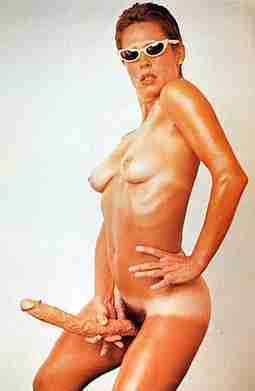 Lynda Benglis in her advertisement (November 1974)
 From Michelangelo’s Fig Leaf to Instagram: How We Automated the Censorship of the Body We did not abolish the fig
Read More Dildos series - Artist credits
 From Womanhouse to the Guerrilla Girls, Christina Schlesinger reflects on lesbian visibility, public art, feminism, and the lifelong process of becoming herself.
Read More Robin Tewes, Alice Neel of the Guerrilla Girls
 Translation of the original Italian article published by Artribune on August 2, 2025 By Antonino La Vela Link to original
Read More Guerrilla Girls poster: “Do Women Have to Be Naked to Get Into the Met. Museum?”
 The Guerrilla Girls: Feminism Meets Art Activism The Guerrilla Girls are an anonymous collective of feminist artist-activists who have been
Read More Do women have to be naked to get into the Med Museum?
 Unmasking Inequality in the Art World and Beyond The Guerrilla Girls are an anonymous collective of feminist artists who exposed—and
Read More Miriam Shapiro — The Apache (for Rondo)
 How “women’s work” became a language of power Feminist art is often described as a fight for representation. This essay
Read More Culture jamming; subvertising and billboard intervention in contemporary art
 Culture Jamming; the Subversive Art of Rewriting Media Culture jamming is a fascinating, subversive art form that turns the mirror
Read More