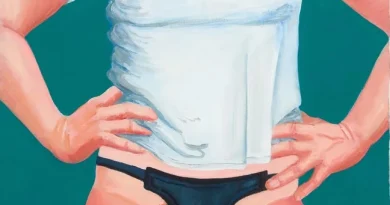
German Feminist Art: New Women’s Movement and Power
German Feminist Art: From the New Women’s Movement to Bodies, Media, and Counter-Institutions
In Germany, feminist art did not grow as a single school or a neat stylistic label. Instead, it expanded through infrastructure: the New Women’s Movement, self-organised exhibitions, archives, and artist-run institutions that treated culture as a political battlefield. Within that ecosystem, artists pushed the body into the centre of the debate, not as an image to admire, but as a site where power trains posture, desire, labour, and visibility.
This article expands the European thread from my larger hub essay on feminism in art:
Feminism in Art Isn’t a Style: It’s a Battle Over Visibility.
You can also browse the ongoing archive in my
Feminism category.
Why Germany matters: feminism as infrastructure, not only iconography
German feminist art history becomes clearer when you stop looking only for “masterpieces” and start looking for systems. In the 1970s, feminist energies converged with new media, performance, documentary strategies, and a sharpened distrust of institutional neutrality. As a result, the scene produced not only artworks, but also frameworks: exhibitions built to correct erasure, archives built to preserve memory, and women-led institutions built to survive without permission.
That approach shaped the aesthetics. Many works operate like evidence, experiments, or interventions. They ask how culture manufactures “normality”, and they often answer by making the manufacture visible.

Key moments: exhibitions that forced the question into public space
Two milestones help anchor the German story because they show feminist art becoming public infrastructure.
- “Frauen machen Kunst” (Bonn, 1976–77) helped frame feminism and art as a shared arena, not a private concern. It signalled a deliberate attempt to provoke debate about women’s visibility in the contemporary art system.
- “Künstlerinnen International 1877–1977” (Berlin, Schloss Charlottenburg, 1977) scaled the argument up: a large survey that refused the art market’s narrow logic and instead insisted on historical continuity, lineage, and collective memory.
Importantly, these events were not “footnotes” to a male canon. They were structural acts. They argued that history itself is a contested medium, and that women had to organise that medium if institutions would not.
The counter-institutions: Frauenmuseum Bonn and the politics of permanence
When museums move slowly, feminist culture often responds by building parallel rooms. The Frauenmuseum Bonn, founded in 1981, embodies that strategy: a women-led institution committed to exhibition-making, research, and visibility for women artists. Under the direction of Marianne Pitzen, it did not simply request recognition. It constructed a platform where recognition could happen on feminist terms.

This matters because “representation” alone can be absorbed. Infrastructure is harder to neutralise. Once an institution exists, it changes what can be shown, archived, and taught.
Archives as feminist method: bildwechsel and media memory
Germany also built feminist memory through media infrastructure. In Hamburg, bildwechsel emerged in 1979 as a women-in-media and culture organisation and archive. That choice of form is telling: feminist practice here does not only produce images. It also protects images from disappearance, while creating networks for circulation and research.
Because of that, feminist art in Germany often carries an archival consciousness. Artists work with documentation not as secondary material, but as a political technology.
Rebecca Horn: the body engineered by culture
Within this ecosystem, Rebecca Horn stands out as a decisive voice because she translates discipline into form. Her body extensions and sculptural apparatuses look poetic at first glance. Yet they also behave like rules made physical: they train movement, regulate touch, and stage vulnerability as something engineered rather than accidental.
Consider Unicorn (Einhorn, 1970–72): a woman moves for hours with a long horn strapped to her head. The image evokes myth and transformation, yet the device also enforces posture and exposure. The work therefore becomes a diagram of how femininity can be elevated and controlled at the same time.
Then shift to Pencil Mask (1972), where the face turns into an instrument for mark-making. Instead of celebrating “expression” as freedom, Horn shows expression as engineering. Consequently, the wall records the body’s encounter with boundaries, and spectatorship loses its innocence.
Ulrike Rosenbach: feminist video performance and the unlearning of representation
If Horn builds poetic apparatuses, Ulrike Rosenbach attacks the image system directly. In the 1970s, she emerged as a key representative of feminist video art and video performance. She used video as feedback, critique, and ritual, while exposing “woman” not as nature, but as a social production reinforced by art history, mythology, and mass media.
That move is crucial in a German context shaped by postwar anxieties about authority and the management of bodies. Rosenbach turns the camera into a tool of unlearning. She does not ask the viewer to empathise. Instead, she forces the viewer to recognise the mechanism that teaches them what to see.
Annegret Soltau: photo stitchings, self-appropriation, and the body as evidence
Annegret Soltau pushes a different kind of confrontation: she makes the body literal evidence through her photo stitchings. She tears photographs and sews the fragments together with thread, turning a historically “feminised” technique into an act of disruption and re-assembly.
Because she stitches, she does not merely depict violence, fragmentation, or social pressure. She performs them materially. The work therefore reads as self-appropriation, and also as an indictment of how culture edits women into acceptable shapes.
Katharina Sieverding: photographic scale as political pressure
While Soltau works through tactile rupture, Katharina Sieverding works through scale, repetition, and photographic intervention. Since the 1960s, she has used photography as a mode of political engagement, often amplifying the face and the self-image until they become public surfaces for ideology, identity, and conflict.
In that sense, Sieverding makes a key feminist point without simplifying it: the “self” is not private. The self is produced in public, under pressure from media, state power, and social expectation.
Sarah Schumann and Berlin’s feminist cultural scene: art as organising
Germany’s feminist story also includes figures who operate as artists and organisers within local scenes. In Berlin, Sarah Schumann became a key figure in the new women’s movement, while producing work that mixes collage, painting, and graphic intensity. Her trajectory shows another feminist method: build images, and build the conditions for those images to circulate.
Here, feminist practice becomes a social form, not only a personal style. The artwork sits inside a broader labour of publishing, organising, and curating.
Later waves: from the 1980s onward, feminist critique enters the mainstream and refuses comfort
From the 1980s onward, German feminist critique increasingly intersects with post-conceptual strategies, industrial materials, and institutional critique. Artists such as Rosemarie Trockel and Isa Genzken expand the question beyond the body as motif and toward the body as a problem inside systems: production, consumption, design, architecture, and the museum itself.

At that stage, feminist art in Germany does not simply demand entry. It interrogates what “entry” costs, and what the institution asks you to become in exchange for visibility.
What German feminist art teaches now
The German thread offers a toolkit that still feels contemporary:
- Build counter-institutions when institutions delay recognition.
- Treat archives as political technology, not as afterthought.
- Make discipline visible by turning rules into form.
- Use media against itself, especially when the gaze feels “natural”.
Ultimately, German feminist art shows feminism as method: not a label applied after the fact, but a way to construct visibility, protect memory, and force culture to admit the systems it hides.
Related articles
- Feminism in Art Isn’t a Style: It’s a Battle Over Visibility
- Feminism: Power and Gender Politics
- Austrian Feminist Art: VALIE EXPORT and the Politics of the Gaze
- French Feminist Art: ORLAN, Annette Messager, and the Politics of the Body
- Carla Lonzi, Carla Accardi, Elvira Banotti: Rivolta Femminile and the Feminist Break in Italian Art
- Feminist Art in Latin America: How Artists Fought Dictatorship With Memory and the Street
- Womanhouse (1972): The Feminist Art Installation That Turned a Home Into a Revolution
- Judy Chicago and The Dinner Party: The Feminist Artwork That Forced Museums to Change
- Miriam Schapiro and Femmage: How Pattern & Decoration Rewrote “High Art”