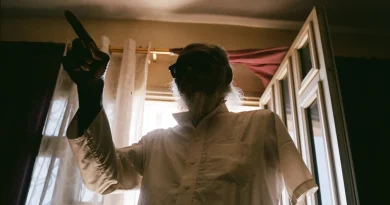
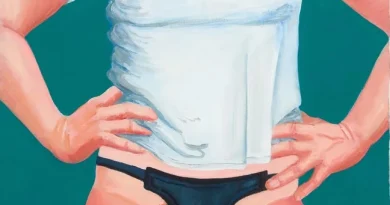
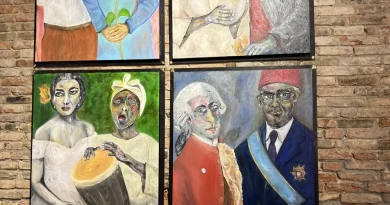
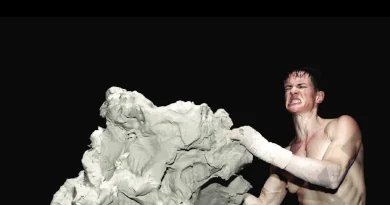
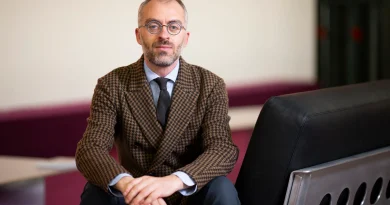
Kader Attia talks to us about his work at the Biennale Arte 2026
Kader Attia: Repair Does Not Erase the Wound
For In Minor Keys, the French-Algerian artist brings Whisper of Traces to Venice, a project that interweaves spirituality, trauma, technology, and memory. In this conversation, he speaks about his connection with Koyo Kouoh and explains why, today, repair does not mean healing, but learning to listen to what cannot be repaired.
Link to the Italian version on Artribune
With Kader Attia, one always has the sense that the work never emerges from an isolated intuition, but from a layering of wounds, memories, removals, and returns. His practice comes from far away: from a historical injury that continues to produce effects in the present, from bodies marked by violence, from images that resist being pacified or definitively archived. At the 2026 Venice Biennale, within the framework of In Minor Keys, Attia presents Whisper of Traces, a multimedia installation still in development, interweaving magic, spirituality, traditional healing, and the digitalization of the world. Yet what makes his discourse particularly urgent today is not only the project’s theoretical or visual structure. It is the way Attia once again poses a radical, perhaps inevitable, question: what does it truly mean to repair in a society that would rather erase cracks than dwell within them, listen to them, and acknowledge them?

Interview with Kader Attia, currently on view at the Arsenale as part of In Minor Keys
Even before the work itself, there is a presence that runs through this project: Koyo Kouoh. What happened between the two of you, and what did it mean to be chosen by her for In Minor Keys?
Koyo was my mentor and my sister. Over the course of our decade-long friendship, we have had many long and deep conversations about many subjects, we worked on several projects together… Before she invited me to be part of her Biennale, we had been writing to each other for a long time already, but it was very difficult to truly meet. Then one day I was on my way to Chicago for an exhibition, and she sent me a message saying that it would be the right moment for us to meet and talk about Venice. We finally met there. It was fantastic. We spent a lot of time together, and at a certain point she told me that, before leaving, we needed to talk about the Biennale. After dinner we went out for a drink, then continued talking in the car, then again at the hotel, and she explained the concept of the project to me at length. It was a very powerful moment. That same night she introduced me to Rory, telling him that I was in and that we would be working together. From there, we continued exchanging many messages about the project. Then she was no longer here. But for me Koyo is everywhere in this work. The first reason for being in Venice was to respond to her invitation.
From what urgency does Whisper of Traces emerge?
For me, everything begins with an interest I have pursued for many years: the relationship between spirituality, magic, witchcraft, and technology. Koyo and I had also spoken a great deal about the role of shamans and traditional healers, and how these practices were shaped first by colonialism, then by neoliberalism, and today by the digitalization of society. In this sense, In Minor Keys has to do with almost imperceptible data, with minimal traces, with deep memories that nevertheless constitute us.
How does this project take shape in space?
It will be a multimedia installation, a video installation with screens, sound, and other elements. But for me the point is not only the medium. The idea is to understand that what we are as human beings is a juxtaposition, an accumulation of billions of pieces of data gathered by the human psyche since we emerged from caves. I call these memories traces. One day my mother said to me: what you are working on is ghosts. I think she was right.

The notion of repair has been central to your work for years. In this project, what does it mean, today, to repair?
I have always begun with wounded bodies, damaged faces, broken objects. But what truly interests me is the symbolic meaning of repair in a society. In the West, repair is almost always aesthetic rather than ethical. The aim is to return the object or the body to its previous state, as if the accident had never happened. It is a form of delirium, because it claims to erase time. In many non-Western cultures, by contrast, repair leaves the trace of the wound visible. The object shows that it has had a previous life, and precisely for that reason it enters a new life. That is where repair ceases to be cosmetic and becomes a form of thought.
What, then, remains irreparable?
The problem is never fully resolved. It remains like an invisible wound. We call it trauma. And repair does not coincide with reconciliation. It is not enough to organize a commemoration or dedicate one day a year to an immense crime in order to say that the problem has been solved. For me, repair begins with listening. Listening to others, but also listening to oneself. That is where a possible space opens.
In your works, history appears as a fracture, but also as something that returns. Why do we keep repeating the same mistakes?
I have been asking myself that for a long time. I think one of the reasons is a form of mental illness spread on a global scale. Social media have produced a kind of collective schizophrenia. Public opinion is deformed by these dynamics. People consume politics as a commodity; they no longer live it as citizens. And this produces a delirious society, convinced of its own strength precisely while many of the things we took for granted are collapsing.

What, then, can art do within this scenario?
Art can create an intermediate space. A space that brings separate communities into relation. In an exhibition, there can be very different people, with different political ideas, cultures, religions, and identities. Some will love the work, others will not. But they will nevertheless share an experience. That matters a great deal to me, because today social media are destroying precisely this possibility of building a common ground.
What interests you in leaving open, rather than resolved, through this work?
I would like it to help us rethink from the ground up what we are, why we are here, what relationship we have with the society in which we live, before and beyond politics. Today we accumulate immense quantities of data, images, personal archives. But this accumulation does not make us stronger. Sometimes it produces only another illusion. That is why it is important to return to traces, to ghosts, to deep memories.
In Attia, repair is never a promise of pacification. It is a way of removing the wound from rhetoric and restoring to it weight, duration, and complexity. And perhaps this is precisely what Whisper of Traces will bring to Venice: not an answer, but a threshold to be crossed.
Venice // through November 22, 2026
In Minor Keys
GIARDINI DELLA BIENNALE, ARSENALE
Further reading on Kader Attia
Co-conceptualised by Kader Attia with Maria Hlavajova and Wietske Maas,
Fragments of Repair expands the artist’s long-standing investigation
of injury, memory and decolonial repair. Through essays, conversations and
visual contributions, the volume asks how societies might confront historical
wounds without erasing their scars or pretending that restoration can simply
return the world to an intact past.
View Fragments of Repair on Amazon
As an Amazon Associate, I earn from qualifying purchases. The price paid by the reader remains unchanged.