Angelo O. Pregoni at the Tanzania Pavilion: Inside Ujamaa Express at Biennale Arte 2026
VENICE BIENNALE 2026 | UJAMAA EXPRESS
Through painting, sculptural perfumes and unexpected encounters between Western icons and Tanzanian history, Angelo O. Pregoni explores cultural memory, difference and dialogue without resorting to exoticism or easy provocation.
Link to the Italian version on Artribune
Angelo O. Pregoni at the Tanzania Pavilion: When Van Gogh Meets Julius Nyerere
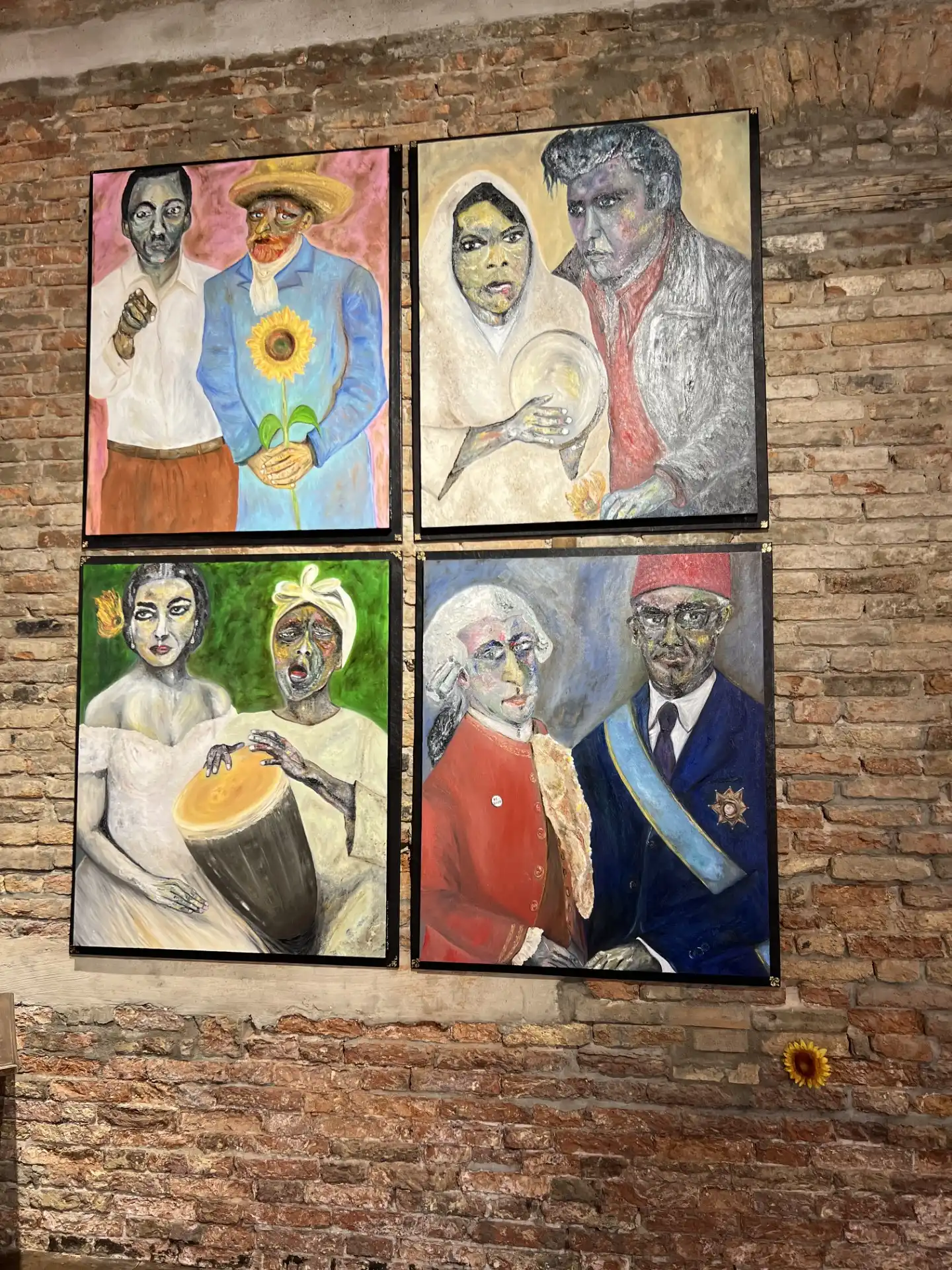
Van Gogh meets Julius Nyerere. Mozart enters into dialogue with figures from Swahili culture. Scent becomes an invisible archive of cultural memory.
In Ujamaa Express, the project presented by Angelo O. Pregoni for the Tanzania Pavilion at the 2026 Venice Biennale, nothing is designed to produce an immediate shock. Nor does anything seem intended to be consumed at the Biennale’s usual accelerated pace.
On the contrary, the entire project asks for time: time to observe, to make connections and to recognise what usually remains at the margins of the Western gaze.
Through a series of textured paintings with a powerful material presence, alongside a parallel investigation into scent as an artistic language, Pregoni reflects on the relationship between cultural identity, memory and representation. His work avoids both exoticism and provocation for its own sake.
We spoke with him about painting, cultural difference, artificial intelligence and the increasingly automatic use of shock in contemporary art.
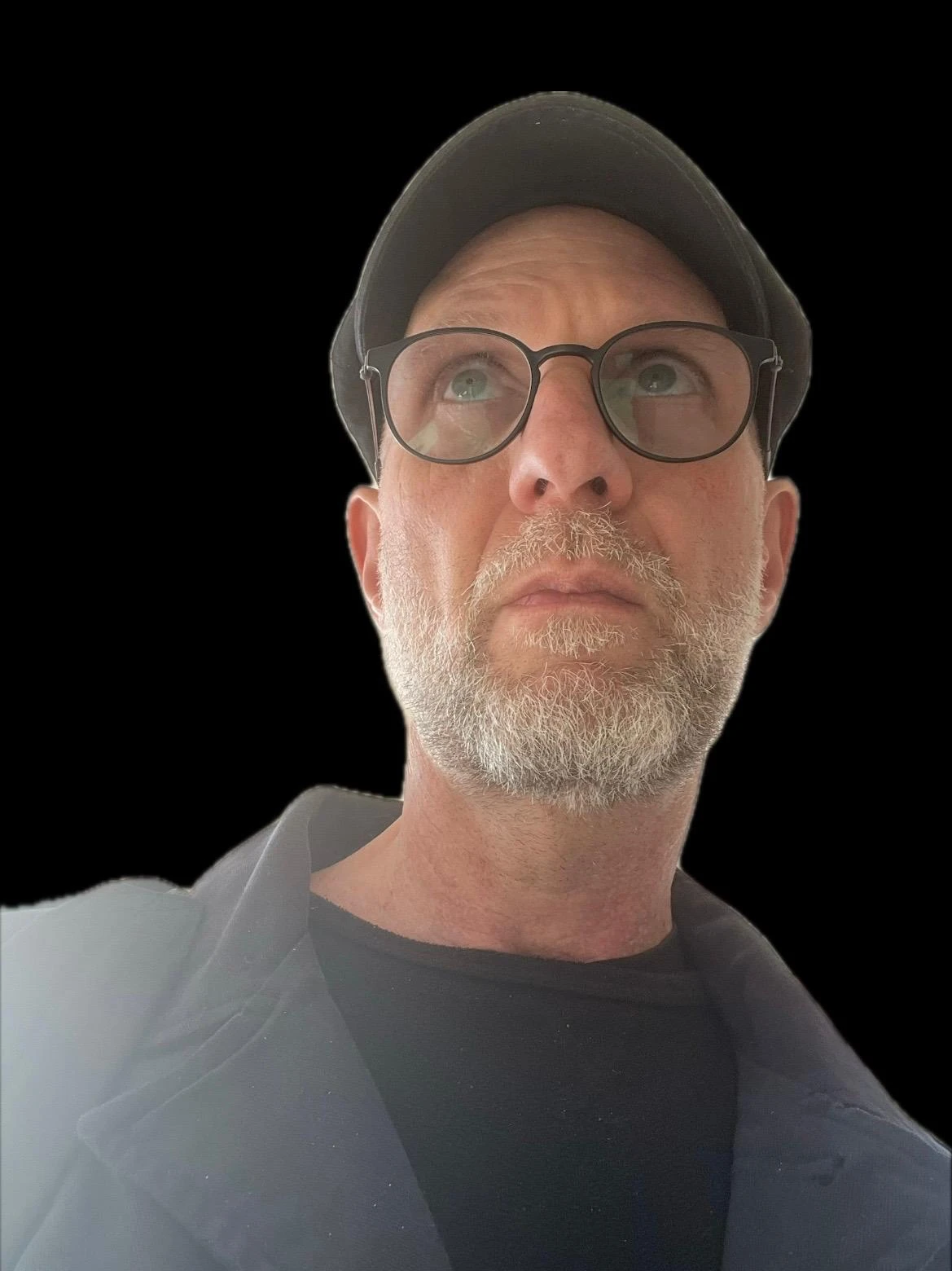
Interview with Angelo O. Pregoni
Your project for the Tanzania Pavilion brings together iconic figures from Western culture and key protagonists of Tanzanian history. Where did the idea come from?
It began with a desire to create connections that do not come straight out of a catalogue, as well as a series of cognitive short circuits. I wanted to take figures who, for Western audiences, have been almost worn out by visual repetition, such as Van Gogh, Mozart or Maria Callas, and bring them into collision with figures who are fundamental to Swahili culture and Tanzanian history, but remain largely unknown in Europe.
When someone sees the painting featuring Van Gogh, they will probably recognise him immediately. But then they may begin to wonder who the other person is. That question leads them to Julius Nyerere, to the history of Tanzanian independence and to a political and cultural vision entirely different from our own.
I wanted to open up that space in order to unsettle the intellectual complacency of the Western visitor. I wanted to force viewers to confront the weight of their own historical ignorance, while also allowing them to be surprised by new and extraordinary worlds.
Looking at these works, one has the sense that painting comes even before the image itself. Is that the case?
For me, painting is the most emotionally difficult part of the work. When I paint, I need to establish a physical relationship with the canvas, the pigments and the very duration of the act of painting.
The works always begin with a very precise compositional idea. But then something happens while I am painting. At a certain point, the painting stops fully obeying what I had planned and forces me to follow it into chaos.
A painting has a life of its own. Once it is finished, it no longer belongs to me.

Alongside the paintings, you have also presented a series of perfumes. Why did you decide to introduce the sense of smell into the project?
Scent is an extraordinarily powerful trigger of memory. It is also an ancestral and deeply intimate artistic medium. I wanted to create a symbiotic language alongside the paintings, a sensory intervention capable of breaking down any sterile distance between the work and the audience.
I did not, however, want to produce simple atmospheric or commercial fragrances. In developing the O’toteman perfumes, I focused my research on the sculptural and apotropaic dimensions of perfume as an object.
Through their 3D-printed structures, I looked for a balance between pop elements, a cultivated form of kitsch and an almost ritualistic dimension. The fragrances themselves also move through unusual combinations: fruity and resinous accords, floral notes hybridised with molecules used in mass-market perfumery, and earthy, primordial, almost barnyard-like olfactory collisions.
The diffusers are conceived as sculptures designed to be used, stripped of any technological automation. I wanted everything to retain a human, imperfect and handcrafted presence.

The project also contains a political reflection. Were you concerned that it might be interpreted as a form of cultural appropriation?
Yes, and that was probably my first concern. For this reason, I chose never to pretend to be anything other than what I am.
I remain a European artist exhibiting within the Tanzania Pavilion, as part of an international group exhibition. I use oil paint and tools that belong to my own culture. I have learned to navigate the neuroses and traditions of a Western education.
I am not trying to mimic or imitate Swahili culture. I am looking for a direct friction with it, a respectful dialogue that keeps the differences visible.
I believe that inclusion is often confused with homogenisation today. Brotherhood, or Ujamaa, is not a compromise that erases differences. It is a form of coexistence in which differences remain visible and mutually enriching.
We are enriched precisely by what makes it impossible to assimilate the other.
I am deeply grateful to the curators, Lorna Benedict Mashiba and Martina Cavallarin, for giving me this degree of artistic autonomy.

Speaking about the Biennale, you also referred to a certain form of “automatic provocation” in contemporary art. What do you mean by that?
Many works today seem to be constructed to generate immediate attention. Provocation has almost become an automatic mechanism for achieving visibility.
I am not opposed to provocation in itself. On the contrary, my own sensibility has also been shaped by certain radical artistic experiences.
But I often encounter works that produce shock without producing thought.
During the Biennale, I felt the need to do the opposite: to lower my voice and search for a dimension that was more human, slower and less aggressive.

During our conversation, you also reflected on artificial intelligence. What is your relationship with these tools?
I am not opposed to artificial intelligence. In fact, I believe it could become a means of emancipation, provided that it is used properly.
The problem begins when we stop developing our own capacity for thought. Artificial intelligence can provide extremely rapid answers, but it has no sensitivity, bodily memory or physical experience of the world.
What I want to defend is the complexity of the human being: personal judgement, individual sensitivity and even doubt. These are still the elements that keep art alive.
Can painting still possess that kind of power today?
Absolutely. When standing in front of a painting, each person can see something that not even the artist had anticipated.
Painting never produces a single meaning. It is an open, multifaceted language. That is why I continue to regard it as a medium with extraordinary authority.
It is very similar to poetry. It takes something emotional, irrational and invisible and transforms it into an image.
Painting continues to interest me because it does not simplify the world. It makes the world more difficult to ignore.

Recommended Reading: Biennale Arte 2026
To explore the wider curatorial framework of the 2026 Venice Biennale, read Biennale Arte 2026 – In Minor Keys by Koyo Kouoh.
Biennale Arte 2026 – In Minor Keys by Koyo Kouoh
Affiliate disclosure: As an Amazon Associate, I earn from qualifying purchases. The price paid by the reader remains unchanged.
Related Articles
- The United Arab Emirates Pavilion at the Venice Biennale: Washwasha
- Fiona Pardington at Biennale Arte 2026: The New Zealand Pavilion Between Extinction, Memory, and Vision
- Dries Verhoeven at the Dutch Pavilion: Art Should Make Us Uncomfortable
- Chiara Camoni at the Italy Pavilion, Venice Biennale 2026
- Explore All Venice Biennale Articles