Belarus in Venice: when the State no longer represents the country
Belarus Free Theatre – Official. Unofficial. Belarus
Link to the Italian version on Artribune
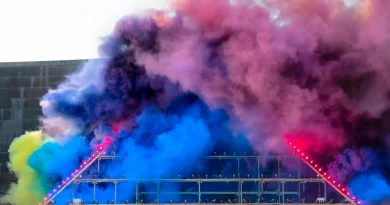
Collateral Event of the 61st International Art Exhibition, does not simply set out to represent a country. It stages a fracture: the one between the official image produced by the State and a cultural life that continues to exist elsewhere, in exile, under pressure, outside authorized channels.
Bringing it to Venice is the Belarus Free Theatre, the historic independent group born in the Belarusian underground. The title immediately clarifies the core of the project: “official” and “unofficial” do not simply indicate two levels of recognition, but two opposing forms of legitimacy. On the one hand, power and its apparatuses. On the other, a cultural production that continues to generate meaning even when it is expelled, censored, or forced to move.
All of the following questions were answered by Daniella Kaliada, curator of the project.
What does it mean today to represent Belarus outside the State’s official frameworks?
Representing Belarus outside the State’s official frameworks today is not a symbolic gesture. Belarusian culture has long developed in parallel to the structures that claim to define it. What has changed is not the existence of that unofficial sphere, but its scale and visibility. After 2020, a significant part of the cultural community was forced into exile, yet the work did not stop. It simply continued elsewhere. In that sense, this project is not an alternative to an official representation. It is a continuation of a cultural reality that has never been fully contained by it. Working outside official frameworks also changes the conditions of responsibility. There is no institutional protection, no stable infrastructure, and state funding. What remains is the necessity to continue producing, speaking, and maintaining a connection to the country through culture, to let the voices of all the people still on the inside be heard. For us, representing Belarus in this way is not about speaking on behalf of a nation. It is about insisting that Belarusian culture exists beyond the structures that attempt to define or limit it, and that it remains part of a wider European and international conversation.
The exhibition occupies the Church of San Giovanni Evangelista, in San Polo, turning the space into an active part of the narrative. Sergey Grinevich’s site specific paintings enter into dialogue with the tradition of altarpieces, while Sounds of Silence by Olga Podgayskaya uses the organ as a physical presence, made of sudden expansions and voids charged with weight.
Among the most striking images is a large sphere made of books banned in Belarus, compressed in the claw of a bulldozer, from an idea originally conceived by Nicolai Khalezin. It is a brutal image of the relationship between censorship and symbolic destruction. In the private cemetery next to the church, recorded testimonies by recently released political prisoners resonate through the space. Alongside these voices, Vladimir Tsesler presents large sculptures made from prison bars, transforming the traditional Belarusian straw spider into a figure built from the very material of detention.
How did you work with the relationship between cultural symbols and political trauma while avoiding an illustrative representation of suffering?
We have made a very deliberate decision not to represent trauma directly. In the context of Belarus, like many authoritarian states, the suffering has already been extensively documented, circulated, and, to a certain extent, consumed. Reproducing those images risks turning lived experience into something overused and therefore distant. At the time when the majority of people are experiencing news fatigue, it has become increasingly difficult to reach people through the language of trauma. And so, in our exhibition we are working through transformation and alteration. Cultural symbols are present, but they are structurally altered. The cross becomes a surveillance apparatus. The confessional becomes a site of exposure. The altar produces scent rather than transcendence. These are not illustrations of trauma, but transformations of familiar forms into systems that behave differently. The aim was to avoid empathy as spectacle and move towards implication. Rather than showing what has happened, the exhibition creates conditions in which the visitor encounters a loss of control, a subtle destabilisation of perception, and eventually its complete absence. Works such as Rasmus Munk’s Taste of Nothing operate precisely at that threshold, where expectation is produced and then withdrawn. This allows the wider political context to remain present without being explicitly brought to the forefront.
One of the strongest aspects of the project is that it does not ask only to be seen, but to be undergone. At specific moments, visitors will be involved in a sensory intervention conceived by Rasmus Munk. Outside the church, Surveillance Crucifixion, a cross composed entirely of analog CCTV cameras conceived by Daniella Kaliada and Natalia Kaliada, condenses the meaning of the entire project.
If a regime continues to officially occupy the name of a country, who should be recognized today as its true cultural interlocutor?
A regime can occupy the name of a country administratively, but culture does not operate through administration. It operates through production, circulation, and recognition but above all, it operates through individuals, not the state. In the case of Belarus, what we are witnessing is a clear separation between the official framework, which seeks to restrict and minimise, and the unofficial cultural body that continues to exist beyond it. Artists working in exile are not external to what Belarusian culture is, on the contrary, they are what it is made of. And as such, the question shifts. It is not who is authorised to speak for Belarus, but what is being said. This exhibition does not claim to replace an official narrative. It makes visible a cultural reality that persists without institutional endorsement. An unofficial culture. In that sense, the interlocutor is not a fixed figure or state structure. It is a dispersed field of practices that continue to generate meaning under the name Belarus, irrespective of who formally controls it.
This is where the strength of Official. Unofficial. Belarus. lies. It does not try to mend the relationship between nation and power. It exposes it. And for that very reason, it moves beyond the Belarusian case and touches on a broader question: who embodies the voice of a country when the institutions that claim to represent it are working to empty it out from within? At a time when many national pavilions still seem to perform the idea of nationhood, this project reminds us that culture truly begins where propaganda loses control.
Official. Unofficial. Belarus.
Collateral Event of the 61st Venice Biennale
May 9–November 22, 2026