The Forma 1 Group – How political conditions destroied the Italian Abstractism
Bridging Contemporary Sociopolitical Art and Conceptual Modern Paintings to Marxism in Post-War Italy
The story of Forma 1 still feels urgent today. In fact, it touches a problem we keep revisiting. How can art stay political without becoming propaganda? Forma 1 offered one clear answer. They chose abstraction and refused obedience.
In March 1947, a small group of artists in Rome published a magazine called Forma. It had only one issue. However, that single publication sparked a larger debate. The artists soon shaped a manifesto and a shared identity. They called themselves Gruppo Forma 1.
Origins and the manifesto (1947)
Forma 1 formed in a tense, post-war Italy. The country rebuilt cities, parties, and identities. At the same time, culture turned into a battlefield. Therefore, every aesthetic choice looked political.
The group included
Carla Accardi,
Ugo Attardi,
Pietro Consagra,
Piero Dorazio,
Mino Guerrini,
Achille Perilli,
Antonio Sanfilippo,
and Giulio Turcato.
They signed a manifesto and made a bold claim. They were formalists and Marxists. In other words, they refused the idea that Marxism required realism.
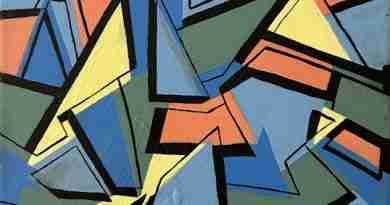
They defended an art that stayed structured but not illustrative. They focused on form, sign, and visual logic. For example, they used objective reality as raw material. Then they rebuilt it as abstract construction. That is why the famous line matters: “we are interested in the shape of lemon, not the lemon.”
Post-war Italy: abstraction vs. social realism
After the war, Italian art split into two camps. On one side, many defended abstraction as modern freedom. On the other, others promoted figurative painting with civil commitment. As a result, style became a moral question.
Renato Guttuso played a key role in that climate. Many young artists saw him as a reference. Moreover, the Italian Communist Party pushed for accessible images. That stance often favored social realism. Consequently, abstraction faced strong suspicion.
Forma 1 entered that clash and refused the binary. They did not reject politics. Instead, they changed the visual method. They aimed for an art that trains perception. Therefore, they treated form as an ethical choice.
What “formalism” meant for them
Forma 1 did not use “formalism” as empty style. They used it as discipline. First, they rejected psychologism and sentimental rhetoric. Next, they pushed for clarity of structure. Finally, they treated painting and sculpture as languages.
Color, drawing, and plastic masses became their tools. Composition became their argument. Meanwhile, they avoided anecdote and illustration. They wanted invention without escapism. So, they linked abstraction to responsibility.
From the studio to the public arena
Forma 1 did not stay private. They aimed for public impact. Therefore, they wrote, exhibited, and argued. They wanted to change the rules of legitimacy.
The group worked inside Rome’s intense network of studios and debates. At that time, artists shared spaces and ideas. Moreover, they looked outward to Europe’s modern languages. They refused a return to academic comfort. Instead, they insisted on a contemporary Italy.
Artists, shifts, and legacy
Forma 1 did not create a single style. Instead, it created a platform. So, each artist developed a personal grammar over time. Some stayed close to abstraction. Others moved back toward figuration.
For example, Ugo Attardi later returned to figurative painting. In contrast, several members kept building abstract languages. Carla Accardi continued as a relentless experimenter. She pushed sign and color as a full system. Similarly, artists like Dorazio, Perilli, Sanfilippo, and Turcato expanded abstraction through rhythm, geometry, and material energy.
Mino Guerrini took another path. He left painting and worked in journalism and film. That move also tells a post-war truth. Culture crossed mediums fast. Therefore, “group life” often dissolved into broader careers.
The group ended around 1951. However, the precedent stayed. Forma 1 proved that abstraction could carry political seriousness. It also proved that commitment does not require illustration. Consequently, the group marked Italian twentieth-century art.
Why Forma 1 still speaks to contemporary sociopolitical art
Today, sociopolitical art often leans on direct images and clear messages. That approach can work. However, it can also become predictable. Forma 1 suggests another route. It treats form as a political field.
Abstraction can resist control in a specific way. It does not deliver a single story. Instead, it activates the viewer. It demands attention and interpretation. Therefore, it can challenge cultural habits, not only opinions.
A note on Italian abstraction (personal view)
I write this as a viewer and painter. So, this is not a neutral verdict. Still, I see a pattern. Figurative art often dominates Italian fairs and exhibitions. It reads easily and institutions manage it well.
By contrast, abstraction stays “niche” more often than it should. Yet abstraction can open difficult space for thought. It can disrupt image control. Therefore, it can feel risky inside a culture that loves consensus. That is why Forma 1 still matters to me. It remains an unfinished proposition.
Manifesto Forma 1 (1947)
The manifesto sets out a few core ideas. First, it opposes imitation and “false emotion.” Next, it defends pure form as method and goal. Finally, it defines painting and sculpture as languages of structure.
- In art there is only traditional reality and inventiveness of the pure form;
- We recognize formalism as the only means to escape decadent influences: psychological, expressionistic;
- Painting and sculpture are presented as means of expression: color, design, plastic masses, and a harmony of pure forms;
- The shape is the middle and end; the framework must serve as a decorative complement of a bare wall, the sculpture as a room’s decor; the end of the work of art is utility and harmonious beauty, not heaviness;
- In our work we use the forms of objective reality as means to achieve abstract shapes objective; we are interested in the shape of lemon, and not the lemon;
In short, the manifesto rejects psychologism and sentimentalism. It also rejects the instrumental use of art. Instead, it defends invention as a serious act.
Related articles
- Carla Accardi, Italian Avantgarde
- Kasimiro Medio and the Essence of Abstraction
- Achille Perilli – Il collasso del carnale
- Antonio Sanfilippo: The Vibrant Pulse of Post-War Italian Art
- Discover the Brilliance of Giulio Turcato: A Master of Abstract Art
- Ugo Attardi
- Pietro Consagra’s Colloquio Definitivo: A Forma 1 Group Masterpiece in Bronze