The Urban Art Movement: From Street Art to a Global Phenomenon
The Urban Art Movement: From Street Art to a Global Phenomenon
The Urban Art Movement—often discussed alongside street art—grew from informal, local actions into a global visual language. However, the shift didn’t happen “naturally.” Artists pushed the work into public attention, cities reacted, and institutions eventually adapted. As a result, urban art now shapes how many people understand public space, politics, and image-making.
From rebellion to recognition: who controls public walls?
For decades, many institutions framed street art as damage or disorder. Yet artists used visibility as leverage, and the work kept spreading. Therefore, the conversation changed: galleries and museums began to exhibit it, cities commissioned murals, and brands tried to borrow its credibility. At the same time, this recognition created a tension—urban art gained resources, but it also risked losing its edge.
Defining characteristics: the city as medium
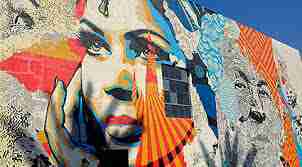
Urban art uses public space as a working surface. In practice, that includes murals, graffiti, stencil art, stickers, paste-ups, and installations. Moreover, it stays accessible: people encounter it during daily life, not only inside art institutions.
Urban art also embraces impermanence. Many works disappear quickly—painted over, removed, or weathered. As a result, the art carries urgency, and documentation becomes part of the work’s afterlife.
Key themes: politics, identity, and who gets seen
Urban art often speaks directly to current social and political issues. For example, artists use walls to challenge power, expose inequality, or amplify voices that mainstream culture ignores. In other words, the street becomes both a gallery and a public argument.
Influential figures in urban art
- Banksy: Uses stencils and dark humor to compress big political questions into instantly readable images. Consequently, the work travels fast—on walls and online.
- Jean-Michel Basquiat: Moved from graffiti (SAMO) into painting while keeping the street’s intensity—especially around identity, history, and power.
- Shepard Fairey: Blends design, propaganda aesthetics, and street distribution to build political images that circulate at scale.
Global impact: the outdoor gallery effect
Urban art reshaped cities worldwide. Berlin, Melbourne, and São Paulo, among others, turned into outdoor archives of conflict, memory, and identity. Moreover, the movement forces a simple question: who does public space serve—property, advertising, or people?
Urban art in the digital age: visibility at speed
Social media changed urban art’s ecosystem. Instead of relying on local discovery, artists now publish instantly and reach global audiences. As a result, the “street” becomes both physical and digital: documentation can amplify a work, but it can also detach it from its context.
Ultimately, the Urban Art Movement matters because it treats the city as a living surface—one where aesthetics, politics, and everyday life collide. If you want contemporary art that speaks in public, urban art remains one of the clearest examples.