Swiss Pavilion 2026. The Unfinished Business of Living Together
The Politics of an Open Archive
At the 2026 Venice Biennale, The Unfinished Business of Living Together brings together Nina Wakeford, Gianmaria Andreetta, Luca Beeler, Miriam Laura Leonardi, Lithic Alliance, and Yul Tomatala in a collective reflection on archive, memory, and coexistence.
Link to the Italian version on Artribune
There are pavilions that arrive at the Biennale with a message already in place. The Swiss Pavilion seems to have chosen a more difficult path: not to explain a position, but to reopen a fracture. The Unfinished Business of Living Together draws on two Swiss television broadcasts, Telearena from 1978 and Agora from 1984, but it does not use them as simple historical documents. It uses them as pressure points. From there, Nina Wakeford, together with Gianmaria Andreetta, Luca Beeler, Miriam Laura Leonardi, Lithic Alliance, and Yul Tomatala, has built a collective project in which coexistence, visibility, and language stop being abstract formulas and once again reveal themselves for what they are: unstable practices, negotiations, frictions.

Interview with Nina Wakeford, artist and curator of the Swiss Pavilion at the 2026 Venice Biennale
The pavilion’s title, The Unfinished Business of Living Together, immediately rules out any idea of celebration. For you, what still remains unresolved in living together?
For me, it concerns the unfinished work of certain social movements, especially those of the 1970s and 1980s. I am thinking of movements connected to gender, race, ethnicity, and sexuality. They opened up real possibilities, but it cannot be said that they resolved everything. For me, that “unfinished business” is precisely this: something that comes from the past but does not belong only to the past. The question is not whether it will ever end. The question is whether we are still willing to sustain it and carry it forward.
Why return specifically to Telearena from 1978 and Agora from 1984?
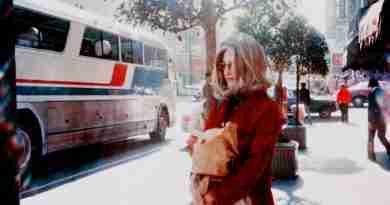
Because in those moments gay, lesbian, and trans people enter Swiss national television. They are no longer only within separate spaces or specific communities. They find themselves within a national public space. For us, that passage was decisive. That is where the project begins. Not as nostalgia, but as the reactivation of a historical threshold that continues to produce effects.
So the pavilion does not look at the past as something concluded.
No, not at all. The past here is not a closed room. It is something that continues to exert pressure on the present. Those broadcasts interest us because they show a moment when a society finds itself confronted with bodies, words, and identities that it can no longer keep at the margins. And that, in different ways, continues to concern us.
How will this tension take shape within the Biennale space?
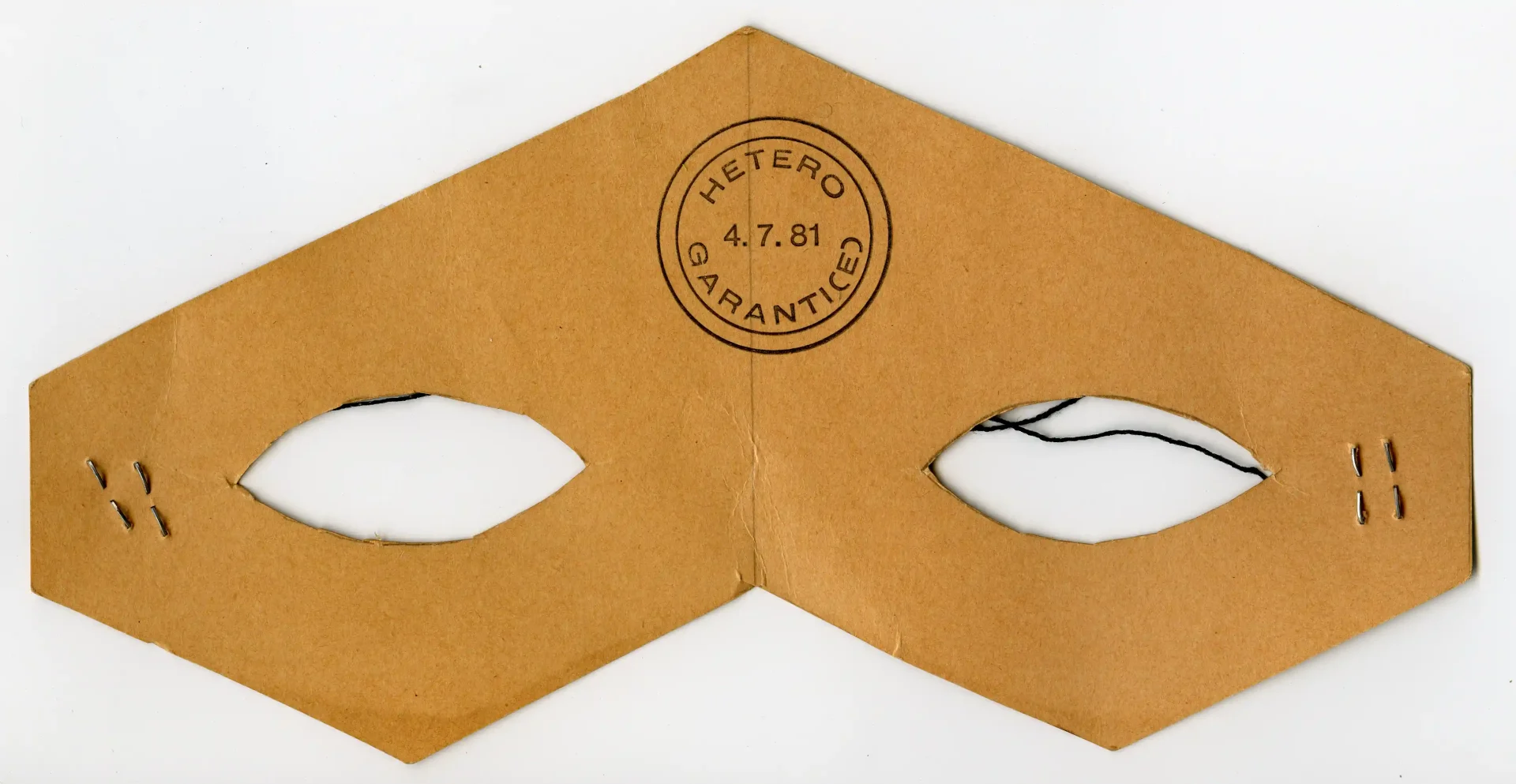
As a multimedia environment. There will be videos, installations, and objects. We did not want to construct a path that explained everything in a linear way. It was important that visitors enter and have to find their bearings, that they have to understand for themselves what kind of relationship they are in with those materials, those times, those images.
Is there a particular device that introduces visitors to the project?
Yes. One of the first things visitors will encounter will be a period television set with a freeze-frame, as if they were actually watching television in 1978. It seemed important to me to create that threshold immediately. The visitor understands right away that there is a precise historical time, but also understands that they will not remain there. From that point onward, archive, memory, and artistic construction begin to overlap.
What kinds of materials will you be using?
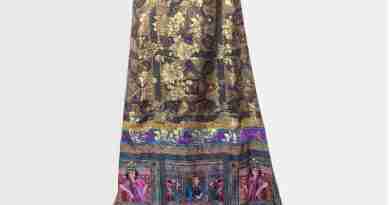
New video productions, installations, objects, and of course historical materials. But those materials will not be treated as relics. They enter into a new construction. Some come from official archives, others from less institutional sources, from materials preserved privately, from things that have survived in more fragile forms. That also matters a great deal to us.

In this project, the archive seems to be both a resource and a limit.
Yes, because archives are not neutral. They are selective. They produce categories, they organise, they exclude. That is why we were not interested in simply obeying the archive. At certain moments, one has to work with what the archive cannot contain, or with what it has left at the margins. It is not a matter of denying the document, but of not accepting it as the only authority.
Is that where the idea of an archive that does not obey comes in?
Exactly. For example, Yul Tomatala is working with the figure of the continuity announcers, the television presenters who introduced programmes. He takes up that format, but alters it. He makes them say things that never existed in the archive. He introduces themes, phrases, and shifts that do not belong, strictly speaking, to that historical material. It is a very clear way of showing that the archive, on its own, is not enough.
Your own contribution also works with this idea of reactivating the past.
Yes. I am working from Bar jeder Frau, a Swiss film from 1991, originally a roughly five-minute 16 mm film about butch and femme roles in a bar. I wanted to expand it rather than leave it enclosed within its original form. I manually reprinted every frame twice, so the film became longer. Then I worked with the original composer on a new soundtrack, and with filmmaker Catherine Barben we added new footage of contemporary dancers. This is exactly what interests me: when a work does not remain fixed in its own time but begins to move across different temporalities.
This temporal layering within the pavilion also seems to be a political position.
Yes, because I do not believe very much in a simple idea of progress. Some things move forward, others move backward. Some struggles seem to consolidate, others once again become exposed to regression. I am thinking, for example, of certain trans issues. For me, the question is not whether the future will automatically be better. The question is how one works now, within conditions that remain contradictory, and how one inherits the work of previous generations without pretending to start from zero.

The project is built by six people with very different experiences. How important is this collective dimension?
It matters enormously. We did not want a single compact voice. We are people from different generations, with different languages, positions, and experiences. And it mattered to me that this should also be felt within the pavilion. Coexistence, after all, is never an already resolved form. It is also made of differences, negotiations, disagreements.
Will this linguistic plurality also enter the project?
Yes, because Switzerland carries this complexity within itself. Italian, German, French, English: it is not a decorative detail. It is a real part of the political and cultural context from which the project emerges. And in a work that reflects on coexistence, it was important that this plurality remain perceptible.
At the Biennale, projects like this often risk being reduced to an already legible representation of identity politics. How did you avoid that simplification?
I do not see an automatic opposition between political complexity and a spectacular dimension. Queer cultures have always used irony, performance, excess, disguise. That too is a way of producing thought. So yes, there will be elements in the pavilion that also operate through a strong visual dimension, but not in order to simplify. Rather, to keep the tension open.
What do you hope stays with the visitor after leaving the pavilion?
I hope there remains a sense that these stories are not closed and are not simple. And I hope something else remains as well: that the project’s second historical reference, the one from 1984, brings us very close to the beginning of the AIDS crisis. So this is not only a question of representation. There is a history of vulnerability, loss, public exposure, urgency. That matters to me.

The strength of the Swiss Pavilion, at least as Nina Wakeford brings it into focus, does not lie in turning difference into a ready-made formula for the Biennale’s international consumption. It lies in doing something riskier: returning coexistence as unfinished matter, as continuous pressure, as a space that never truly allows itself to be pacified. And in a system that often asks art to make everything immediately legible, that is no small thing.
Venice // through November 22, 2026
The Unfinished Business of Living Together – 61st International Art Exhibition of Venice
GIARDINI DELLA BIENNALE – Viale Trento, 1260