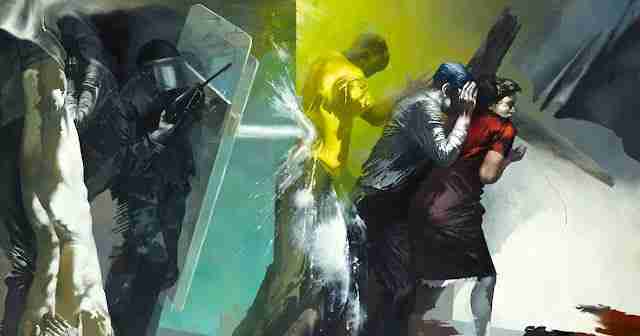
Arno Rink: A Visionary of the New Leipzig School
The Power of Myth, Mystery, and the Human Condition
Arno Rink is a pivotal figure for understanding Leipzig painting and its long shadow into the early 2000s. Commonly linked to the context that later gets grouped as the New Leipzig School, Rink’s role is double: he is an artist with a distinctive, myth-charged visual language, and he is a teacher who shaped an entire generation, most notably Neo Rauch. If Rauch’s international rise brought new attention to Leipzig, it also pushed viewers to look backward and recognize the foundations that Rink helped build.
Art behind the Iron Curtain: a journey through the GDR
Born in 1940 in Thuringia, Rink’s life and formation unfolded largely within the German Democratic Republic. Making art behind the Iron Curtain meant negotiating the complicated relationship between aesthetics and politics, including the expectations attached to Socialist Realism and the state’s preference for legible, optimistic narratives.
But Rink was never a simple realist. He used strong academic technique as a platform for ambiguity. Within figurative mastery, he inserted allegory, psychological tension, and a surreal charge that refuses to settle. Even under restriction, he carved out space for existential inquiry, staging the human figure in scenes that hover between realism and dream, the mundane and the visionary.
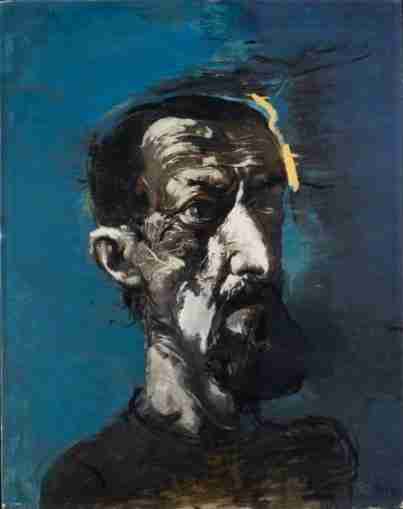
The mythical and the mystical: an artistic signature
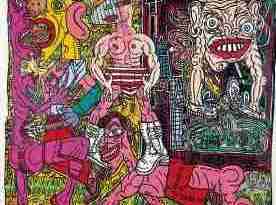
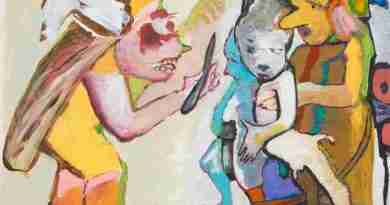
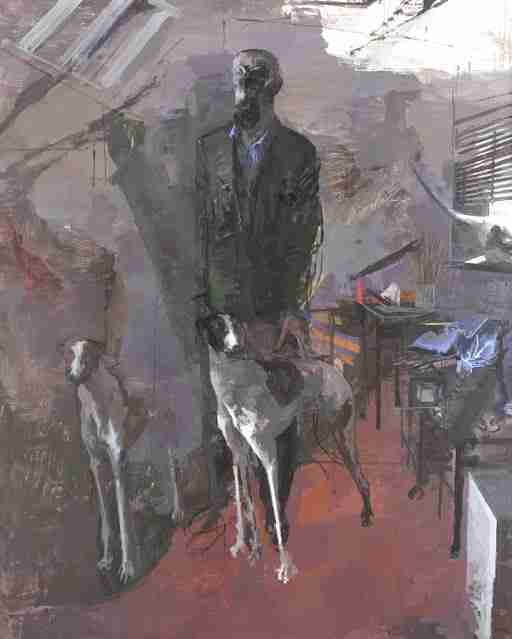
One of the most distinctive aspects of Rink’s work is his engagement with myth and allegory. His paintings often place solitary figures into dramatic, dreamlike settings, as if the subject were caught mid-transformation. The mythic is not used as illustration, but as a structure for thinking about fear, desire, violence, and the fragility of identity.
Even when the scene appears anchored in a recognizable world, Rink’s light, color contrasts, and compositional tension suggest another layer: an internal drama running parallel to the visible one. The paintings often feel like fragments from a larger narrative that can’t be fully recovered, only sensed. In this way, the mythical becomes a language for the contemporary: a way to speak about the human condition without reducing it to a single explanation.
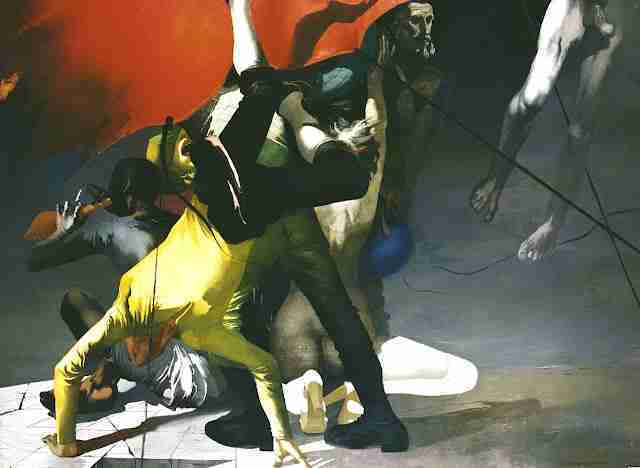
A teacher’s legacy: shaping Leipzig painting
Rink’s influence extends beyond his own canvases through his teaching at the Leipzig Academy of Visual Arts. He mentored artists who later became internationally visible, including Neo Rauch. This pedagogical role matters because it helps explain why Leipzig painting retains a specific identity: a respect for craft and image-building paired with an insistence on psychological and narrative complexity.
Rink encouraged technical rigor without treating technique as an end in itself. He pushed students to master figurative structure while leaving room for experimentation, contradiction, and the strange. That balance between discipline and imaginative risk is part of what later becomes recognizable as a Leipzig signature.
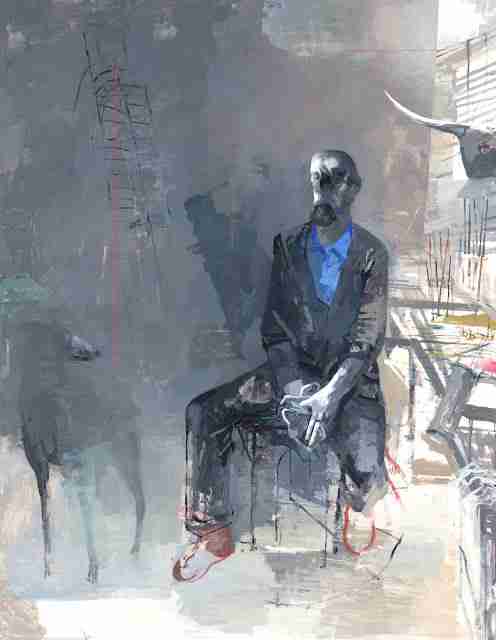
The human drama: emotion and identity
At the heart of Rink’s work is a persistent empathy for human contradiction. His figures are rarely heroic in a conventional sense. They appear vulnerable, exposed, and psychologically complex, often isolated against expanses that amplify their solitude. Gesture and posture carry emotional weight, and the surrounding space feels less like backdrop than like pressure.
Across his later works, surreal and fantastical elements become increasingly pronounced, not as escape but as method. Dreamlike imagery and abstract forms enter the figurative field as if they were surfacing from the subconscious. The result is a body of work that feels personal yet broadly resonant: a sustained investigation into what it means to live with fear, desire, memory, and uncertainty.
A legacy etched in myth and mystery
Arno Rink’s contribution to contemporary German art lies in two intertwined legacies: the paintings themselves, technically accomplished and psychologically charged, and the artistic ecosystem he helped build through teaching. He defended figurative painting as a serious arena for complexity at moments when other modes dominated. He made room for myth and ambiguity not as decoration, but as a way to speak about existence.
Rink’s work reminds us that the human experience has layers, some visible, others buried. His figures, often caught in moments of tension or transition, speak to the desire to understand our place in the world, to survive our inner storms, and to find meaning where reality and mystery overlap.