Nilbar Güreş at Biennale Arte 2026. Turkey Pavilion
Başak Doğa Temür on the Turkey Pavilion
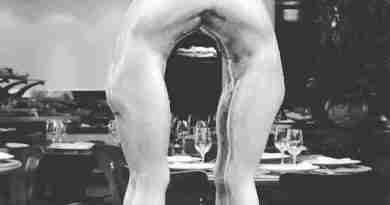
With A Kiss on the Eyes, Nilbar Güreş brings to Biennale Arte 2026 a project that intertwines sculpture, installation, material memory, and a politics of proximity. Curator Başak Doğa Temür speaks about a pavilion that turns delicacy into a form of resistance.
Link to the Italian version on Artribune
For Biennale Arte 2026, the Turkey Pavilion, commissioned by the Istanbul Foundation for Culture and Arts (İKSV), presents A Kiss on the Eyes by Nilbar Güreş, curated by Başak Doğa Temür. From its very title, the project suggests a precise stance: not a frontal declaration, but a way of drawing near without invading. It is a subtle inflection that has long run through the artist’s work and that, in Venice, takes shape in a space made of relations, slight displacements, and restrained tensions.
The exhibition brings together new productions and earlier works, weaving sculpture, installation, painting, and works on paper and fabric. But rather than offering a synthesis of Güreş’s practice, the project clarifies the point at which her research becomes most necessary today: where intimacy and politics, irony and fragility, belonging and displacement press against one another. We spoke with Başak Doğa Temür.

Interview with Başak Doğa Temür, curator of the Turkey Pavilion at Biennale 2026
The title A Kiss on the Eyes comes from a Turkish expression that conveys closeness, affection, and respect without intrusion. How has this nuance been translated into the space of the pavilion?
Nilbar Güreş herself proposed the title Gözlerinizden Öperim, a Turkish expression suggesting an affectionate closeness that also respects the other person’s space. It immediately seemed to me not only an effective title, but a curatorial key. I did not want to create an installation display that imposed a single trajectory or a fixed reading. I was interested in creating a rhythm made of approaches, pauses, and slight withdrawals. The works do not present themselves as frontal, definitive blocks: some hang, others remain low, others seem to hold themselves in a precarious suspension. In this sense, the “kiss” is not an added metaphor, but a way of thinking about the relationship between artwork, space, and visitor. Entering into contact without fully occupying the other, always leaving a threshold open: that was the tone I wanted to give the pavilion.
The project brings into dialogue new works for Venice and works from earlier moments in Güreş’s practice. What was the curatorial logic behind this interweaving?
I was not interested in a retrospective construction. The point was not to arrange the work into a chronology or to fix a definitive image of the artist. What mattered to me was bringing out a deep continuity. From the photographic works to the more recent installations, Nilbar Güreş’s practice returns again and again to a sensitivity for thresholds: bodies that never fully coincide with the spaces they inhabit, identities that elude simple definition, contexts crossed by tensions that do not need emphasis. Bringing together works from different moments was a way of making that internal coherence visible. The new productions push that language into a more openly three-dimensional dimension, where weight, support, balance, and suspension are not merely formal elements, but parts of the discourse itself.

In Güreş’s work, irony, tenderness, social critique, and questions of identity coexist. How did you avoid both an overly didactic reading and an overly rarefied one?
It was a crucial balance. One of the strongest qualities of Nilbar Güreş’s practice is her ability to hold together registers that are often kept apart: irony and tenderness, lightness and conflict, the intimate and the political. But this happens without turning the work into a formula. In the exhibition, I was not looking for a pacification of contrasts. On the contrary, I wanted these forces to remain in tension. Many works begin from familiar, almost everyday situations, and then introduce a minimal shift that unsettles an immediate reading. It is in that shift that the gaze changes. This prevents an illustrative reception, because the works do not explain a theme in a didactic way. At the same time, the strong presence of materials, gestures, and traces of making prevents everything from dissolving into an elegant vagueness. Meaning does not arrive as a ready-made conclusion: it forms slowly, through proximity and attention.
For Venice, the pavilion also includes large-scale sculptures and installations. How important was it to think of the exhibition as a physical experience, and not only as a sequence of works?
It was fundamental. Nilbar Güreş’s practice has always questioned the relationship between bodies and space, and in Venice this dimension becomes even more evident. I did not want the visitor simply to find themselves before a sequence of works to be viewed frontally. I was interested in the passage through space producing a more complex awareness: of distance, scale, orientation, even posture. Some works lift the gaze, others force it downward, and others still alter the way one moves through the pavilion. It is not about overwhelming the visitor, but about drawing them into an already active system of relations, where their body too becomes a provisional measure of space.

Biennale 2026 is titled In Minor Keys. In what sense do you feel Nilbar Güreş’s project resonates with that framework?
Rather than responding directly to the theme, I think the project resonates with it in tone and method. Güreş’s work often operates through minimal shifts, almost imperceptible at first, which nonetheless slowly modify the way a situation is perceived. A detail that breaks the familiarity of an image, a slightly displaced body, a presence that insists without needing to declare itself. In this sense, the “minor” has nothing secondary about it. It is a mode of resistance: it does not try to impose itself by shouting, but works from within forms, bending them, cracking them, making them less stable. There is a precise force in this way of proceeding: a force that does not coincide with noise, but with persistence.
What position can this project take within the international context of the Biennale, and what do you hope remains with the visitor after moving through the pavilion?
I think the strength of this project lies in the way it addresses themes such as belonging, inequality, gender, and memory without reducing them to an easily legible formula. It does not seek to simplify complexity, nor to turn it into an exemplary statement. It keeps open a space in which different tensions can coexist, even without being resolved. I hope that what remains with the visitor is not a single message, but a displacement: a slight alteration in the way proximity, difference, and relation are perceived. Perhaps also the suspicion that delicacy, at times, is the most exact place where force decides to show itself.
Related Articles
- More from Biennale Arte 2026
- Pussy Riot and FEMEN Protest at the Russian Pavilion at the Venice Biennale
- The Pavilion of Nature at the Venice Biennale
- Annalee Davis at Biennale Arte 2026. Landscape as Mourning, Archive, and Resistance
- Kader Attia: Repair Does Not Erase the Wound
- The Polish Pavilion: Language Beyond the Human in Liquid Tongues
- Swiss Pavilion 2026. The Unfinished Business of Living Together