Biennale Arte 2026. Dries Verhoeven: “Art Should Make Us Uncomfortable, Not Protect Us from Reality”
At the Dutch Pavilion of the Venice Biennale, The Fortress transforms Gerrit Rietveld’s modernist architecture into a dark, closed, almost paranoid environment. In this conversation with Antonino La Vela, the Dutch artist reflects on the collapse of Europe’s liberal self-image, the Biennale as a geopolitical device, and the need for an art capable of genuinely destabilizing its audience.
Link to the Italian version on Artribune
At the 2026 Venice Biennale, many pavilions still ask to be understood. The Fortress, instead, seems to ask for something far more uncomfortable: to be endured.
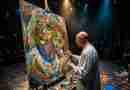
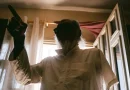
At the Dutch Pavilion, Dutch artist Dries Verhoeven and curator Rieke Vos transform the pavilion designed by Gerrit Rietveld into a structure that progressively closes in on itself. Light disappears, metal shutters slowly descend, and the audience enters a state of growing tension while performers immersed in darkness use death metal grunting as a physical, visceral language. For several minutes, visitors remain almost motionless in the dark, listening only to breathing, guttural vibrations, and the metallic sound of the closing structures.

“The Fortress” at the 2026 Venice Biennale
But The Fortress is not simply a reflection on architecture. Above all, it is a work about contemporary Europe, fear, the obsessive need for protection, and the widening gap between the moral self-image of the West and its actual behavior.
During the preview days, the pavilion also became one of the most politically charged spaces of the Biennale after temporarily closing in solidarity with the ANGA movement protesting Israel’s presence at the Giardini.
In this conversation, Verhoeven speaks about the Biennale as a “fiction of neutrality,” the collapse of European utopian visions, and the need for an art that stops reassuring its audience.

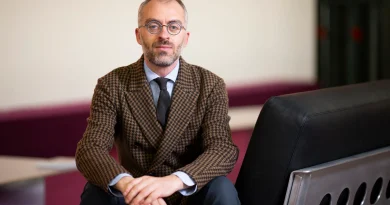
Interview with Dries Verhoeven
Your pavilion transforms an architecture originally conceived as a symbol of openness into a defensive and almost claustrophobic structure. How much is this transformation about contemporary Europe?
It is a work about the tendency toward self-preservation, and therefore obviously about contemporary Europe. I use the pavilion as a metaphor for an era built on postwar ideals of openness, progress, and trust in the future. Yet today we continue to invoke those values while, in reality, we are increasingly closing ourselves within logics of protectionism and self-preservation.
We wanted to strip the pavilion, a modernist monument, of its accessibility and light. In the Netherlands we too often continue protecting ourselves through an idealized image of who we are. And yet the present tells a very different story.
A strong dissonance emerges in the performance between Europe’s moral self-image and contemporary political reality.
Yes, but I don’t think we deliberately ignore that reality. We simply find ways to mentally distance ourselves, to protect the image we have built of ourselves.
I often speak about “cognitive dissonance.” We in Western Europe continue telling ourselves that we are the civilized ones, the enlightened ones, the people on the right side of history. The barbarians are the ones on the other side of our borders, our walls, our fences.
The Biennale’s Giardini is almost a time capsule of that Western self-image: orderly, elegant, apparently innocent. Yet beneath that surface, geopolitical, economic, and colonial powers continue moving in ways we pretend not to see.
The Fortress seems to question the Biennale as a neutral space of international dialogue.
Yes, especially because the Biennale still functions through national representation. Across the world, we are witnessing growing nationalism, yet in the Giardini we pretend that nationalism plays no role. Meanwhile, the former world powers occupy the most prominent pavilions, while quite a few countries are much harder to find; where is Nigeria, where is Palestine?
And then there is this very convenient idea of cultural neutrality. As if art institutions were simply innocent places of global dialogue. But they are not. We are all entangled in geopolitics, whether we want to be or not. The Biennale is a tool of soft power. Nations use their pavilions to construct a public image, consensus, and international reputation. Pretending otherwise means continuing to tell ourselves a comforting fairy tale.

Watching the performance, I felt not only fear, but also helplessness. As if the work were saying: we still have time to change direction, but perhaps we no longer know how.
That is a beautiful reading. I wanted to capture a contemporary feeling through architecture and performance. And for me that feeling is made of confusion, desperation, and helplessness.
The more fragile we feel, the more we cling to everything that has given us security over the past decades: comfort, stability, the innocent idea we have of ourselves.
But that attachment becomes increasingly aggressive precisely because we feel our convictions start to crumble.
When Trump keeps shouting “America is great,” to me it is not strength. It is desperation. It is the attempt to protect an identity that feels itself collapsing.
Many works at the Biennale address geopolitical crises through symbolism or heavily mediated languages. Your work instead feels direct, even disturbing. Should art return to destabilizing its audience?
For me, yes. I like it when artworks make me feel uncomfortable, when they breathe down my neck, like a wild cat. I hope to portray the quicksand, in which we find ourselves these days, and yes that might feel destabilizing
If we transform the art world into a completely safe space, we begin to believe that we are not implicated in the violence and crises surrounding us.
We need images and experiences capable of capturing the nightmare, not only the dream.
Today much art addresses crises in an excessively cognitive way. You read the wall text, immediately understand what the “correct” message is supposed to be, and everything remains under intellectual control. But what does that tell us about our autopilot, our irrational responses? We are not just cognition, we have our bodies, and those function merely irrational.
That is the point that truly interests me.

Your work also seems to criticize the contemporary idea of the “safe space.”
I wouldn’t call it a critique, I call it a portrait.
Nowadays art spaces talk often about care, healing and emotional control. They try to symbolically glue together what is fundamentally broken in the real world. While reality is a mess, our museums are full of trigger warnings.
It moves me, it reveals the collective fragility we are experiencing. I no longer see grand utopian visions of the future. I mostly see frightened people searching either for understandable images of crisis or protected refuges where they do not have to feel it too intensely.
During the Biennale, the Dutch Pavilion was the first to temporarily shut down in solidarity with the ANGA movement. Do you think this tension will remain within the art world, or will it quickly be absorbed?
I hope it remains. It has to remain.
It took ten years of protests before apartheid state South Africa was excluded from the Biennale. These processes do not change within a week.
I believe many artists today no longer want to function merely as the moral decoration of institutions that maintain deeply contradictory structures.
If the Biennale wants to remain contemporary and relevant, it must seriously confront its own values. Otherwise, it risks becoming a gigantic nostalgic capsule of the Western past.

At a certain point, an almost inevitable question emerges: is art enough?
It is a fundamental question. Pablo Picasso’s Guernica was “just” a painting. And yet we still look at it today to understand something about the violence of its time.
Art does not solve conflicts. It does not replace politics or activism. Art is always closely connected to the problems if it’s time. To reveal our implication is what it means to “stay with the trouble” .
If art becomes pure propaganda, it loses ambiguity, mystery, and poetry. And then it also loses part of its power.

With The Fortress, Dries Verhoeven does not simply construct a critique of the Biennale or of Europe’s contemporary crisis. He constructs a psychological device. An experience forcing visitors to confront something many cultural systems today continuously try to anesthetize: fear, fragility, and the very real possibility that Europe’s liberal self-image may no longer be able to sustain the weight of the present.
In a Biennale that still often attempts to organize chaos into readable and reassuring languages, The Fortress instead chooses to leave the visitor without protection.
The Fortress by Dries Verhoeven, curated by Rieke Vos.
Dutch Pavilion, Biennale Arte 2026
Giardini della Biennale, Venice.
Open from May 9 to November 22, 2026. From wednesday to sunday.
Related Articles
- More from Biennale Arte 2026
- Pussy Riot and FEMEN Protest at the Russian Pavilion at the Venice Biennale
- The Pavilion of Nature at the Venice Biennale
- Nick Cave at the 2026 Biennale. Seven works of loss, memory, and protest
- Annalee Davis at Biennale Arte 2026. Landscape as Mourning, Archive, and Resistance
- Kader Attia: Repair Does Not Erase the Wound
- The Polish Pavilion: Language Beyond the Human in Liquid Tongues
- Danish Pavilion Venice Biennale 2026 Who Brought Porn Stars into the Exhibition