“I Want to Die Broken.” An Interview with Artist Alessandro Bulgini
Translation of the original Italian article published by Artribune on August 15, 2026. Read the Italian version on Artribune.
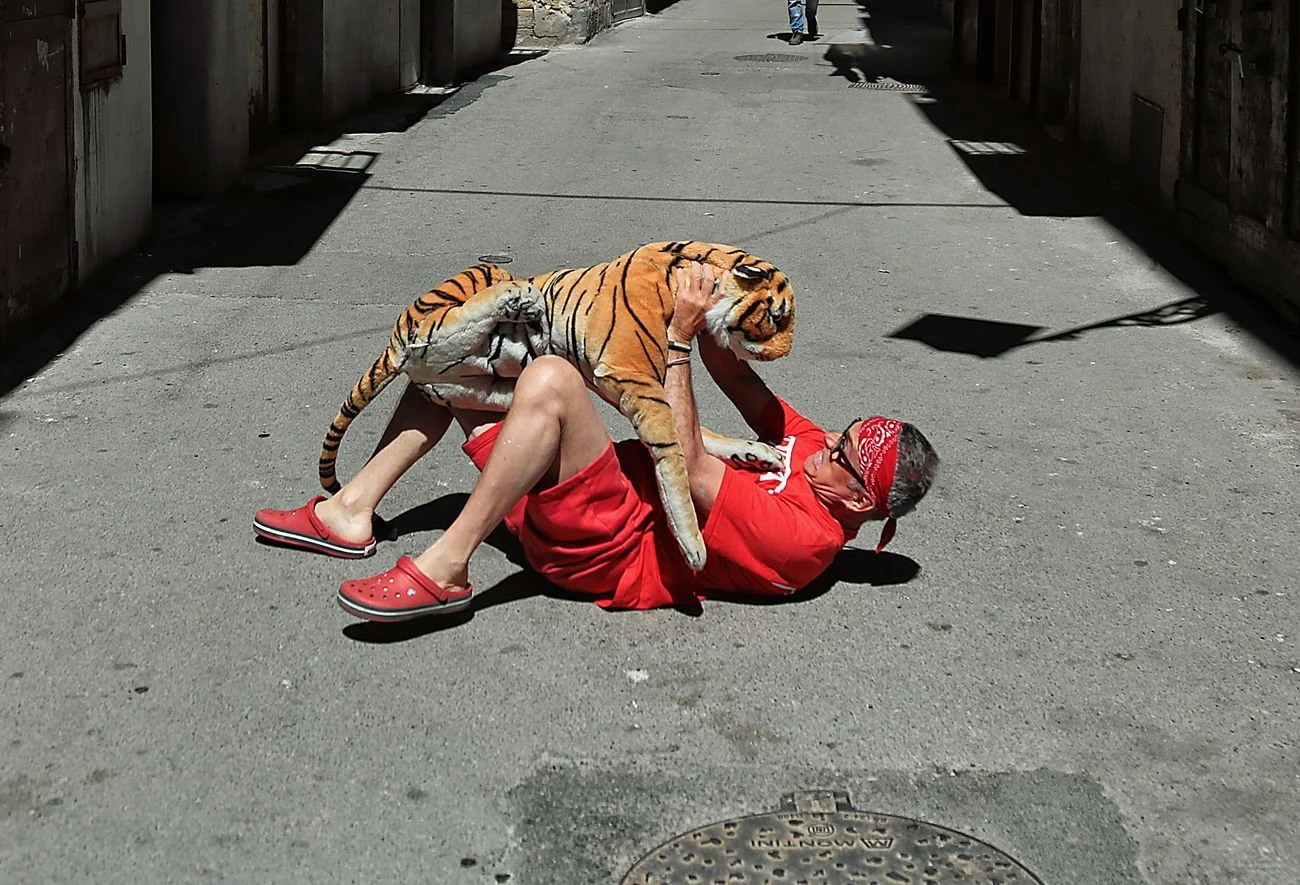
What happens when an artist stops worrying about being an artist? An interview with Alessandro Bulgini, artist and artistic director of Flashback Habitat, while an exhibition on scarecrows is on view in Turin through September 27.
I listened to this interview more times than I normally do with any recording. Not because there were quotations to verify or unclear passages, but because it kept generating new questions.
Every time I thought I had understood Alessandro Bulgini (Taranto, 1962), another Bulgini emerged: the painter of the Heretics, the artistic director of Flashback Habitat, the man who turns a room into a memorial for Gaza, the community builder, the provocateur, the man with a heart condition who speaks about death with disarming naturalness.
Who Is Alessandro Bulgini?
During our conversation, he returns several times to the same idea. He says he no longer knows whether he is an artist, that he uses the art system but does not live for its recognition, and that moving from painting to people has not really changed the core of his practice. These statements may sound provocative, but listening to him, it becomes clear that they are anything but.
They are the coherent result of a trajectory that, over the years, has progressively shifted the centre of his practice from the artwork to the relationship, from the object to responsibility, from the image to presence. At some point, I realised that the issue was not how to tell the story of an artist. The issue was understanding whether Alessandro Bulgini still considered himself one. And perhaps, in the end, I am not even sure that this question really interests him.
Interview with Alessandro Bulgini
You describe yourself as an anomaly. In what sense?
Before considering myself an artist, I consider myself a free person. I have had a complicated life. My father died when I was sixteen, my mother when I was twenty-five, and my brother in 2011. Death has never stopped accompanying me, and this has forced me to constantly question the meaning of existence. When you live with this awareness, everything that comes before the final act becomes an opportunity.
That is why I try to expend my energy and make it available to others. Whether what I do will be recognised as art or not, quite frankly, is no longer my problem.
With many artists, there is a distance between life and work. In your case, it seems almost impossible to distinguish between the two.
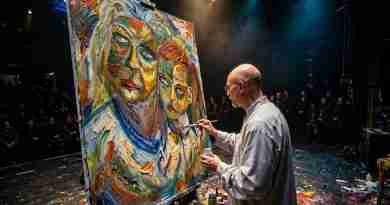
Because for me there is no real difference. I used to paint; today, my field of action is people. In reality, I do not think very much has changed. I have simply replaced one material with another. What continues to interest me is life, the way people meet, clash, help one another or transform one another. I like to say that I want to die broken. Not in the sense of destruction, but in the sense of use.
I would like to reach the end knowing that I have used up all the energy I had available, rather than having preserved it out of caution or fear.
Does this outlook also come from your relationship with illness?
Probably, yes. I have a heart condition and have undergone several operations. Every time I came out of an operating theatre, I got a tattoo. When you live with the concrete possibility of an ending, many things that normally seem important cease to be so. It becomes more difficult to accept hypocrisy, conventions or the fears that prevent people from taking a stand. At a certain point, you understand that time is a limited resource and that it is not worth wasting it.
Your attention to what lies at the margins runs throughout your practice, even when you were primarily a painter.
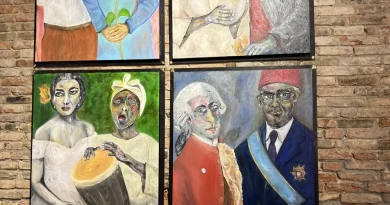
It has always been that way. In the 1990s, I was working on the Le Déjeuner sur l’Herbe cycle, and I was interested in telling the stories of what remained at the edges of the main narrative. Later came the Heretics, which perhaps represent the clearest transition towards everything that would follow.
The Heretics seem to be a fundamental key to reading your work. Almost invisible figures immersed in black, emerging only under particular lighting conditions. Today, I have the impression that you are still dealing with the same subjects, but outside the painting.
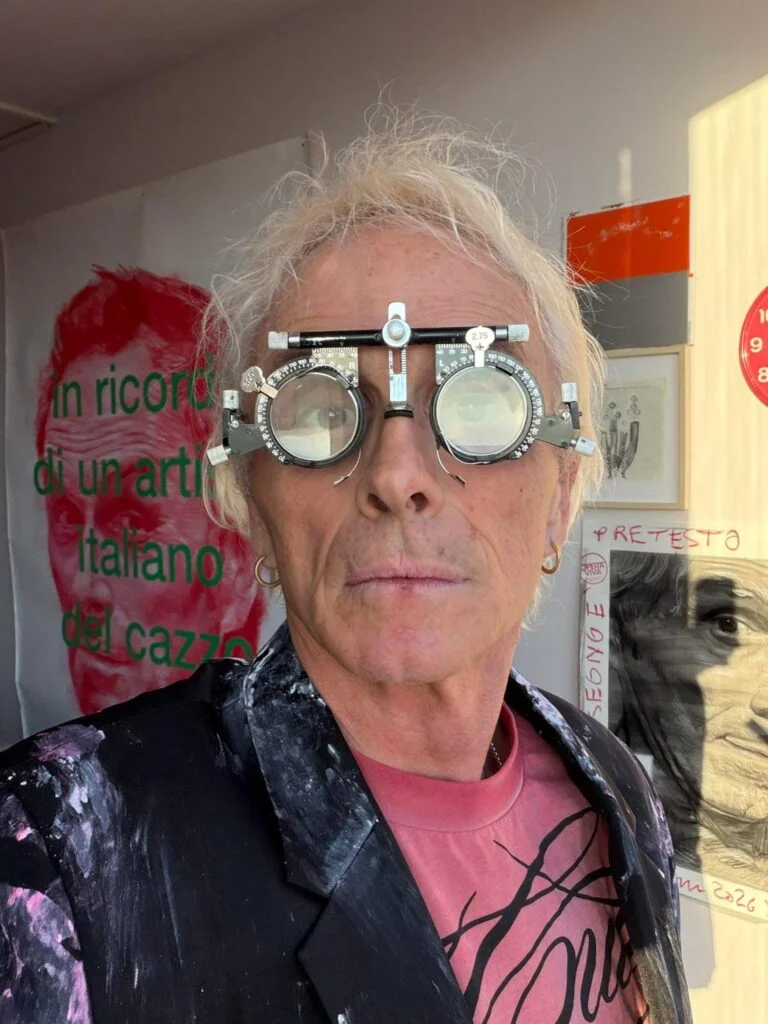
I think that is true. The Heretics were people who existed but whom nobody wanted to look at. To paint them, I dressed entirely in black, used side shields on my glasses and searched for the slightest tonal differences between black and grey. Once finished, the paintings were polished until they became almost like mirrors. At first glance, they appeared monochrome, but the figures emerged only under certain conditions. Heretics have always existed.
They are the excluded, the outcasts, those who destabilise the system. Today those subjects might be the peripheries, migrants, Gaza or anyone pushed to the margins of visibility. Ultimately, I am still telling the same story.
So the Heretics and Gaza belong to the same narrative?
Yes. I am interested in people and realities that risk disappearing from the field of vision. When something is made invisible, my instinct is to look precisely there. It has always been that way, and I think it will continue to be.
Let me ask you a brutal question. If the art system disappeared completely tomorrow, would you continue doing what you do?
Yes. I would continue. Because I do not do these things for the art system. I use the art system, but it is not the reason I do what I do. For me, the question is life. Art is one of the tools I use, not the ultimate end.
Your relationship with Caravaggio also seems to enter into this reflection.
Absolutely. Caravaggio is one of the artists who has taught me the most. I think the relationship between his works and actual light has often not been fully understood. In some churches, the paintings were conceived with the natural light coming through the windows in mind. When you illuminate them artificially, you alter the very meaning of the work. I am very interested in this idea. I am interested in it because important things are often not immediately visible.
In 2008, you moved to Barriera di Milano. How important was that transition?
Extremely important. Many people regarded that neighbourhood as a problem. I found it extraordinary. Differences, tensions, vulnerabilities, migrant histories and possibilities coexist there. At a certain point, I asked myself whether I was still capable of acting as an artist without painting. I stopped shutting myself away in the studio and began engaging directly with reality. Since then, relationships have become the centre of my practice.
Today you are the artistic director of Flashback Habitat. What kind of responsibility does that involve?
An enormous responsibility. Dozens of different worlds coexist here, from artists’ studios and associations to publishers and musicians. Being artistic director means publicly taking responsibility for your positions and your choices. You cannot hide behind the role. You have to answer to the community that inhabits this place every day.
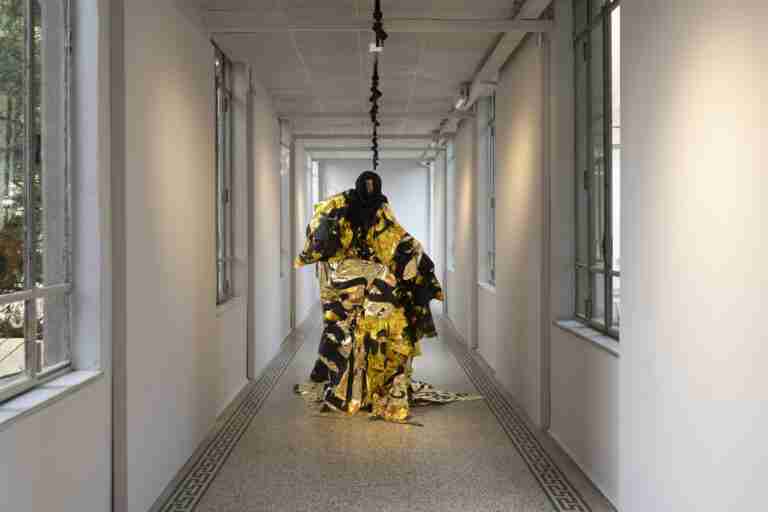
The Scarecrow Exhibition in Turin
Together with curator Christian Caliandro, you recently developed the project Scarecrow. How did it come about?
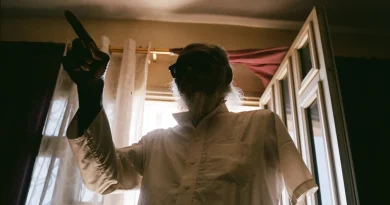
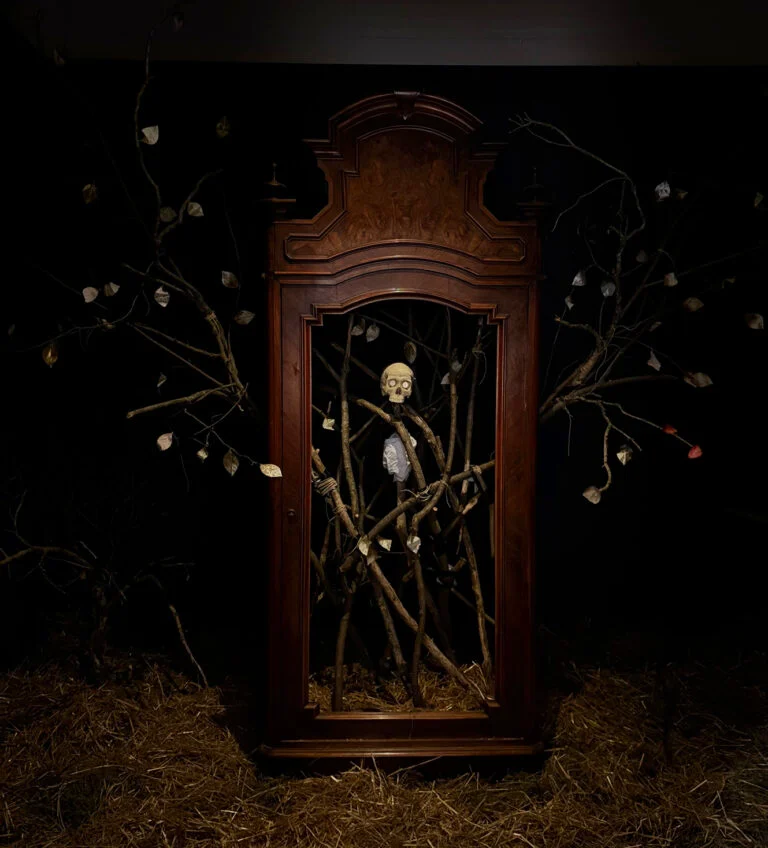
Scarecrow is more a device than an exhibition. The scarecrow is a figure that attacks no one, is unarmed and exercises no violence. And yet it takes a position, protects something and, precisely through its apparent fragility, generates a symbolic shift. I was interested in this image because I think it describes well the role art can play today.
In recent years, Gaza has become a constant presence in your thinking. When did you realise that you could no longer remain silent?
When I began to feel that silence was becoming complicity. Things are getting worse everywhere: in terms of rights, language, and our ability to distinguish what is true from what is false. At a certain point, I realised that I could no longer pretend nothing was happening. I started with posters, then I asked Palestinians in Gaza directly to send me photographs of their everyday lives. Not propaganda, but real life. Families, tents, rubble, people continuing to live despite everything.
It seemed necessary to establish a direct connection.
At Flashback Habitat, you also created a memorial dedicated to the victims of Gaza.
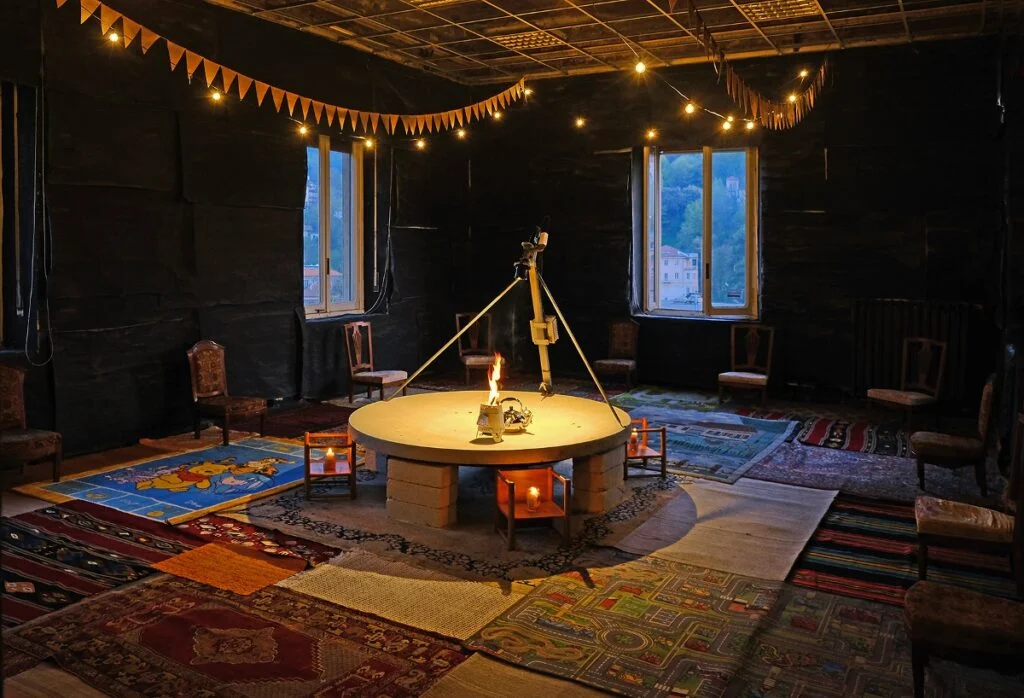
I was struck by seeing how, among the rubble, many families recovered their rugs before almost anything else. That was where they began living again. I collected rugs donated by people and transformed them into a place of encounter. At the centre, I placed a large satellite dish recovered from the building, and every week I prepare Palestinian tea for those who come to visit. I am not interested in building monuments. I am interested in creating places of memory, relationships and exchange.
Have you received criticism and even threats because of these positions?
Yes, but when a performance produces reactions, it means that it has managed to touch something. I went to Art Basel and other fairs simply wearing a T-shirt with “Gaza” written on it. One word. A geographical designation. And yet it was enough to create discomfort. That says far more than I ever could.
What responsibility do artists and intellectuals have today?
An enormous one. The difference is that an artist spends a large part of their life questioning existence. That is a responsibility before it is a privilege. We live in an era in which it is becoming increasingly difficult to distinguish truth from falsehood. In a situation like this, art cannot limit itself to decoration. It must continue to create spaces for thought and possibilities for dialogue.
You said that you want to “die broken.” What does that really mean?
It means that I do not want to reach the end having preserved myself. I want to know that I have used everything I had available. Then, whether what I do will be remembered as art, activism, human relationships or anything else, quite frankly, is not for me to decide. What interests me is taking part. The rest will come afterwards.
Antonino La Vela
Turin // through September 27, 2026
Scarecrow – Artists Standing Guard Over Life
Flashback Habitat
Corso Giovanni Lanza, 75
Further Reading
Claire Bishop’s Artificial Hells: Participatory Art and the Politics of Spectatorship is a key critical study of participatory art and the political ambitions, contradictions and problems that arise when participation itself becomes an artistic medium. It offers a particularly relevant theoretical context for thinking about the shift in Bulgini’s practice from painting towards people, relationships and collective experience.
Artificial Hells: Participatory Art and the Politics of Spectatorship – View on Amazon
As an Amazon Associate, I earn from qualifying purchases. The price paid by the reader remains unchanged.
Related Articles
- When Memory Refuses to Leave: Alessandro Bulgini Turns a Former Childhood Institute into a Permanent Artwork
- Happening Art: When the Audience Became the Artwork
- Art as Activism: How Visual Artists Are Fueling Social Justice Movements
- “How You Curate Genocide?”: Faisal Saleh and the Palestinian Question Crossing the Venice Biennale